
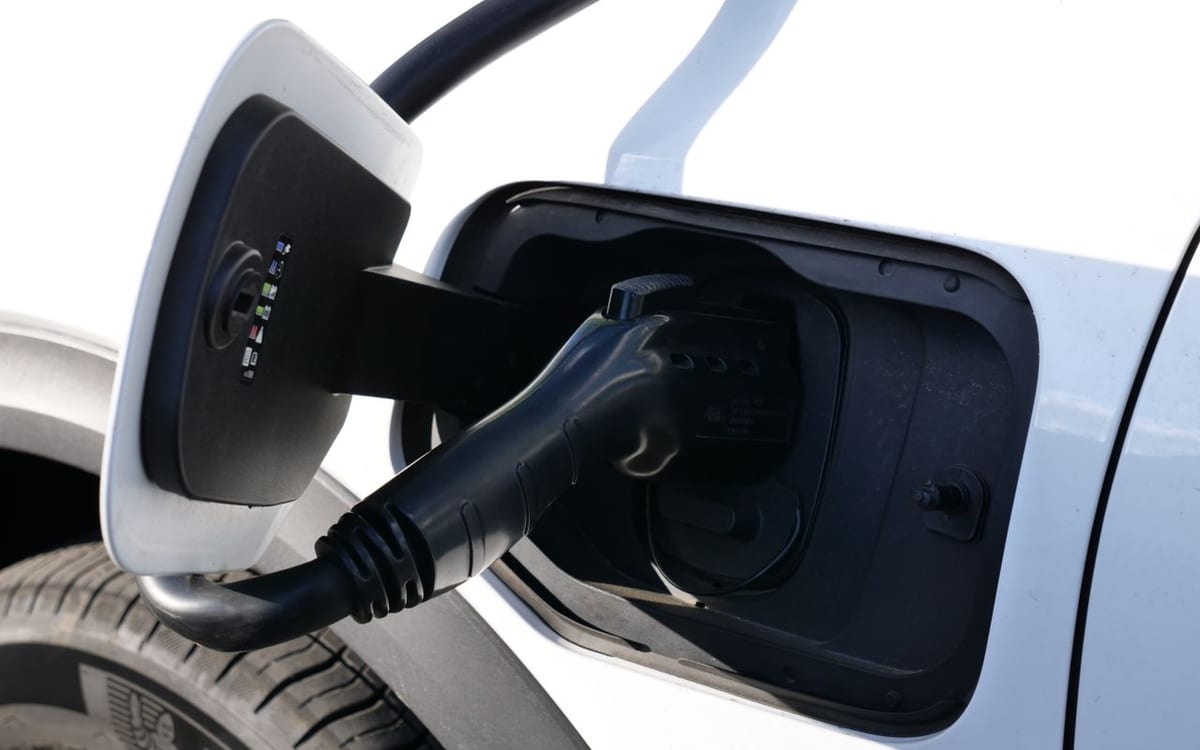
For many electric vehicle owners, being able to charge at home is one of the biggest advantages of owning an EV.
Instead of making regular trips to a public charging station, you can plug in when you arrive home and let the vehicle recharge while it is parked.
But choosing a home EV charger raises plenty of questions.
Do you actually need a dedicated charger? Is 7kW enough? Is a 22kW EV charger better? Do you need three-phase power? Can you charge directly from solar? And what should be checked before an electrician installs the charger?
This guide explains the main options for EV charging at home in Australia and the factors homeowners should consider before choosing a charging setup.
How Does EV Charging at Home Work?
An electric vehicle stores energy in its battery.
When the vehicle is connected to a home charging source, electricity from the property flows into the vehicle through charging equipment.
For most Australian households, home charging generally falls into two categories:
- charging from a standard household power point
- charging from a dedicated AC home EV charger.
Australian Government guidance says the majority of EV charging occurs at home, making the home charging setup an important part of EV ownership.
The best option is not necessarily the charger with the highest power rating.
Your actual charging requirements depend on how much energy you use during normal driving and how long the vehicle is usually parked at home.
Home EV Charging Options
Option 1: Standard Household Power Point
An EV can be charged from an appropriate standard household power point using compatible charging equipment.
This is commonly called:
- Level 1 charging
- trickle charging
- slow charging.
Australian Government guidance describes standard power-point charging as providing up to approximately 2.4kW.
Because the charging rate is relatively low, fully charging a large EV battery can take up to 24 hours.
That does not automatically make power-point charging impractical.
Most drivers do not arrive home every evening with an empty battery.
Australian Government guidance notes that the average Australian drives around 33 kilometres per day, which typically represents only a relatively small proportion of a modern EV battery.
For drivers covering modest daily distances and leaving the vehicle parked for long periods, slower charging may therefore replenish enough energy for normal use.
Option 2: Dedicated Home EV Charger
A dedicated EV home charger provides considerably more charging power.
Australian Government guidance describes dedicated Level 2 home charging as typically providing between 7kW and 22kW AC.
Depending on the vehicle and charging setup, this can provide approximately 30 to 80 kilometres of driving range for each hour of charging.
A dedicated charger may also provide functionality such as:
- scheduled charging
- off-peak charging
- solar-aware charging
- dynamic load management
- charging history and monitoring
- app-based controls.
A dedicated charger is connected directly to the property's electrical system and must be installed by an appropriately licensed electrician.
Depending on the property, installation may also require electrical or switchboard upgrades.
Standard Power Point vs Dedicated Home EV Charger
| Feature | Standard Power Point | Dedicated Home EV Charger |
|---|---|---|
| Charging level | Level 1 | Level 2 |
| Typical charging power | Up to about 2.4kW | Typically 7–22kW |
| Relative speed | Slow | Significantly faster |
| Potential full-charge time | Can take up to 24 hours | Depends on charger, vehicle and battery |
| Smart charging | Limited | Often available |
| Solar-aware charging | Limited | Available on compatible systems |
| Installation | Appropriate outlet/equipment required | Licensed electrician required |
| Best suited to | Lower daily driving / long parking periods | Faster regular home charging |
Neither option is automatically right for every household.
A driver travelling relatively short distances each day may find slower charging sufficient, while a household with higher daily driving requirements may benefit substantially from a dedicated charger.
7kW vs 22kW Home EV Charger
One of the most common decisions when choosing a dedicated charger is whether to install a 7kW EV charger or a higher-powered 22kW EV charger.
The numbers describe the charger's maximum power output.
Higher power can mean faster charging, but only when the vehicle and property can actually support that charging rate.
7kW EV Charger
A 7kW charger is a common residential charging option.
It can provide significantly faster charging than a standard household power point and can suit many EV owners who recharge overnight or during the day.
Potential advantages include:
- substantially faster charging than a standard outlet
- compatibility with many residential electrical setups
- enough charging capacity for typical overnight charging
- smart and scheduled charging features depending on the charger.
22kW EV Charger
A 22kW AC charger can provide substantially more charging power, but installing a 22kW unit does not automatically mean your EV will charge at 22kW.
The actual charging rate is limited by several factors:
- the property's electrical supply
- whether three-phase power is available
- the charger's capabilities
- the EV's onboard AC charger
- load-management settings
- other electrical loads at the property.
For example, some EVs may only accept 11kW AC even when connected to equipment capable of delivering 22kW.
That means choosing the highest-rated charger does not necessarily produce the fastest practical charging result.
Is 7kW or 22kW Better for Home Charging?
There is no universal answer.
The better question is:
How much charging power does your household actually need and how much can your vehicle accept?
For many households, a 7kW charger may provide more than enough charging capacity to replenish normal daily driving while the vehicle is parked overnight.
A 22kW charger may make more sense where:
- the property has suitable three-phase power
- the vehicle supports higher AC charging rates
- faster turnaround is genuinely useful
- multiple EVs may need to be supported
- the electrical infrastructure has been designed for the additional load.
Do not choose charger capacity based only on the largest number advertised on the charger.
Single-Phase vs Three-Phase EV Charging
Your home's electrical supply can affect the charging power available to an EV charger.
Single-Phase EV Charger
Many Australian homes use single-phase electricity.
A dedicated home EV charger connected to a suitable single-phase supply will commonly operate at around 7kW, depending on the property, charger and installation.
For many EV owners, this can provide sufficient charging capacity for normal overnight charging.
Three-Phase EV Charger
Three-phase electricity can support higher power levels.
A 22kW AC EV charger generally requires a suitable three-phase electrical supply to deliver its maximum rated output.
However, having three-phase power does not automatically mean a 22kW charger is necessary.
The vehicle must also be capable of accepting the higher AC charging rate.
Before selecting a charger, confirm:
- the property's electrical supply
- available electrical capacity
- the EV's maximum AC charging rate
- charger compatibility
- whether load management is required.
Do You Need to Upgrade to Three-Phase Power?
Not necessarily.
If a 7kW charger provides enough energy during the time your vehicle is normally parked, upgrading the property's electrical supply solely to obtain faster charging may not be necessary.
An electrical assessment can help determine whether the existing supply can support the proposed charger.
In NSW, some changes that increase the amount of power a property can use at once may require work involving an Accredited Service Provider.
This can be relevant when adding larger electrical loads such as an EV charger.
The appropriate solution depends on the property and local electricity-network requirements.
How Long Does It Take to Charge an EV at Home?
Charging time depends on:
- battery capacity
- starting state of charge
- vehicle charging capability
- charger power
- available electrical capacity
- charging limits configured in the vehicle
- load-management settings.
A simplified calculation is:
Charging time ≈ energy required ÷ charging power
- At 2.4kW: approximately 17.5 hours
- At 7kW: approximately 6 hours
- At 11kW: approximately 3.8 hours
These are simplified examples, not guaranteed charging times.
Real-world charging can vary because vehicles may limit charging rates and charging power can change during a session.
Do You Need to Fully Charge an EV Every Night?
Usually, the more useful question is how much energy needs to be replaced after your daily driving.
If your normal driving consumes only a portion of the battery, your home charger only needs enough time to replace that energy before the vehicle is needed again.
For example, someone who drives relatively short distances each day may only need to replenish a modest amount of energy overnight.
Always follow the vehicle manufacturer's guidance about recommended charging limits and battery management.
What Does Home EV Charging Cost?
There are two different costs to consider:
Charger and Installation Cost
The cost of installing a home EV charger varies considerably depending on the property and installation.
Factors can include:
- charger model
- charging capacity
- distance from the switchboard to the parking area
- cable route
- switchboard condition
- available electrical capacity
- single-phase or three-phase supply
- load-management requirements
- wall or pedestal mounting
- network or supply upgrades where required.
Electricity Cost
Electricity used to charge an EV is normally measured in kilowatt-hours (kWh), just like other household electricity consumption.
The charging cost therefore depends on:
- how much energy the EV needs
- the household electricity tariff
- when charging occurs
- whether solar electricity is available
- charging losses.
Home charging may be particularly attractive where households can use:
- off-peak electricity rates
- EV-specific electricity tariffs
- excess rooftop solar generation.
Can You Charge an EV With Solar Panels?
Yes.
For households with rooftop solar, EV charging can become part of the home's broader energy strategy.
If the vehicle is connected during periods of strong solar generation, some of the electricity generated by the solar system can be used directly to charge the EV rather than being exported to the grid.
The amount of solar energy available for EV charging depends on factors such as:
- solar system size
- weather
- season
- time of day
- household electricity consumption
- EV charging power
- vehicle availability during daylight hours.
Some compatible smart EV chargers can adjust charging based on available solar generation.
This can help households make greater use of their own generated electricity.
Solar Rebates and Home EV Charging
If you're considering adding rooftop solar as part of a broader home energy upgrade, it is also worth understanding the solar rebates and incentives that may apply to the solar system itself.
These incentives apply to eligible solar systems. They are not EV charger rebates.
For households considering a new solar installation, our guide to the Federal Solar Rebate explains how the federal solar incentive works and how eligible solar installations may receive support.
Can a Home Battery Help With EV Charging?
Potentially, but the answer depends on the household energy system.
A home battery storage system stores electricity for later use.
In a solar-equipped home, excess daytime solar generation can potentially be stored rather than immediately exported to the grid.
That stored energy may then be available for household consumption later.
However, EV batteries are large energy loads, so charging an EV from a home battery can use a significant portion of the battery's stored energy.
The value of combining solar, home battery storage and EV charging depends on factors such as:
- system size
- household consumption
- EV usage
- tariffs
- when energy is generated and consumed.
What Is Smart EV Charging?
Smart charging allows the charger or connected energy-management system to control when and sometimes how quickly the EV charges.
Depending on the equipment, smart charging may support:
- charging schedules
- off-peak charging
- solar-aware charging
- dynamic load management
- charging history
- remote controls
- energy monitoring.
For example, a household may schedule charging to start when off-peak electricity begins, or configure compatible equipment to make greater use of available solar generation.
What Is EV Load Management?
An EV charger can represent a significant electrical load.
At the same time, a modern electrified home may also be operating:
- air conditioning
- induction cooking
- electric hot water
- a pool pump
- home battery equipment
- other high-powered appliances.
Load management can help coordinate electrical demand so that charging does not unnecessarily exceed the property's available capacity.
Depending on the charger and energy-management system, charging power may be adjusted based on what other loads are operating.
This can be particularly important where:
- multiple EV chargers are installed
- the property's available capacity is limited
- several large electric appliances operate at the same time.
Does Your Switchboard Need an Upgrade?
Sometimes.
A dedicated home EV charger is a substantial electrical appliance, and the existing electrical system should be assessed before installation.
An electrician may need to consider:
- switchboard condition
- available capacity
- existing circuits
- protection equipment
- cable requirements
- other large electrical loads
- proposed charger power.
Australian Government guidance notes that installing a dedicated home EV charger may require an upgrade to the switchboard or electricity supply connection.
NSW Government guidance also identifies EV chargers as one of the upgrades that can increase a property's electricity requirements.
Do not assume that every home needs a switchboard upgrade.
An assessment should determine what is actually required.
Choosing the Right Home EV Charger
Rather than starting with a particular charger model, start with the household's requirements.
Check Your Vehicle's AC Charging Capability
Find out the maximum AC charging rate your EV can accept.
Installing a charger with a much higher rating will not make the vehicle charge faster than its onboard charging system allows.
Understand Your Daily Driving
Consider how much energy you normally use each day.
The goal is usually to replenish daily energy use conveniently rather than repeatedly charging an empty battery from zero to full.
Check Your Electrical Supply
Determine whether the property has:
- single-phase or three-phase supply
- enough available capacity
- an appropriate switchboard
- suitable cable routes.
Consider Solar Integration
If you already have solar, or plan to install it, consider whether the charger can coordinate charging with solar generation.
Consider Smart Charging
Think about whether you need:
- scheduling
- solar-aware charging
- dynamic load management
- app control
- energy monitoring.
Think About Future Needs
Consider whether:
- another EV may be added later
- the household is electrifying other appliances
- solar or batteries may be added
- charging requirements may increase.
Have the Property Assessed
A qualified installer can assess the electrical system and help determine what charger capacity and electrical work are appropriate.
The objective should be a charging solution designed around the property and vehicle rather than simply selecting the highest-powered charger available.
Are There Rebates for Home EV Chargers?
Government support can change over time and differs by location.
For NSW households, Decarby has a separate guide explaining EV charger rebates and financial support in NSW.
That guide explains the difference between direct rebates, zero-interest finance and other government-backed support, including the NSW Home Energy Saver program and federal Household Energy Upgrades Fund.
Home EV Charger Installation: What Happens Next?
Once you've decided that a dedicated charger is appropriate, the next step is to have the property and charging requirements assessed.
A typical assessment may consider:
- your EV
- required charging speed
- parking location
- cable route
- electrical supply
- switchboard
- solar system
- existing household loads
- future electrification plans.
The charger should then be selected and installed based on the actual requirements of the property. Decarby provides home EV charger installation for households that want that assessment carried through to the electrical work.
The Bottom Line
A home EV charger can make EV ownership considerably more convenient, but the highest-powered charger is not automatically the best option.
For some drivers, a standard household power point may provide enough energy for normal daily travel.
For others, a dedicated 7kW charger can provide a practical balance of charging speed and residential electrical requirements.
Higher-powered charging such as 11kW or 22kW can be useful in the right circumstances, but the property and vehicle both need to support it.
Before choosing a charger, consider:
- how far you drive
- how quickly you need to recharge
- your EV's AC charging capability
- your home's electrical supply
- solar generation
- electricity tariffs
- smart-charging requirements
- future household energy needs.
The goal is not simply to install the biggest charger.
It is to design a charging setup that works with your vehicle, property and broader energy system.
Sources & Further Reading
- Australian GovernmentHow to charge your electric vehicle
- Australian GovernmentElectric vehicle charging equipment
- Australian GovernmentCharging options for houses and strata buildings
- NSW GovernmentInstalling or altering electricity supply to your property
- NSW GovernmentSwitchboard upgrade
- Australian GovernmentHousehold Energy Upgrades Fund