
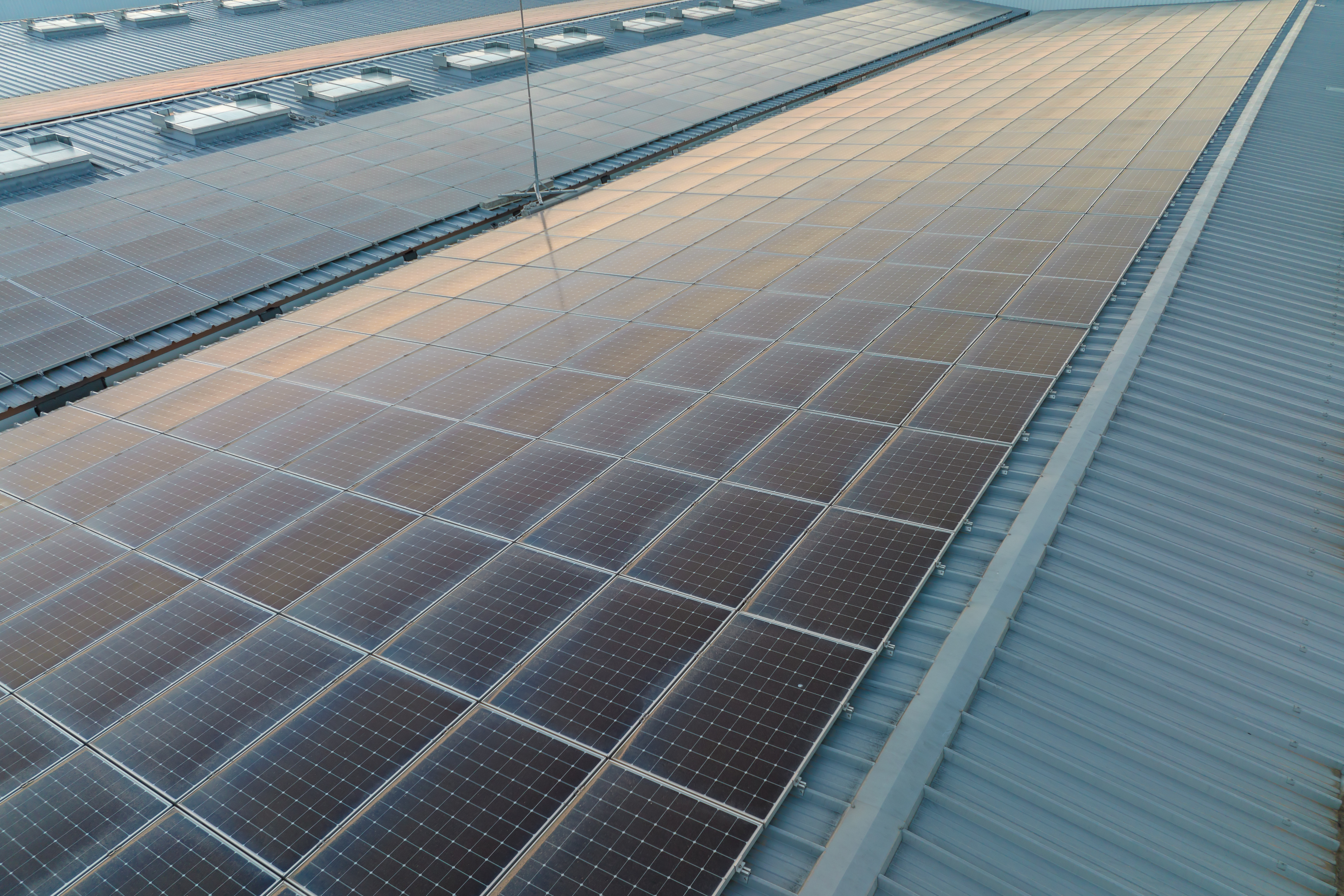
SITE-LED DESIGN
Commercial Battery Storage Designed Around How Your Site Uses Energy
Businesses rarely use electricity evenly throughout the day.
Loads can change with operating hours, production schedules, HVAC demand, refrigeration, machinery, EV charging and seasonal conditions.
That is why commercial battery storage should begin with the site's load profile.
Before recommending capacity, Decarby can consider:
- interval electricity data
- peak-demand periods
- time-of-use tariffs
- demand charges
- existing solar generation
- solar exports
- operating hours
- after-hours electricity demand
- critical electrical loads
- backup requirements
- switchboard and electrical infrastructure
- inverter requirements
- future EV charging
- business expansion
- planned electrification.
A battery then has a defined job.
It might shift solar energy from the middle of the day into the evening.
It might discharge during selected higher-cost tariff periods.
It might help manage a site's short periods of high electricity demand.
Or it may form one part of a broader energy-resilience strategy.
Those outcomes require different designs.
COMMERCIAL VALUE
Where Commercial Battery Storage Can Create Value
The commercial case for batteries comes from when electricity moves, not simply how many kilowatt-hours a battery can hold.
A battery changes the timing of energy.
That timing can create value in several ways.
Store More of Your Solar Generation
Businesses with rooftop solar may generate more electricity than they can use during certain periods.
Without storage, that surplus is exported to the grid.
Depending on the site's export arrangement and electricity tariff, using that energy later may be more valuable than exporting it immediately.
Battery storage allows excess generation to be retained and used during:
- late afternoon
- evening operations
- early morning loads
- higher-price tariff periods.
This can improve the proportion of solar generation consumed onsite.
Shift Grid Consumption Away From Higher-Cost Periods
Some businesses operate on tariffs where electricity costs vary depending on the time of day.
A battery may be charged when electricity is cheaper or when solar production is high, then discharged when grid electricity becomes more expensive.
The size of that opportunity depends on the actual tariff.
That is why Decarby reviews tariff structures rather than assuming every battery creates the same savings.
Manage Peak Demand
For some commercial customers, a short period of unusually high electricity demand can contribute materially to the monthly bill.
Battery discharge can sometimes reduce grid demand during those peaks.
But it needs to happen at the right time.
A battery cannot reduce a demand charge simply because one has been installed.
The controls, available battery power, state of charge and timing of the site's peak all matter.
Decarby's commercial energy guidance already treats demand management this way: battery value comes from the interaction between the asset, tariff and site rather than from the hardware alone.
Support Business Resilience
Businesses that cannot easily tolerate an outage may also investigate battery backup.
The first step is defining which loads actually need support.
That could include:
- communications equipment
- IT infrastructure
- refrigeration
- lighting
- security
- selected production equipment
- building-management systems
- essential office functions.
Whole-site backup can require substantially more battery and inverter capacity than supporting selected circuits.
A resilience design should therefore distinguish between:
critical loads
and
everything connected to the building.
SOLAR ALIGNMENT
Commercial Solar Batteries and Solar Self-Consumption
Commercial solar batteries can be particularly useful where solar production and electricity consumption do not align.
Consider a business with a large rooftop solar array.
During normal working hours, most generation may be consumed onsite.
But weekends, shutdown periods or low-production days can create significant solar exports.
A battery may capture some of that otherwise exported energy and make it available when demand returns.
The important number is not simply total annual solar generation.
We also need to understand:
When is surplus solar actually available?
If a site already consumes nearly all of its solar generation during daylight hours, there may be relatively little excess energy available to charge a battery.
In that case, storage may need another value stream, such as tariff shifting, demand management or resilience, to justify the investment.
This is why battery and solar modelling should be performed together.
SYSTEM DESIGN
Commercial Solar Battery Storage as Part of a Complete Energy System
A commercial solar battery storage project works best when solar generation, energy demand and storage are treated as one connected system.
Solar determines when renewable electricity is available.
The building determines when electricity is needed.
The battery sits between those two profiles and shifts energy from one period to another.
The design can therefore involve decisions about:
- solar array capacity
- inverter capacity
- battery energy capacity
- battery power
- charge and discharge limits
- operating strategy
- export constraints
- control systems
- monitoring.
Two batteries with the same energy capacity can deliver very different results if their power output, controls or operating strategy differ.
That becomes increasingly important on commercial sites where short, high-load events can matter as much as total daily energy consumption.
DEMAND MANAGEMENT
Commercial Battery Storage and Demand Charges
Demand charges deserve particular attention in C&I battery projects.
A typical energy charge is based on how many kilowatt-hours a business consumes.
Demand charges can instead depend on the highest level of demand recorded during a defined period.
That means a relatively short operational event can influence part of the bill.
Examples might include:
- multiple pieces of equipment starting together
- refrigeration and HVAC operating simultaneously
- EV fleet charging beginning at the same time
- production equipment reaching peak load
- heating or cooling demand during extreme weather.
A properly controlled battery may discharge during these events and reduce the amount of power drawn from the grid.
But the project needs enough:
power
to address the peak,
and enough:
energy
to sustain the required discharge.
These are not the same thing.
This is one reason commercial battery sizing should not be based only on a kWh figure.
BATTERY SPECIFICATIONS
Understanding Battery Power and Battery Capacity
Battery specifications can be confusing because two numbers are often discussed together.
A business trying to support a relatively modest load for several hours may need a different configuration from a facility trying to reduce a very large 15-minute demand peak.
The first problem may be energy-heavy.
The second may be power-heavy.
A proper commercial assessment considers both.
INDUSTRIAL SITES
Industrial Battery Storage for High-Load Sites
Industrial battery storage requires another level of analysis.
Manufacturing facilities, warehouses, logistics operations, food processing sites and other high-load properties may have complex electricity profiles driven by:
- motors
- refrigeration
- pumps
- compressors
- process equipment
- HVAC
- shift operations
- material handling
- fleet charging.
Annual electricity consumption alone cannot show how those loads interact.
Interval data becomes particularly valuable because it shows when peaks occur and whether they are predictable.
An industrial project may also need closer consideration of:
available network capacity
transformer limitations
protection systems
switchboards
connection requirements
fire safety
battery location
access
planning approvals
control integration.
At this scale, energy storage is infrastructure.
It should be engineered accordingly.
BESS DESIGN
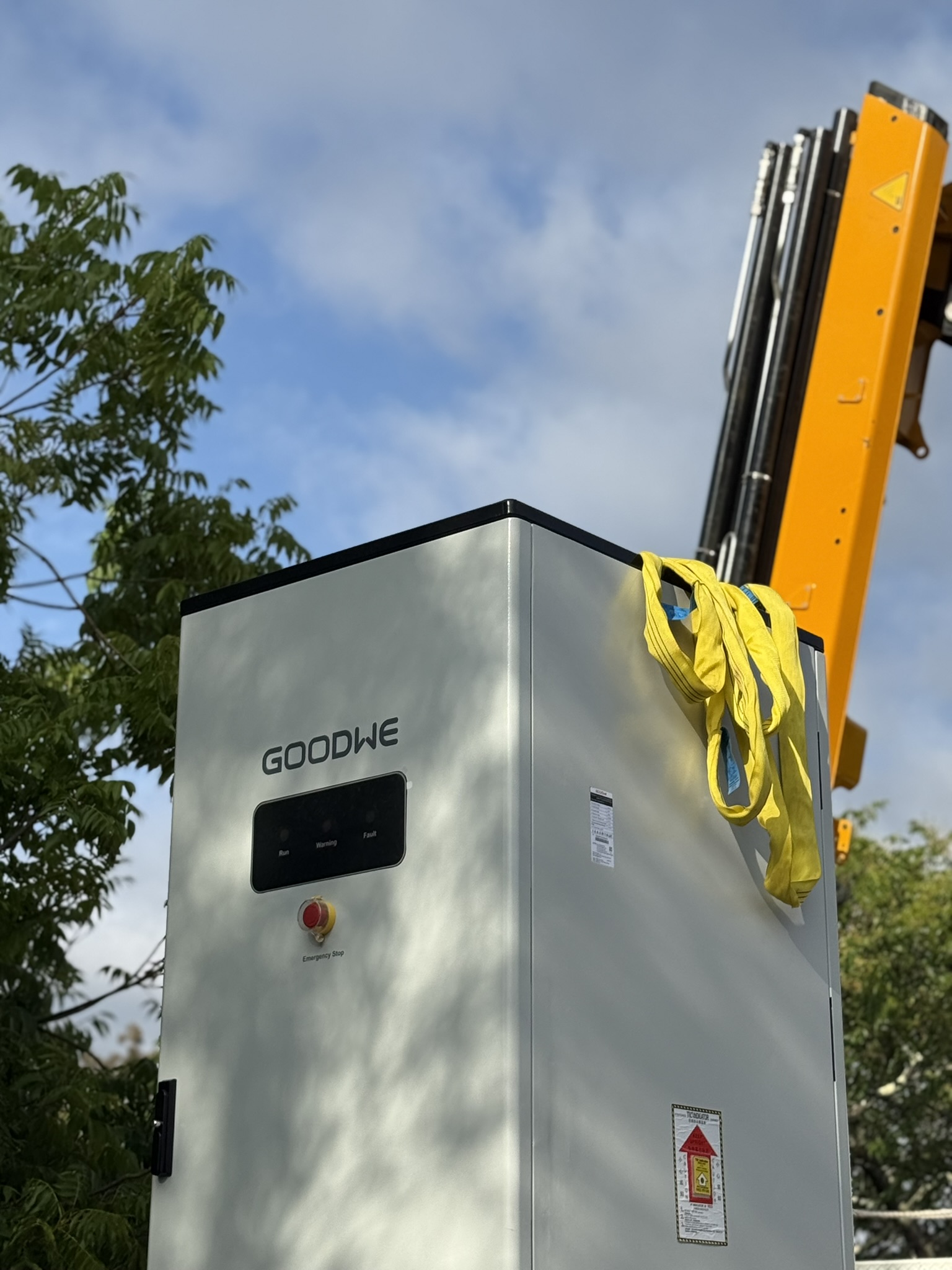
Industrial Battery Energy Storage System Design
An industrial battery energy storage system may range from a relatively straightforward behind-the-meter installation to a large, highly controlled asset integrated into a complex electrical network.
The design process should therefore begin with the project's objective.
Possible objectives include:
- peak-demand management
- solar energy shifting
- tariff optimisation
- network-capacity management
- renewable-energy utilisation
- resilience
- EV fleet integration
- operational decarbonisation.
Different objectives can require different battery technologies, inverter capacities and control strategies.
A system intended primarily for daily energy shifting, for example, will have a different operating profile from a battery held partly in reserve for backup.
Trying to optimise every possible function at once can also create competing requirements.
The priorities need to be clear.
EXISTING SOLAR
Solar Batteries for Commercial Sites With Existing Solar
Solar batteries for commercial properties do not necessarily require a completely new solar installation.
Businesses with an existing rooftop system can potentially add battery storage if the electrical infrastructure, existing solar equipment and proposed battery architecture are compatible.
Before doing that, Decarby can assess:
- existing solar capacity
- inverter configuration
- historical solar production
- solar export data
- electricity consumption
- available switchboard capacity
- equipment compatibility
- network requirements
- future expansion plans.
This can help answer an important question:
Is the existing solar system producing enough surplus energy to justify storage?
If the answer is no, the stronger project may involve adding solar capacity as well.
SITE ENGINEERING
Commercial Solar Battery Installation and Site Engineering
A commercial solar battery installation involves more than delivering equipment and connecting it to an inverter.
Site-specific considerations may include:
- equipment location
- ventilation
- thermal conditions
- fire safety requirements
- clearances
- vehicle impact protection
- cable routes
- switchboard integration
- protection systems
- metering
- communication infrastructure
- network connection
- monitoring
- control logic
- emergency procedures
- maintenance access.
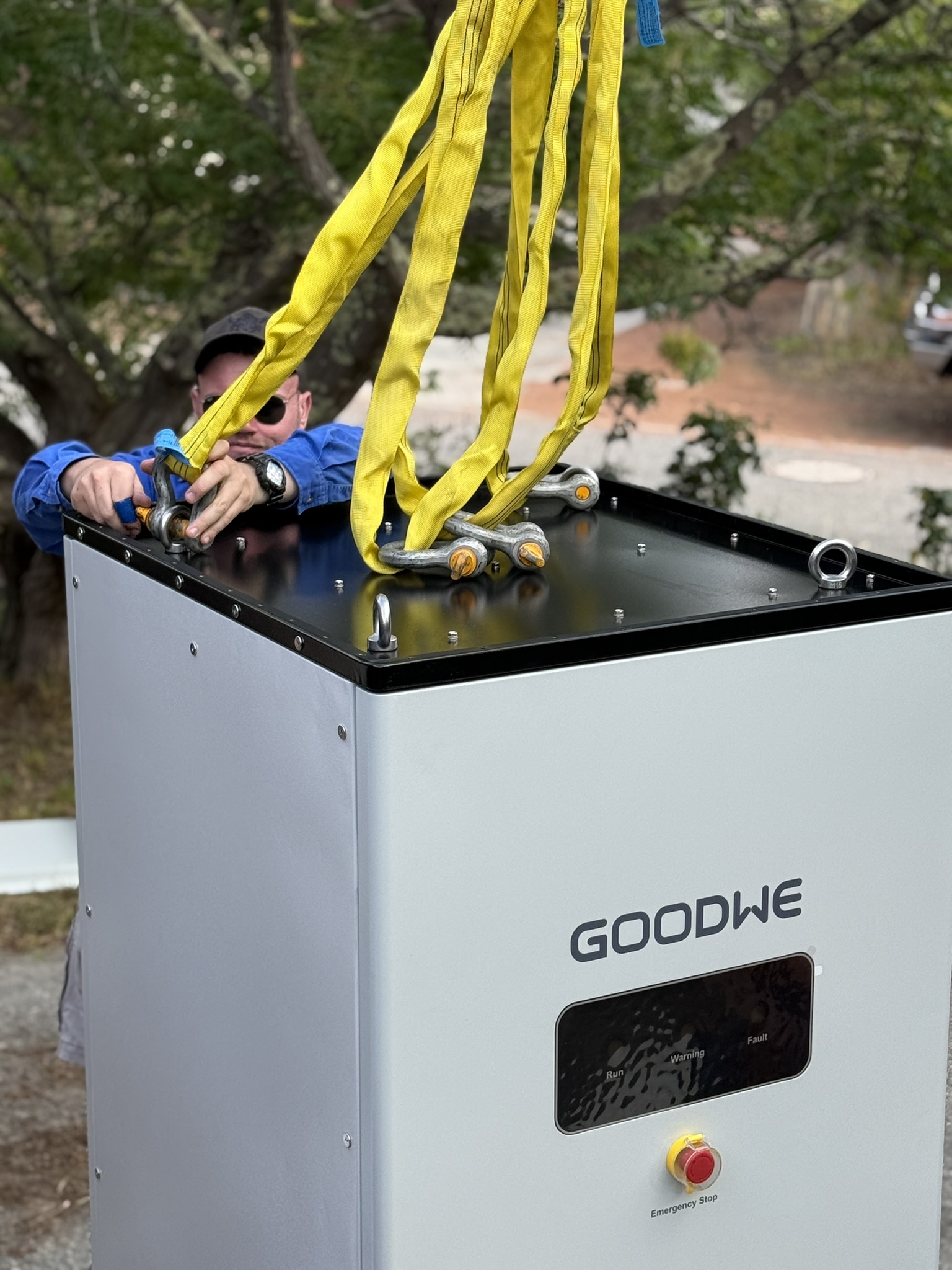
Larger systems may also involve planning and network approvals.
These considerations need to be identified early because they can materially affect the scope and economics of a project.
The cheapest equipment quote can become an expensive installation if infrastructure constraints are discovered too late.
EV FLEETS
Battery Storage for EV Charging and Fleet Electrification
EV charging can significantly change the load profile of a commercial site.
A business moving from petrol or diesel vehicles to an electric fleet may introduce a substantial new electrical demand.
If multiple vehicles begin charging at the same time, the new peak can be significant.
Battery storage can potentially form part of the solution by working alongside:
- solar
- scheduled charging
- load management
- charger controls
- tariff optimisation.
The goal should not necessarily be to make the battery supply every EV charger.
A better strategy may be to coordinate when vehicles charge and use the battery only where it creates additional value.
Understanding the fleet's operating schedule is therefore just as important as understanding the charger rating.
ELECTRIFICATION
Battery Storage and Business Electrification
Commercial properties are gradually adding more electrical loads.
That can include:
- electric vehicles
- electric fleet charging
- heat pumps
- electric hot water
- upgraded HVAC
- process electrification
- new machinery.
These changes can improve the case for onsite renewable energy.
But they can also create new peaks and change when electricity is consumed.
Battery planning should therefore account for the site's expected future state rather than relying exclusively on last year's electricity bill.
This can reduce the likelihood that equipment needs to be substantially redesigned as the business electrifies.
INCENTIVES
Government Support for Commercial Batteries
Current incentives can materially affect the upfront economics of eligible battery projects.
However, the rules are different depending on battery capacity, property type and location.
Actual discounts vary and eligibility requirements apply.
For an existing solar site to receive the higher solar-plus-battery incentive, NSW guidance states that additional solar capacity must generally be installed within 90 days before or after the battery and be equivalent to at least 25% of the new battery's capacity.
Eligible projects may also be able to combine NSW battery support with Australian Government solar and battery incentives when the requirements of both programs are satisfied.
The incentive should still come after the technical and commercial assessment.
A discount can improve a good battery project. It cannot turn the wrong battery into the right one.
BUSINESS CASE
Commercial Battery Storage and the Business Case
Before committing capital, a business should be able to explain where the battery's value is expected to come from.
The answer might include:
A strong business case may use several of these value streams.
But each assumption should be measurable.
ROI
Why Battery ROI Varies Between Businesses
It is tempting to ask for one standard battery payback period.
There isn't one.
The financial result depends on:
- battery cost
- installation cost
- usable capacity
- discharge power
- electricity tariffs
- demand charges
- solar generation
- existing solar exports
- battery cycling
- degradation
- operating hours
- future energy consumption
- government incentives
- finance structure.
Two businesses can install similar equipment and achieve very different outcomes.
A facility with regular solar surplus and high evening consumption may use a battery heavily.
Another site with the same annual consumption may already use almost all of its solar directly and have relatively flat tariffs.
The battery opportunity is therefore site-specific.
STAGED APPROACH
When a Battery May Not Be the First Upgrade
Not every business needs storage immediately.
Sometimes the stronger first step is:
- installing more solar
- changing the electricity tariff
- improving energy monitoring
- shifting operational loads
- replacing inefficient equipment
- improving controls.
A staged approach can be useful.
For example:
Stage 1. Measure
Understand interval consumption and tariff exposure.
Stage 2. Reduce and Generate
Improve efficiency and install appropriately sized solar.
Stage 3. Review
Measure the site's new import and export profile.
Stage 4. Store
Add battery capacity when there is a clearly defined role for it.
This avoids purchasing storage based on assumptions that could change once the site's solar and energy-efficiency improvements are complete.
ENGINEERING-LED
Engineering-Led C&I Battery Solutions
Decarby's approach begins with the energy problem rather than the equipment catalogue.
For the right project, we consider:
- what the site consumes
- when consumption occurs
- what the tariff charges
- where peaks occur
- how much solar is generated
- how much solar is exported
- what loads are critical
- what changes are planned.
Only then do battery capacity and architecture become useful questions.
This reflects Decarby's broader commercial approach: commercial energy projects should be assessed as business cases first and equipment packages second.
WHY DECARBY
Why Work With Decarby?
Commercial Energy Analysis
We look beyond annual electricity usage. Interval data, demand charges, solar production, operating hours and future loads can all affect the battery opportunity.
Engineering-Led Design
Equipment is selected around the site and the job the battery needs to perform.
Solar and Storage Planned Together
Existing or proposed solar can be assessed alongside storage rather than treating each technology independently.
C&I Incentive Guidance
Where relevant, we consider current federal and NSW battery support when assessing the project.
Future-Ready Energy Planning
Battery infrastructure can be considered alongside EV charging, business growth and wider electrification.
Clear Commercial Reasoning
You should understand why a system has been recommended, what it is expected to do and which assumptions drive its financial case.
OUR PROCESS
Our C&I Battery Project Process
01. Define the Objective
We begin by understanding what you want the battery to achieve. Is the priority: electricity cost reduction? solar self-consumption? demand management? backup? EV charging? future capacity? a combination? Clear objectives prevent the design from becoming unnecessarily complicated.
02. Review Energy Data
We review available electricity bills, interval data, tariff information and solar-generation data. This helps establish: load patterns, peak periods, solar exports, after-hours demand, potential battery cycling.
03. Assess the Site
We investigate the electrical and physical conditions relevant to installation. That can include: switchboards, inverter configuration, solar equipment, battery location, available space, cable routes, network connection, safety requirements.
04. Model the Battery Strategy
We consider appropriate: usable capacity, power output, operating strategy, charge windows, discharge windows, reserve capacity, solar interaction. The system is sized around expected use rather than simply selecting the largest capacity available.
05. Review Incentive Eligibility
Where applicable, current federal and state battery incentives are reviewed. For NSW businesses, that can include BESS4 or BESS5 depending on system size and eligibility.
06. Develop the Business Case
The proposal should identify where value is expected to come from and the assumptions behind those calculations. This provides a clearer basis for capital approval.
07. Installation and Commissioning
The system is installed, integrated, tested and configured around the intended operating strategy.
08. Monitor and Optimise
Battery performance should be visible after commissioning. Monitoring can help verify: charging behaviour, discharge behaviour, solar utilisation, peak-demand response, energy imports, system performance. Real operating data can then inform future optimisation or expansion.
FREQUENTLY ASKED QUESTIONS
Commercial Battery FAQs
What is commercial battery energy storage?
Commercial energy storage uses batteries to store electricity for later use at a business or other non-residential property. The electricity may come from onsite solar or, depending on the tariff and operating strategy, from the grid during selected periods. Stored energy can then be used to reduce grid imports, increase solar self-consumption, support tariff management or provide backup for selected loads. The appropriate strategy depends on how the site uses electricity.
How is a business battery different from a residential battery?
The underlying storage technology may be similar, but commercial projects typically involve more complex electricity usage and electrical infrastructure. Commercial sites may have: three-phase loads, demand charges, larger solar arrays, higher charge and discharge requirements, multiple switchboards, more complicated tariffs, network constraints, critical operational loads. Larger systems may also require additional engineering, planning, network and fire-safety considerations.
How large should a business battery be?
There is no standard size. Battery capacity should be calculated from the job it needs to perform. For solar shifting, we need to know how much surplus solar is regularly available and how much electricity is used later. For demand management, the required discharge power and duration of the peak become particularly important. For backup, we need to identify the critical loads and how long they need to operate. Those requirements can lead to very different battery sizes.
Does my business need solar before installing a battery?
Not every commercial battery strategy is based entirely on solar, but solar and storage often work particularly well together. The Australian Government's Cheaper Home Batteries Program requires eligible batteries receiving the federal discount to be connected to new or existing solar PV. The new NSW business incentive also provides a larger indicative discount where qualifying battery storage is installed with new or additional solar. From a system-design perspective, Decarby assesses the available generation and load profile before determining how the battery should operate.
Can a battery reduce my business electricity bill?
Potentially. Battery savings can come from several areas, including: storing solar for later use, avoiding selected higher-cost tariff periods, managing some demand peaks, reducing grid imports. Whether those opportunities exist depends on the site's electricity profile and tariff. This is why interval data is useful when assessing a project.
Can batteries reduce commercial demand charges?
They can in the right circumstances. The battery needs to detect or anticipate the relevant peak and have sufficient available power and stored energy to reduce grid demand during that period. If the peak occurs when the battery is empty, lasts longer than expected or exceeds the available battery power, the result may be different. Demand-charge management therefore requires appropriate sizing and control logic.
Can a commercial battery provide backup power?
Yes, if the system is designed with backup functionality. Backup should not be assumed simply because a battery is installed. The design needs to consider: which loads will be supported, inverter capacity, battery capacity, changeover arrangements, electrical architecture, expected outage duration. Supporting selected critical loads can be substantially more practical than attempting to back up an entire high-demand commercial facility.
What is the difference between kW and kWh for batteries?
Kilowatt-hours, or kWh, describe how much energy the battery can store. Kilowatts, or kW, describe how quickly the system can deliver or absorb that energy. Both matter. A battery may have enough stored energy for a task but insufficient power to meet a large demand peak. Conversely, a high-power battery may be able to respond quickly but have insufficient energy to sustain that response for several hours.
Can I add storage to an existing commercial solar system?
Often, yes. Compatibility still needs to be assessed. Factors can include: existing inverter architecture, solar capacity, switchboard configuration, network approvals, available space, current exports, equipment compatibility. For some sites, expanding the existing solar array at the same time may improve the overall project.
Are commercial batteries eligible for the federal battery discount?
Eligible batteries installed at non-residential premises can qualify for the Australian Government's Cheaper Home Batteries Program. The program supports eligible systems with nominal capacity between 5 kWh and 100 kWh. STCs apply to the first 50 kWh of usable capacity. Other equipment, solar, accreditation and installation conditions also apply. Larger C&I systems above the federal program's capacity limit need to rely on other applicable incentive programs and the underlying commercial case.
What NSW battery incentives are available to businesses?
From 1 September 2026, NSW introduces two particularly relevant activities under the Peak Demand Reduction Scheme. BESS4 covers qualifying small and medium business battery systems from 20–200 kWh. BESS5 covers qualifying commercial and industrial systems from 200 kWh to 30 MWh. Eligibility, equipment, planning and installation requirements apply. The NSW Government currently indicates that eligible business projects can receive approximately 20–30% off a battery-only installation or approximately 30–40% where qualifying new or additional solar is installed with the battery.
Can NSW and federal battery incentives be combined?
For eligible projects, yes. The NSW Government confirms that its new business battery discount can be combined with the Australian Government's battery discount where the requirements of both schemes are satisfied. Federal solar support may also apply where qualifying solar is installed. However, the exact incentive treatment should be checked for the individual project rather than calculated by simply adding headline percentages together.
What is BESS4?
BESS4 is a NSW Peak Demand Reduction Scheme activity commencing on 1 September 2026. It applies to eligible small and medium businesses installing batteries with usable capacity from 20 kWh to 200 kWh. The activity has requirements around the battery, installation, planning approvals and other scheme conditions.
What is BESS5?
BESS5 is designed for larger commercial and industrial businesses. It also begins on 1 September 2026 and covers eligible battery systems from 200 kWh to 30,000 kWh. These larger projects require more detailed technical consideration, including system integration, approvals and safety requirements.
How long does a business battery take to pay back?
There is no standard payback period. Battery returns depend on: capital cost, incentives, solar exports, electricity tariffs, demand charges, battery cycling, energy consumption, operating strategy, degradation, financing. A useful assessment models the actual site instead of applying a generic payback number.
Is the biggest battery the best option?
No. Unused battery capacity still costs money. The objective is to install enough capacity and power to perform the required job without paying unnecessarily for capacity that rarely creates value. The current federal battery incentive also tapers across larger capacity bands, reinforcing the need to size storage around real requirements.
Can battery storage help with EV fleet charging?
Potentially. EV charging can introduce substantial new electrical loads, particularly when several vehicles charge simultaneously. A battery can be integrated with solar, scheduled charging and load management to help control those loads. The strongest solution depends on when vehicles return to site, how quickly they need to recharge and how much charging flexibility exists.
What information does Decarby need to assess a battery project?
Useful information can include: electricity bills, interval data, tariff details, existing solar information, solar production data, operating hours, details of major loads, future EV or electrification plans, backup requirements. For larger projects, site electrical information may also be needed. The more accurately the current load profile is understood, the more meaningful the battery model becomes.
Not Sure What System You Need?
You don't need to have the answer before you call us.
Tell us about your home, your electricity use and what you're hoping to achieve. We'll help you work through what makes sense whether that's solar now, solar and battery together, or a system designed so you can add more later.
Practical advice. No sales pressure.