
SITE-LED DESIGN
Commercial EV Charger Solutions Designed Around Your Site
A commercial ev charger is only one part of the charging system.
The surrounding infrastructure can be equally important.
Before recommending equipment, Decarby can consider:
- number of current EVs
- expected future EV adoption
- fleet size
- vehicle dwell times
- required daily driving range
- available electrical supply
- historical peak electricity demand
- switchboard capacity
- three-phase availability
- solar generation
- battery storage
- operating hours
- parking layout
- cable routes
- access control
- user billing
- charger monitoring
- network requirements.

This matters because two businesses installing the same number of chargers can have completely different electrical requirements.
A workplace where employees remain parked for eight hours may be able to charge vehicles slowly and efficiently.
A commercial fleet that returns late in the afternoon and must be fully charged before 6 am may need a very different system.
The charging solution should reflect that operating reality.
VEHICLE-LED PLANNING
Commercial EV Charging Starts With the Vehicles
The first question should not be:
It should be:
A business with ten electric vehicles does not necessarily need ten high-powered chargers.
Consider a vehicle that returns to the depot with enough charge remaining for most of the following day's work.
It may only need a relatively small amount of energy overnight.
Another fleet vehicle covering hundreds of kilometres each day may need substantially more.
The charging strategy can therefore consider:
- kilometres travelled each day
- vehicle battery capacity
- arrival time
- departure time
- state of charge on arrival
- overnight parking duration
- vehicle utilisation
- charging priority.
This information helps determine whether the site needs:
- standard AC charging
- higher-powered AC charging
- DC fast charging
- or a combination.
Good commercial ev charging is about matching charging speed to operational requirements rather than defaulting to the fastest charger available.
CHARGER TYPES
Choosing the Right Commercial EV Charger
Commercial charging generally falls into two broad categories.
AC Charging
AC chargers are often suitable for:
- workplaces
- office buildings
- apartment complexes
- employee parking
- fleet vehicles parked for several hours
- destination charging.
Common commercial AC chargers may operate at approximately:
- 7 kW
- 11 kW
- 22 kW
depending on the charger, vehicle and electrical supply.
The Australian Government notes that Level 2 charging can provide roughly 30–130 kilometres of range per hour depending on the equipment and vehicle.
Where vehicles remain onsite for several hours, AC charging can often provide enough energy without creating the electrical demands associated with high-powered DC charging.
DC Fast Charging
DC charging may suit environments where charging time is limited.
Examples can include:
- high-utilisation vehicle fleets
- logistics operations
- public charging sites
- dealerships
- highway or destination charging
- vehicles with short turnaround times.
DC charging systems can range from relatively modest power levels to hundreds of kilowatts.
The Australian Government describes Level 3 chargers as typically ranging from around 25 kW to 350 kW, with charging performance depending on the vehicle and charger.
Higher charging power can reduce charging time.
But it can also increase:
- equipment cost
- electrical infrastructure requirements
- network demand
- switchboard requirements
- potential demand charges.
The fastest charger is therefore not automatically the best commercial solution.
STATION PLANNING
Commercial EV Charging Station Planning
A commercial ev charging station needs to work as part of the property rather than as an isolated piece of equipment.
Important site considerations can include:
Electrical Capacity
How much unused capacity is available before an electrical upgrade becomes necessary?
Parking Configuration
Where will vehicles park, and how far are those bays from switchboards or distribution boards?
Vehicle Movement
Will charging cables interfere with loading areas, pedestrian paths or normal operations?
User Access
Are chargers intended for:
- employees
- customers
- tenants
- fleet drivers
- the general public?
Billing
Will electricity be:
- provided free
- charged back to individual users
- billed by session
- billed by energy consumed
- incorporated into tenant costs?
Future Expansion
Will five chargers eventually become twenty?
Planning those questions during the first installation can reduce unnecessary future electrical and civil work.
ELECTRICAL CAPACITY
Commercial EV Charger Installation and Electrical Capacity
Electrical capacity is often the most important constraint on a large charging project.
If ten 22 kW chargers theoretically operate at maximum output at the same time, they could create up to 220 kW of additional demand.
That does not mean the business necessarily needs another 220 kW of network capacity.
A well-designed commercial ev charger installation can use intelligent load management to control how much electricity the charging system draws at any given time.
The charging system can respond to:
- building demand
- charger utilisation
- vehicle priority
- available site capacity
- solar generation
- battery state of charge.
This can allow several vehicles to share available electrical capacity.
The Australian Government specifically recommends assessing historical peak loads and energy-use patterns before designing multi-charger infrastructure and notes that load management can help limit the impact of EV charging on building peak demand.
LOAD MANAGEMENT
Smart Load Management for Commercial EV Charging
Load management can make a significant difference to the economics of a commercial charging project.
Imagine a building with 150 kW of spare electrical capacity during quiet periods but only 40 kW available during the busiest part of the day.
Without smart controls, the property might require a significant electrical upgrade before installing several chargers.
With dynamic load management, charging power can potentially respond to the building's available capacity.
When building demand rises: EV charging can temporarily reduce.
When building demand falls: charging capacity can increase.
The vehicles can still receive the energy they need during their overall parking period without all chargers demanding maximum power at the same time.
This can be particularly useful for:
- workplaces
- apartment buildings
- fleet depots
- shopping centres
- mixed-use properties.
SOLAR AND EV CHARGING
Solar and Commercial EV Charging
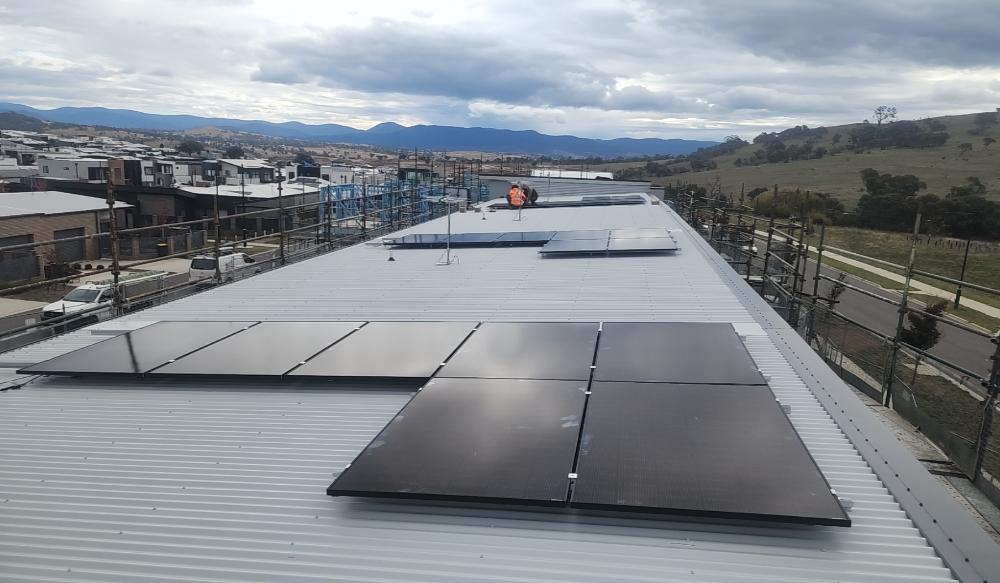
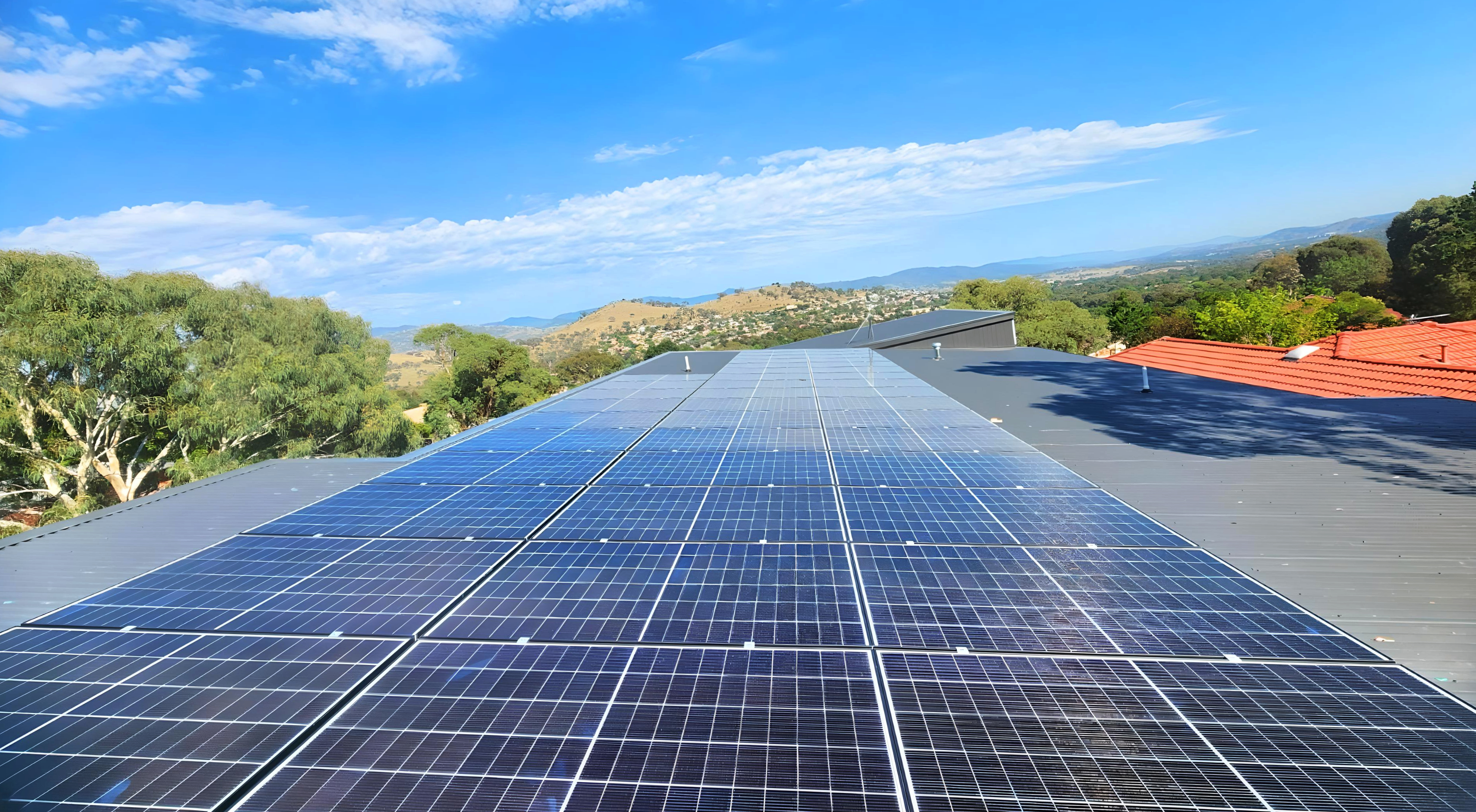
Solar can be particularly valuable where vehicles are available to charge during daylight hours.
Instead of exporting excess rooftop solar, some of that electricity can potentially be directed into parked vehicles.
This can create a natural energy pathway:
Solar panels → building loads → EV charging → grid
depending on how the system is configured.
Decarby's existing EV charging service already highlights the advantage of smart charging alongside solar and battery systems.
For businesses, this can be expanded further.
Charging schedules can potentially prioritise periods when:
- solar production is high
- building demand is lower
- electricity tariffs are cheaper.
This is where EV charging becomes part of energy management rather than simply transport infrastructure.
BATTERY STORAGE
Commercial EV Charging With Battery Storage
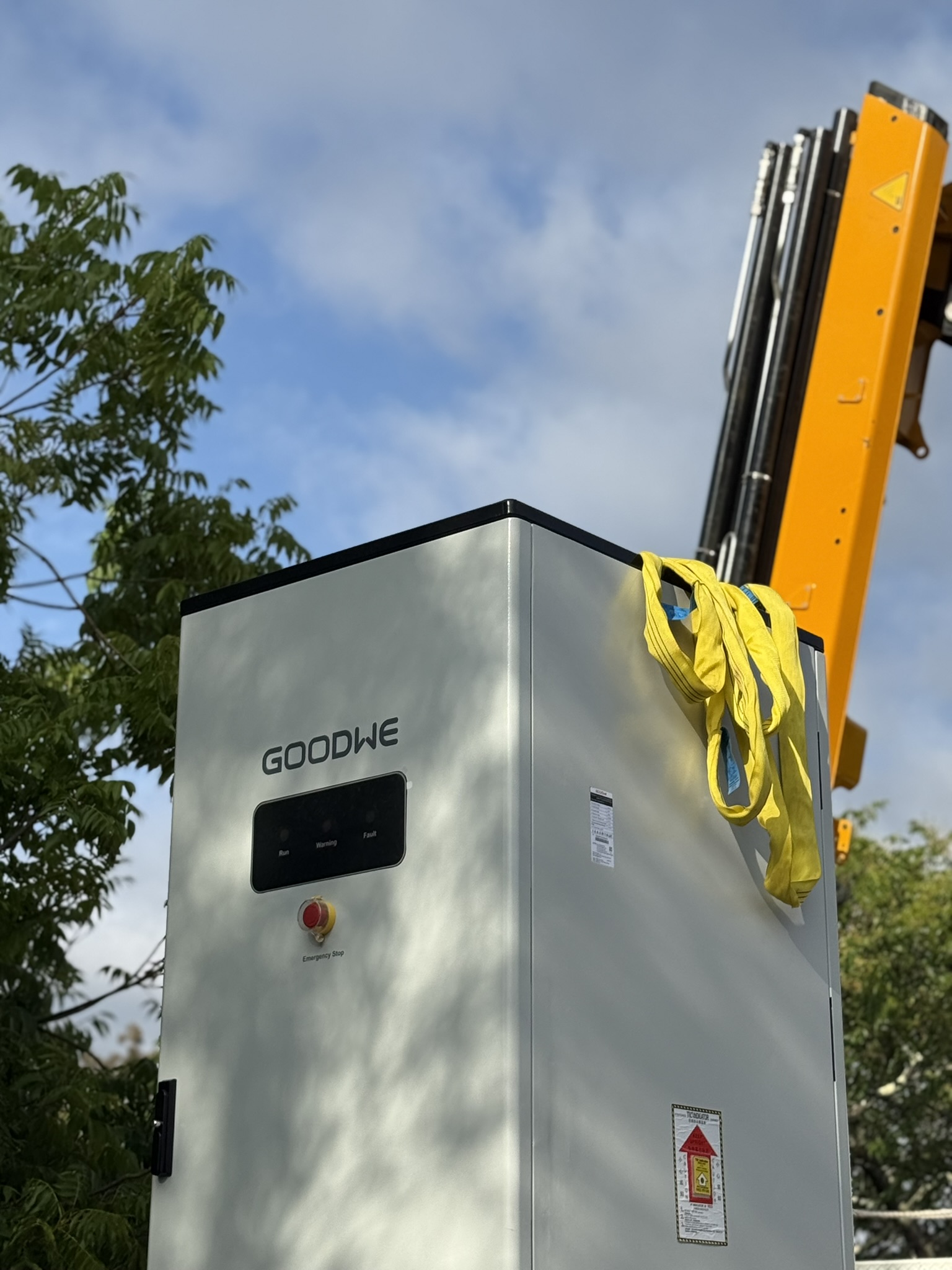
Battery storage can add another layer of flexibility.
A commercial battery may potentially:
- store excess daytime solar
- support EV charging later
- reduce selected grid peaks
- limit charging demand during higher-cost periods
- support wider site load management.
But batteries should not automatically be installed simply because EV charging is being added.
The business case needs to be assessed.
For some sites, solar and smart charge scheduling may already provide an effective solution.
For others, a battery may help avoid or defer part of an electrical upgrade or improve the use of onsite solar.
The answer depends on the load profile.
WORKPLACE CHARGING
Commercial EV Charging for Workplace Parking
Workplaces can be particularly well suited to AC charging.
Employees often park for six to ten hours at a time.
That gives the charging system flexibility.
Rather than charging every vehicle at maximum power immediately, the system can distribute available electricity throughout the day.
This makes workplace charging suitable for strategies such as:
- solar-priority charging
- off-peak charging
- load-managed charging
- user billing
- employee charging allowances.
A business might initially install only a few chargers while preparing electrical infrastructure for future bays.
This can create a more manageable pathway as employee EV ownership increases.
FLEET CHARGING
Commercial EV Charging for Fleets
Fleet charging is more operationally demanding.
The charging strategy needs to work backwards from: When does each vehicle need to leave again?
A useful fleet assessment can include:
- vehicle type
- route distance
- daily kilometres
- vehicle efficiency
- battery capacity
- arrival time
- departure time
- charging window
- operational priority.
A vehicle that returns at 5 pm and leaves at 6 am has a thirteen-hour charging window.
Another vehicle returning at midnight may only have six hours.
Those differences can influence charger capacity and priority rules.
For larger fleets, charging software can also help allocate available power according to departure schedules.
CUSTOMER CHARGING
Commercial Electric Vehicle Charging Stations for Customers
Commercial electric vehicle charging stations can also form part of the customer experience.
Potential locations include:
- shopping centres
- hotels
- restaurants
- supermarkets
- tourism businesses
- sporting facilities
- medical centres
- dealerships
- public car parks.
The charging strategy can depend heavily on expected dwell time.
For example, a hotel guest may have many hours available, a café customer may stay for one hour, and a highway traveller may expect rapid charging.
Those users should not automatically receive the same charging solution.
Businesses should consider whether charging is intended primarily as an amenity, a customer attraction, a paid service, a sustainability initiative or public infrastructure.
That purpose influences charger type and pricing strategy.
PUBLIC CHARGING
Public Charging and User Payments
Public-facing chargers can require additional functionality beyond electrical charging.
Depending on the project, this may include:
- user authentication
- mobile applications
- RFID access
- credit card payment
- session billing
- energy-based billing
- charger-status monitoring
- remote fault reporting.
Australian Government guidance notes that public charging operators may use apps, subscriptions, dedicated cards or standard payment cards depending on the operator.
Government-supported public charging infrastructure is also subject to national minimum operating guidance covering matters such as accessibility, payment and interoperability.
These requirements need to be considered during planning rather than after equipment has already been selected.
FUTURE EXPANSION
Commercial EV Charging Station Installation and Future Expansion
A commercial ev charging station installation should consider how EV usage may change over the life of the property.
It may be economical to install 4 chargers today while preparing infrastructure for 12 or 20 chargers later.
Future readiness may involve:
- EV distribution boards
- cable pathways
- conduit
- switchboard capacity
- communications infrastructure
- load-management controllers
- reserved electrical capacity.
The Australian Government specifically recommends making buildings EV-ready before charger numbers grow, because retrofitting electrical infrastructure later can become more difficult and expensive.
The objective is not necessarily to buy every charger upfront.
It is to avoid rebuilding the electrical system every time another charging bay is added.
APARTMENTS AND MIXED-USE
Commercial EV Charging for Apartments and Mixed-Use Buildings
Apartment and strata environments create their own challenges.
A project may need to address:
- owners corporation approval
- common-property electricity
- individual billing
- parking ownership
- cabling through shared areas
- existing electrical capacity
- charger management
- future resident demand.
The Australian Government recommends conducting an electrical readiness assessment that reviews historical peak loads and determines whether a building is EV ready, EV capable, or requires electrical upgrades.
For buildings expecting multiple chargers, a dedicated EV distribution board and load-management system can help create infrastructure that is easier to expand.
Decarby can assess EV charging alongside the property's solar, battery and wider electrical infrastructure.
PROJECT COST
What Does Commercial EV Charging Cost?
The electric vehicle charging station cost varies considerably because the charger itself is only one component.
Costs can be affected by:
- charger type
- charger power
- number of charging bays
- distance from the switchboard
- electrical capacity
- new cabling
- distribution boards
- switchboard upgrades
- load management
- network upgrades
- trenching or civil works
- bollards and protection
- communications
- billing software
- signage.
NSW Government guidance provides useful indicative benchmarks for commercial buildings.
A Level 2 AC charger may cost roughly $2,000–$5,000 per installed unit in relatively straightforward situations, excluding major supply upgrades.
A 25 kW DC charger may be around $20,000–$30,000, while a 50 kW DC installation can reach approximately $50,000–$80,000, depending on infrastructure and installation conditions.
These are indicative figures rather than Decarby quotes.
The actual cost depends on the site.
For larger charging projects, the cost of electrical infrastructure can be more significant than the charger hardware itself.
GOVERNMENT SUPPORT
Government Support for Commercial EV Chargers
EV charging incentives are more targeted than solar incentives, so businesses should not assume there is a universal EV charger rebate.
However, current programs can apply to certain organisations and projects.
ACT Business EV Charger Rebate
Eligible ACT businesses can currently receive support for workplace charging infrastructure. The Australian Government's Energy website lists the ACT Business Electric Vehicle Charger Rebates program as providing eligible businesses with up to 50% of the cost of purchasing and installing EV charging infrastructure, capped at $3,000 excluding GST. Eligibility and current funding availability should be checked before a project relies on the incentive.
Federal DRIVEN Program
The Australian Government's DRIVEN Program is also supporting charging infrastructure in specific parts of the automotive sector. The current Charger Grant Stream makes $20 million available for new public fast chargers at eligible:
- automotive dealerships
- service centres
- EV repair facilities.
Eligible automotive businesses can also register interest in hosting public charging infrastructure, with the current registration period closing on 28 August 2026.
These programs are targeted rather than universal commercial EV charger subsidies.
Decarby checks relevant current programs when assessing a project rather than assuming a headline incentive applies to every business.
ENERGY STRATEGY
Why EV Charging Should Be Planned With Solar and Batteries
EV charging can become one of the largest new electrical loads on a commercial site.
That makes it increasingly important to plan:
transport electrification
and
building energy
together.
A business considering a fleet transition might evaluate:
Commercial solar
↓
EV charging
↓
Battery storage
↓
Dynamic load management
as one connected energy strategy.
Solar can provide lower-cost daytime generation.
Charging controls can move vehicle loads into appropriate periods.
Battery storage can provide additional flexibility where the business case supports it.
The resulting energy system can be more efficient than treating each technology as a completely separate project.
ENGINEERING-LED
Engineering-Led Commercial EV Charger Installation
Decarby's approach is built around understanding the site before selecting equipment.
A commercial ev charger installation can affect:
- electrical demand
- switchboards
- network capacity
- tariffs
- solar utilisation
- battery strategy
- parking operations
- future business loads.
That is why engineering input matters.
Decarby brings Chartered Building Services Engineering experience across commercial and government environments, alongside practical solar, battery and EV charging capability.
The objective is not to maximise charger quantity or charging speed.
It is to build charging infrastructure that works reliably with the property and the way vehicles are actually used.
WHY DECARBY
Why Work With Decarby?
Engineering-Led Planning
We begin with electrical capacity, charging requirements and site operation.
Solar and EV Integration
Charging can be planned around existing or proposed rooftop solar.
Battery Integration
Where appropriate, storage can be assessed alongside EV loads.
Load Management
Multiple chargers can be coordinated to make better use of available site capacity.
Commercial Energy Experience
Charging decisions can be considered alongside tariffs, demand charges and future electrification.
Future-Ready Infrastructure
The first stage can be designed so future chargers are easier to add.
A commercial ev charger should fit the property today without becoming a barrier to tomorrow's expansion.
OUR PROCESS
Our Commercial EV Charging Process
01. Understand the Charging Requirement
We identify:
- number of vehicles
- vehicle types
- driving patterns
- parking duration
- charging expectations
- future EV adoption.
02. Review Electrical Demand
Where available, we review:
- interval consumption
- maximum demand
- electrical capacity
- tariff structure
- existing solar production.
This helps identify how much charging load can be accommodated.
03. Assess the Site
The technical assessment can include:
- switchboards
- electrical supply
- charger locations
- cable routes
- parking layout
- network requirements
- communications infrastructure.
04. Develop the Charging Strategy
We determine whether the site is best suited to:
- AC charging
- DC charging
- a mixed solution
- smart load management
- staged deployment.
05. Integrate Solar and Storage
Where relevant, the system can be configured around:
- daytime solar production
- batteries
- lower-cost tariff periods
- building demand.
06. Plan for Future Chargers
We consider likely growth so infrastructure installed today can support future expansion.
07. Install and Commission
Chargers, electrical equipment and control systems are installed and configured for the intended users and operating strategy.
08. Monitor and Manage
Depending on the solution, businesses can monitor:
- charging sessions
- electricity consumption
- charger availability
- user access
- charging costs
- system faults.
This information can help refine charging behaviour over time.
FREQUENTLY ASKED QUESTIONS
Commercial EV Charging FAQs
What is commercial EV charging?
Commercial ev charging refers to EV charging infrastructure installed at workplaces, fleet depots, apartment buildings, retail properties, hotels and other non-residential locations.
It can range from one or two AC chargers to larger networks containing many AC and DC chargers.
Commercial systems may also include load management, user billing, solar integration and remote charger management.
How much does a commercial EV charger cost to install?
There is no single installation price.
A relatively straightforward AC charger installation can cost considerably less than a DC fast charger or a multi-charger fleet system.
The main cost factors include:
- charger power
- quantity
- electrical capacity
- distance to switchboards
- cabling
- electrical upgrades
- load management
- civil works
- billing systems.
NSW Government commercial-building guidance suggests approximately $2,000–$5,000 for relatively straightforward Level 2 installations, while DC fast charging can range from tens of thousands of dollars upward depending on power and infrastructure requirements.
A site assessment is the appropriate way to establish actual project cost.
What type of charger does my business need?
That depends primarily on how long vehicles remain parked and how much energy they need.
A workplace where vehicles remain parked throughout the day may be well suited to AC charging.
A high-utilisation fleet with short turnaround times may require higher-powered AC or DC charging.
The fastest charger is not necessarily the best option.
The correct charging power is the one that meets operational requirements without unnecessary infrastructure cost.
Does every parking space need its own full-power charger?
No.
Many sites can use smart load management to share available electrical capacity across multiple chargers.
For example, chargers can automatically reduce power when building demand increases and increase charging when more capacity becomes available.
This can help support more charging bays without every charger drawing maximum power simultaneously.
Can EV chargers use solar power?
Yes.
Where the property has rooftop solar, charging can potentially be scheduled or controlled to make greater use of daytime solar generation.
This can be particularly effective for workplace vehicles parked during the day.
Solar integration depends on the charging system, available generation and control strategy.
Can batteries support commercial EV charging?
Yes, where there is a clear technical or commercial role.
Battery storage may help:
- use more onsite solar
- shift energy into charging periods
- reduce selected site peaks
- support load management.
However, batteries should be assessed separately because they add capital cost and are not necessary for every charging project.
Can an EV charger increase my business's demand charges?
Potentially.
Adding several chargers can increase maximum grid demand if vehicles charge during existing site peaks.
This risk can sometimes be managed through:
- charging schedules
- dynamic load management
- solar generation
- battery storage
- charger power limits.
Understanding the tariff and existing load profile is important before installing a large charging system.
What is the difference between AC and DC commercial charging?
AC chargers deliver AC electricity to the vehicle, where the vehicle's onboard charger converts it for the battery.
They are typically suited to longer parking periods.
DC chargers convert the electricity before it reaches the vehicle battery and can charge much faster.
DC equipment generally has substantially higher equipment and infrastructure costs.
The right option depends on required turnaround time.
How fast does a commercial EV charger charge?
Charging speed depends on:
- charger output
- vehicle charging capability
- vehicle battery state
- battery temperature
- load-management limits.
A 22 kW charger does not necessarily mean every vehicle will accept 22 kW.
The vehicle itself may limit the charging rate.
Charging infrastructure should therefore be selected with the actual fleet or expected vehicle mix in mind.
Can Decarby install multiple EV chargers at one business?
Yes.
Multi-charger projects should be assessed as a system rather than several independent charger installations.
That can involve:
- load management
- dedicated distribution infrastructure
- communications
- billing
- user access
- monitoring
- staged expansion.
Decarby can assess the electrical requirements alongside the property's wider energy strategy.
Can my business charge employees or customers to use the chargers?
Potentially.
Many commercial charging systems can support user authentication and payment functionality.
Options can include:
- mobile apps
- RFID cards
- credit cards
- session billing
- energy-based billing.
The appropriate setup depends on whether the chargers are private, workplace, tenant or public-facing infrastructure.
Are commercial EV chargers suitable for apartment buildings?
Yes, but apartment projects typically require more planning.
Important issues include:
- strata approval
- common property
- electrical capacity
- individual billing
- parking allocation
- future charger numbers.
The Australian Government recommends evaluating the building's electrical capacity and planning for future EV demand before installing multiple chargers.
Are there rebates for business EV chargers?
Some programs are available, but they are targeted rather than universal.
Eligible ACT businesses can currently receive up to 50% of qualifying EV charging purchase and installation costs, capped at $3,000 excluding GST, under the ACT business charger rebate program.
The federal DRIVEN Program also provides targeted support for public fast charging at qualifying automotive dealerships, service centres and repair businesses.
Availability and eligibility should always be checked before relying on an incentive.
Can commercial EV charging be expanded later?
Yes, and future expansion should ideally be planned during the first stage.
A project can install a smaller number of chargers initially while preparing:
- distribution boards
- conduit
- cabling routes
- communications
- load management.
That can make future expansion significantly easier.
How do I prepare a fleet site for EV charging?
Start by understanding the vehicles.
Useful information includes:
- fleet size
- kilometres travelled
- arrival and departure times
- battery capacities
- parking locations
- charging windows.
The electrical side can then be assessed against that operational requirement.
This is generally more effective than selecting chargers first and trying to make the site's electrical system fit afterwards.
Why is load management important?
Because the theoretical combined power of every charger can be much higher than the amount the vehicles actually need at any one moment.
Load management allows the site to allocate available electricity dynamically.
This can:
- reduce simultaneous peak demand
- avoid unnecessary charging capacity
- make use of solar
- prioritise selected vehicles
- support more charging points.
For larger commercial projects, it can be one of the most important parts of the design.
Why choose Decarby for commercial EV charging?
Decarby approaches EV charging as part of the property's overall energy system.
That means we can consider the interaction between:
- electrical demand
- solar
- batteries
- EV charging
- tariffs
- future electrification.
The aim is not simply to install chargers.
It is to build a charging solution that works with the property, the vehicles and the business over the long term.
Not Sure What System You Need?
You don't need to have the answer before you call us.
Tell us about your home, your electricity use and what you're hoping to achieve. We'll help you work through what makes sense whether that's solar now, solar and battery together, or a system designed so you can add more later.
Practical advice. No sales pressure.