
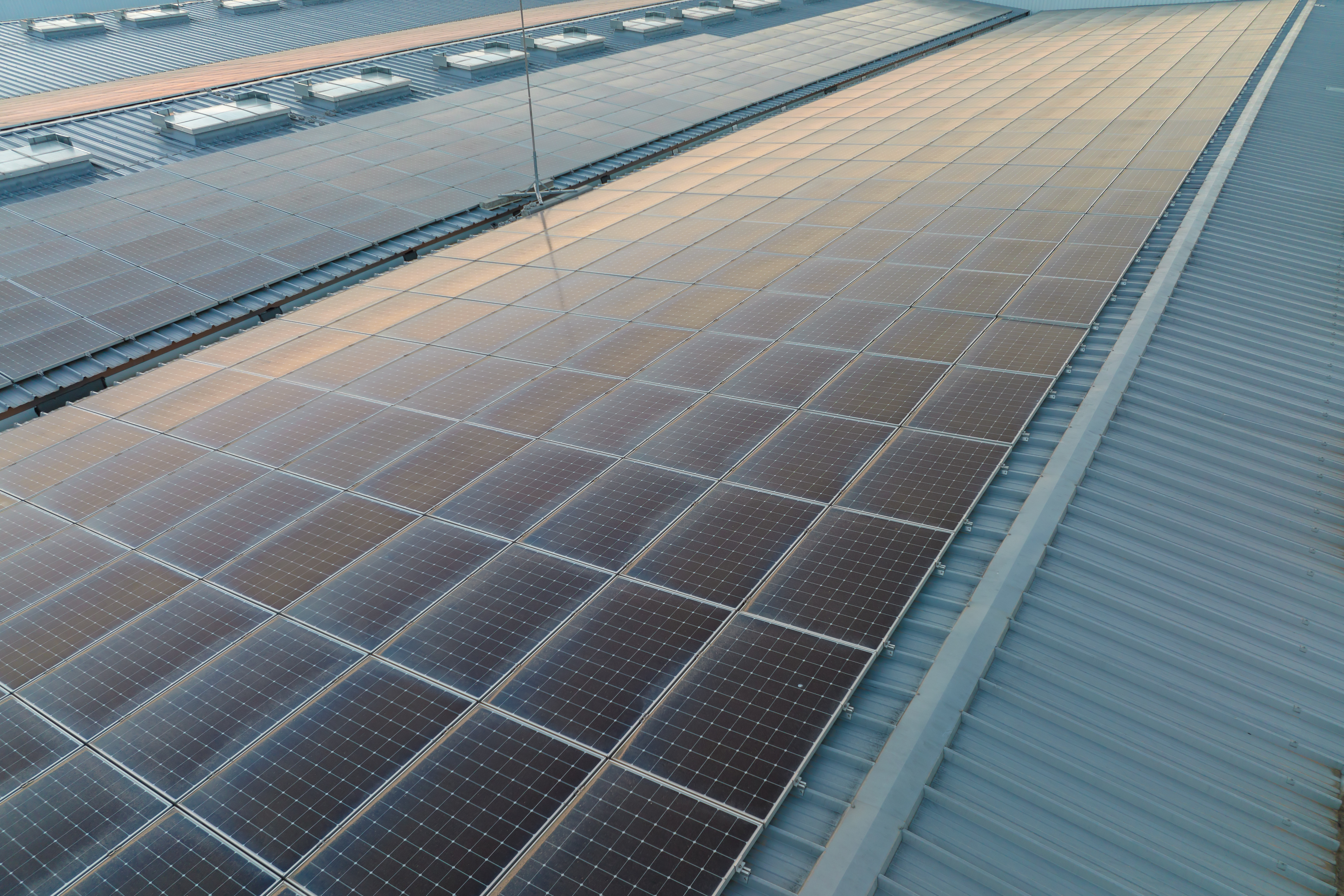
SITE-LED DESIGN
Commercial Solar Panels Installation Designed Around Your Business
No two commercial sites use electricity in exactly the same way.
A warehouse operating mainly during daylight hours can have a very different load profile from a hotel, medical facility, manufacturing business or office building. That is why commercial solar panels installation should begin with site data rather than a standard system package.
For Decarby, a commercial solar installation can involve reviewing:
- interval electricity data
- operating hours
- daytime and overnight loads
- network tariffs
- demand charges
- roof area and structural constraints
- shading and solar access
- switchboards and electrical infrastructure
- network export requirements
- planned equipment or business expansion
- future battery storage
- EV charging
- wider electrification plans.
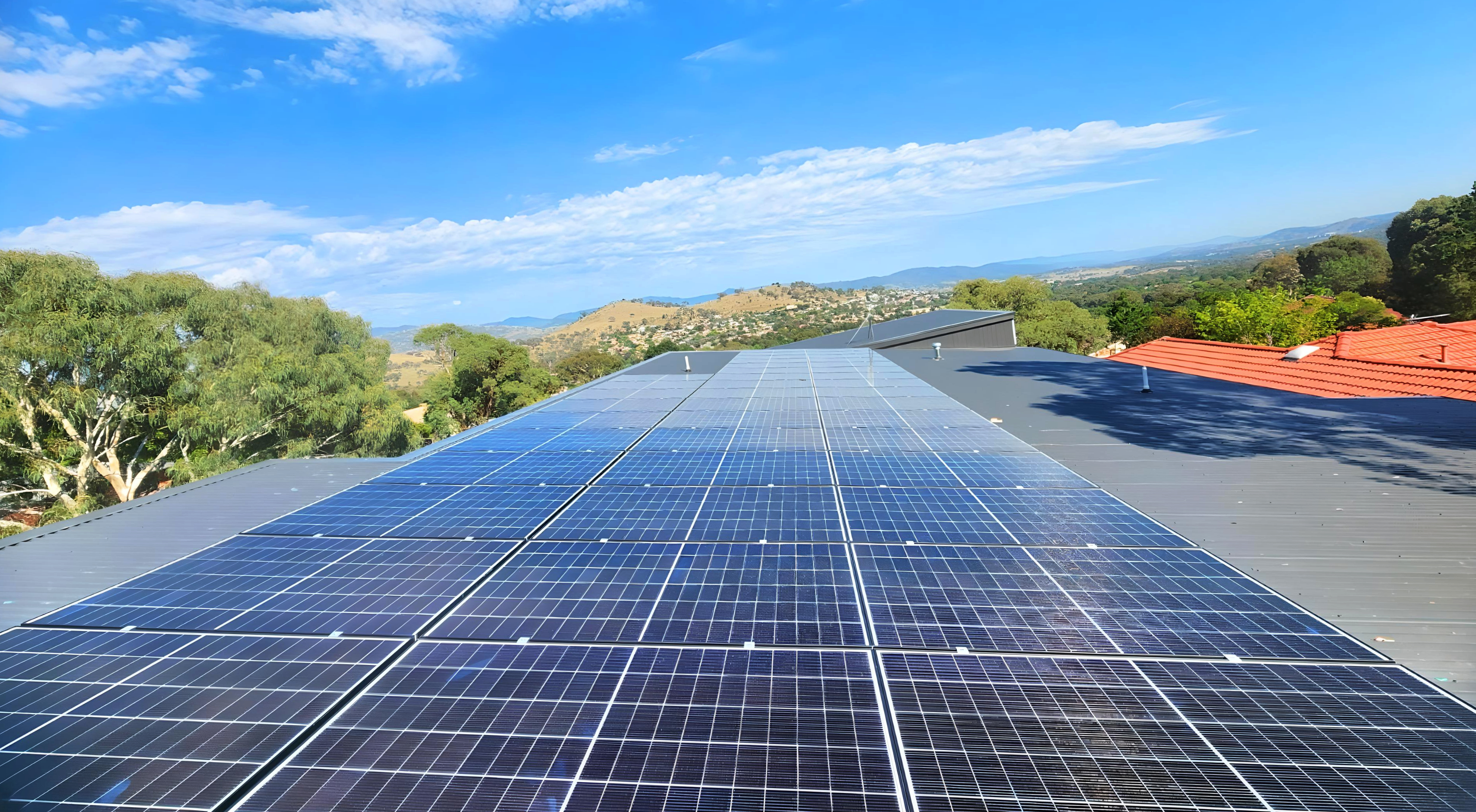
This gives the project a measurable purpose.
Solar may be intended to reduce daytime grid imports, improve energy-cost certainty, support sustainability targets or form part of a wider decarbonisation strategy.
Where battery storage is being considered, we also look at how much solar is likely to be exported, when demand occurs and whether storage can improve self-consumption, tariff management or resilience.
HOW SOLAR CREATES VALUE
Why Commercial Solar Works Differently
Residential solar is often discussed primarily in terms of annual household consumption.
Commercial sites usually need a more detailed view.
Electricity demand can vary significantly between weekdays and weekends, seasons, production cycles and operating shifts. Commercial tariffs may also contain demand components or time-based charges that change the value of solar throughout the day.
A commercial solar panel installation therefore needs to answer a practical question:
Where will this system create measurable value for the business?
That value can come from several areas.
LOAD PROFILE
Commercial Solar Installation Starts With the Load Profile
The strongest commercial projects usually start with electricity data.
Interval data can show:
- when electricity is being consumed
- the size of daytime base loads
- peak-demand periods
- seasonal variation
- periods when solar may be exported
- whether storage may have a practical role.
This matters because system size should not be determined by available roof space alone.
A very large solar array may generate substantial electricity, but if a significant proportion is exported at relatively low value, a smaller or differently configured system may produce a stronger commercial outcome.
The opposite can also be true.
A site with sustained daytime demand, planned fleet charging or wider electrification may benefit from using more of its available roof area.
Decarby uses this information to make commercial solar installation decisions easier to explain internally. The proposed system can be tied to the site's actual operating pattern rather than an arbitrary capacity target.
This reflects Decarby’s existing commercial approach: reviewing interval data, tariffs, operating hours, roof constraints and future changes before finalising design decisions.
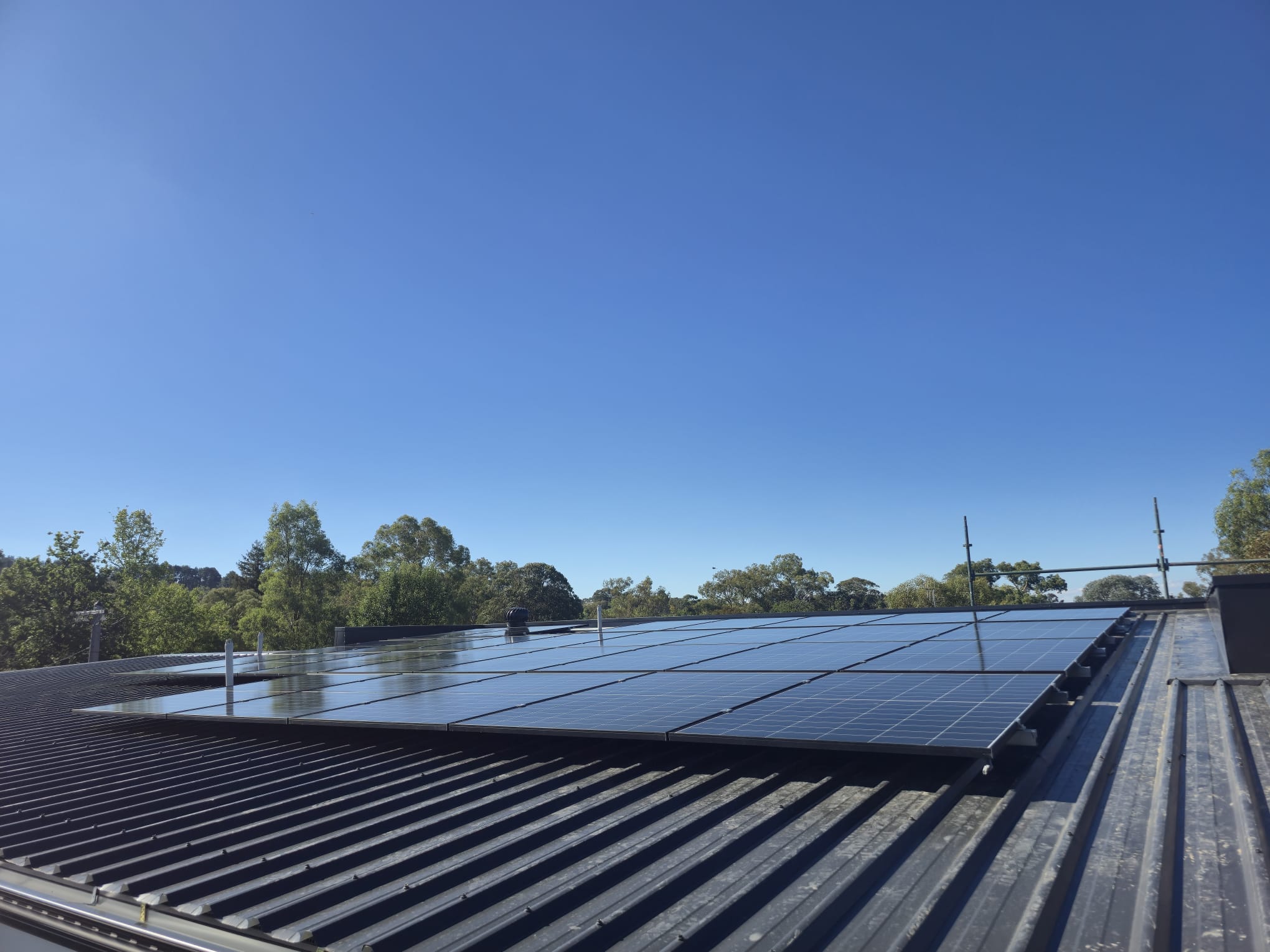
PROPERTY TYPES
Commercial Solar Panels Installation for Different Property Types
Different businesses create different opportunities for solar.
Offices
Office buildings commonly have strong daytime electricity demand from:
- lighting
- computers
- servers
- lifts
- air conditioning
- ventilation
- general building services.
This can align well with solar production.
Retail and Hospitality
Retail stores, cafés, restaurants and hospitality venues can have substantial loads from:
- refrigeration
- air conditioning
- lighting
- kitchen equipment
- hot water
- point-of-sale and operational systems.
For businesses operating seven days a week, solar utilisation can potentially remain strong across weekends as well.
Warehouses and Logistics
Warehouses often offer significant roof area.
However, roof area alone does not determine the right system size.
Electricity use, structural conditions, network capacity, planned EV fleet charging and future operational loads still need to be understood.
Schools and Community Facilities
Daytime operations can align well with solar production.
However, school holidays, seasonal consumption and different building-use patterns need to be reflected in the modelling.
Manufacturing and Industrial Sites
An industrial solar installation requires closer attention to:
- production loads
- machinery
- three-phase electrical infrastructure
- operating shifts
- peak demand
- roof loading
- network capacity
- power quality
- future plant requirements.
Government and Institutional Buildings
Government and institutional projects may require stronger engineering documentation, procurement controls, compliance requirements and long-term asset planning.
A commercial solar system installation should reflect these differences rather than applying the same package to every site.
ENGINEERING-LED
Engineering-Led Commercial Solar Panel Installation
Decarby is not sales-led.
Our commercial work is guided by engineering and consultancy, with Chartered Building Services Engineering experience across residential, commercial and government projects.
That means we look beyond panel count.
A commercial solar panel installation can require consideration of:
- electrical load profile
- phase configuration
- inverter selection
- DC and AC system architecture
- switchboard capacity
- cable routes
- roof condition
- structural limitations
- network connection
- export requirements
- equipment placement
- maintenance access
- monitoring requirements
- future battery compatibility
- expansion opportunities.
The objective is not simply to maximise installed capacity.
It is to deliver a system that works technically, operationally and commercially.
Decarby’s existing brand positioning supports this approach: the company describes itself as providing consultancy, design and installation services rather than simply selling solar equipment.
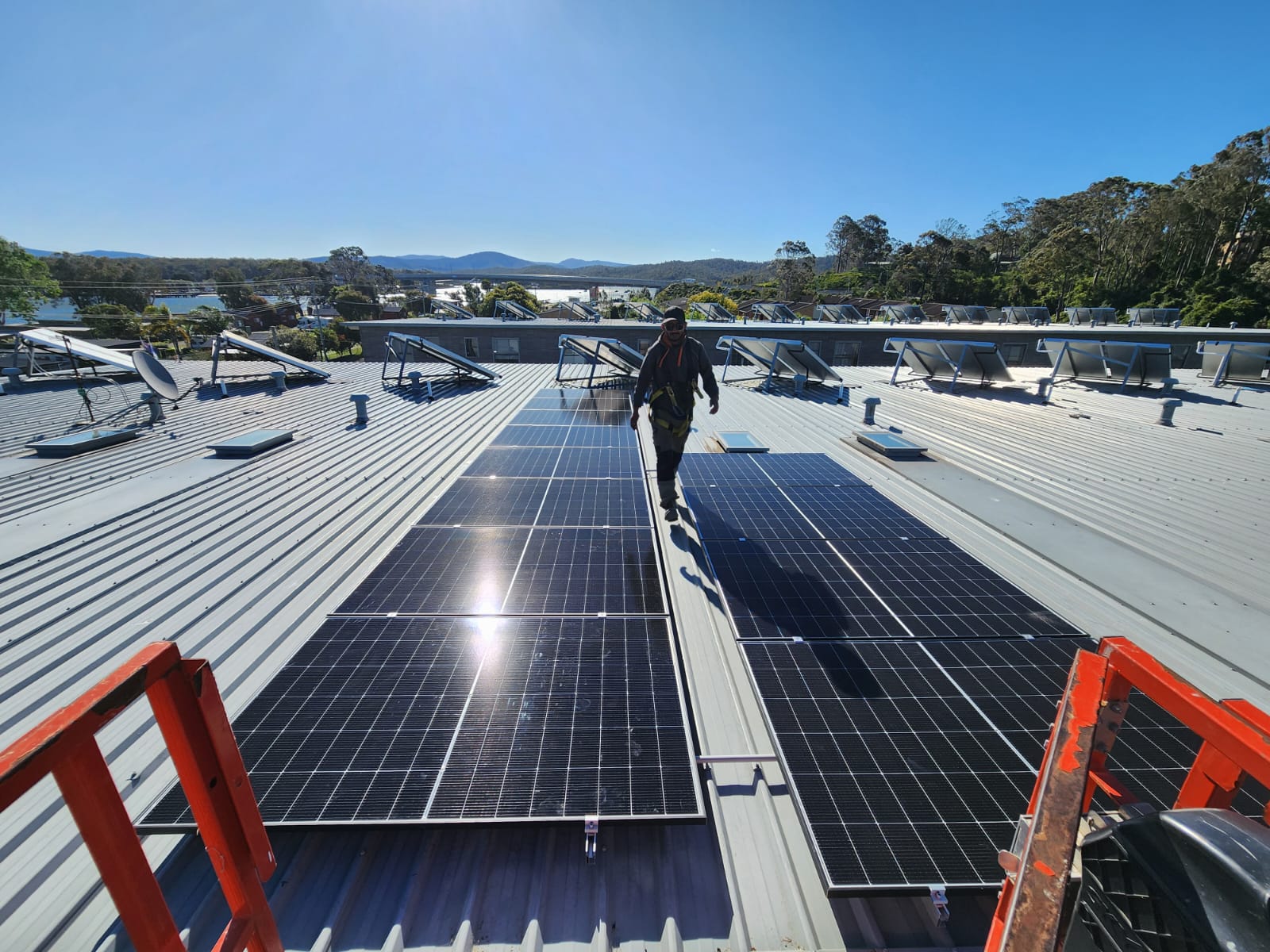
WIDER ENERGY STRATEGY
Solar as Part of a Wider Commercial Energy Strategy
Solar for commercial properties is often the first step rather than the final one.
Businesses are increasingly adding new electrical loads through:
- workplace EV charging
- electric delivery or fleet vehicles
- heat pump hot water
- efficient electric HVAC
- process electrification
- building upgrades
- battery storage.
These changes can materially alter the site's electricity profile.
Planning them together allows solar to be designed with a clearer view of future demand.
For example, a warehouse expecting to introduce twenty workplace or fleet EV chargers over the next three years may have substantially different future daytime electricity requirements from the same warehouse today.
Ignoring that future load can lead to a system that becomes undersized sooner than expected.
Where appropriate, battery storage can also be assessed at the same time.
DEMAND CHARGES
Solar and Demand Charges for Commercial Sites
Commercial solar installations can interact with demand charges, but businesses should be careful with blanket claims that solar will automatically remove them.
A demand charge may be determined by the site's highest measured electrical demand during a specified billing window.
Solar can help when that peak occurs during periods of strong solar production.
But consider a site where peak demand occurs:
- after sunset
- early in the morning
- during a brief machinery start-up
- during poor solar conditions
- outside the tariff's solar-aligned window.
Solar alone may have limited impact on that peak.
That is why tariff structure matters.
Decarby’s existing commercial guidance specifically emphasises that batteries, solar and tariff strategy should be connected to measurable outcomes such as avoided imports, reduced demand exposure or better load management rather than treated as separate products.
For some businesses, the stronger strategy may involve a combination of:
Solar + operational load shifting + battery storage
rather than simply adding more panels.
SOLAR AND STORAGE
Solar and Battery Storage for Businesses
A battery can complement solar, but not every commercial site needs one.
Battery storage may make sense where a business:
- exports substantial excess solar
- consumes significant energy after solar-generation hours
- faces meaningful time-of-use price differences
- wants to manage some peak-demand exposure
- needs backup for selected critical loads
- expects substantial future electrification
- has operational reasons to retain energy onsite.
The commercial case depends on how frequently the battery can be used productively and what financial or operational problem it solves.
For example, a battery that cycles regularly to avoid high-value grid electricity may have a very different business case from a battery that remains largely unused.
Decarby treats storage as part of the site's energy strategy rather than an automatic addition to solar.
INCENTIVES
Government Incentives for Commercial Solar Projects
Solar power commercial installations may qualify for federal or state support depending on system size, technology, location, installation date and current program requirements.
For eligible smaller solar systems, federal Small-scale Technology Certificates can reduce the upfront cost through the Small-scale Renewable Energy Scheme.
Federal battery support may also apply to qualifying business battery systems, while NSW businesses can potentially access additional battery incentives under the Peak Demand Reduction Scheme where eligibility requirements are satisfied.
Incentive programs change.
That is why Decarby checks current support when a project is being assessed instead of relying on an older rebate figure.
The principle remains the same:
The incentive should improve an already viable project. It should not determine the system design.
FUTURE GROWTH
Commercial Solar Panels Installation and Future Growth
A business rarely stays exactly the same for the full operating life of a solar system.
Before finalising commercial solar panels installation, it can be useful to ask what may change during the next five to ten years.
This is where good planning can prevent avoidable rework later.
OUR PROCESS
Our Commercial Solar Project Process
01. Initial Business and Site Discussion
We start by understanding:
- your business
- the property
- operating hours
- electricity costs
- current equipment
- future plans
- what you want solar to achieve.
We are not trying to choose a system size during the first conversation.
We are establishing the problem the project needs to solve.
02. Energy and Tariff Review
Where suitable data is available, we look at:
- interval electricity consumption
- annual usage
- peak demand
- tariff structure
- operating schedules
- seasonal changes.
This helps identify how solar production is likely to align with consumption.
03. Site and Technical Assessment
The physical property also shapes the design.
We consider:
- available roof space
- roof orientation
- shading
- structural and access considerations
- switchboards
- electrical distribution
- potential inverter locations
- cable routes
- network connection requirements.
04. System Design and Business Case
We develop a commercial solar installation around the site's actual requirements.
The proposal should explain where the expected value comes from rather than simply show how many panels fit on the roof.
Where relevant, battery storage or future electrification can also be considered.
05. Proposal and Project Planning
The proposal sets out:
- recommended system
- equipment
- system capacity
- installation scope
- relevant assumptions
- monitoring
- applicable incentives
- expected project considerations.
This gives the business a clearer basis for internal approval and procurement.
06. Installation and Commissioning
The system is installed, tested and commissioned in accordance with applicable electrical, network and accreditation requirements.
Decarby’s team includes practical solar delivery experience across residential and commercial projects in NSW and the ACT.
07. Monitoring and Future Planning
Once the system is operating, monitoring provides visibility into:
- solar generation
- production patterns
- system performance.
That data can also support future decisions around battery storage, EV charging and wider electrification.
WHY DECARBY
Why Choose Decarby for Commercial Solar?
Commercial energy projects need more than a product quote.
Decarby's approach combines consultancy, engineering, system design and practical installation.
Engineering-Led Advice
Commercial projects are evaluated around the building and business rather than a pre-built package.
Commercial and Government Experience
Decarby’s Chartered Building Services Engineering capability includes consultancy experience across commercial and government buildings.
Practical Installation Experience
The team has hands-on experience delivering solar projects across NSW and the ACT.
Clear Commercial Thinking
We focus on where savings are expected to come from and which assumptions matter.
No Sales Pressure
Decarby positions itself as customer-centred rather than sales-driven, with an emphasis on explaining options clearly instead of pushing unnecessary technology.
Future-Ready Design
Solar can be planned alongside storage, EV charging and wider electrification rather than treated as an isolated asset.
Experienced commercial solar panel installers should be able to explain why the proposed system suits your business, not simply how many panels they want to sell you.
FREQUENTLY ASKED QUESTIONS
Commercial Solar FAQs
How do I know if commercial solar is suitable for my business?
Businesses with consistent daytime electricity demand and suitable solar access can often be strong candidates, but there is no single usage threshold that determines suitability.
A useful assessment looks at:
- annual electricity consumption
- interval data
- operating hours
- tariffs
- roof or site conditions
- network constraints
- expected future loads.
The goal is not simply to prove that solar can fit on the roof.
It is to understand how much of the generation the business can use and where the financial benefit is likely to come from.
How large should a commercial solar system be?
There is no standard system size for every business.
Commercial solar panels installation should be planned using the site's electricity profile, available roof or land area, network export constraints, tariffs and expected future demand.
Two businesses using the same amount of electricity annually may need very different systems.
A site consuming most of its electricity between 8 am and 5 pm can have a much stronger alignment with solar than a business where most consumption occurs overnight.
How much can a business save with commercial solar?
Savings vary considerably.
The main factors include:
- installed system cost
- annual solar generation
- onsite self-consumption
- electricity tariffs
- operating hours
- export value
- system degradation
- demand charges
- applicable incentives.
That is why Decarby does not rely on one generic savings percentage for every commercial project.
The relevant question is how the proposed system performs against the site's actual energy profile.
How long does commercial solar take to pay for itself?
There is no universal commercial solar payback period.
Payback can be influenced by:
- capital cost
- electricity consumption
- solar production
- self-consumption
- tariffs
- export rates
- incentives
- finance
- maintenance
- future energy costs.
A useful commercial proposal should show the assumptions behind the financial case rather than present one headline payback number as though it applies to every business.
Can commercial solar reduce demand charges?
Potentially.
It depends on when the demand peak occurs.
If the peak occurs during strong solar-generation hours, solar may reduce grid demand at that time.
If the peak occurs outside daylight hours or during short operational spikes, solar may have less impact.
Interval data and the applicable electricity tariff need to be assessed before demand-charge savings are estimated.
Can commercial solar be combined with batteries?
Yes.
Battery storage can be considered where it has a defined role.
That might include:
- using more excess solar onsite
- shifting electricity consumption
- reducing exposure to higher-price periods
- supporting selected critical loads
- managing parts of a demand tariff
- preparing for future electrification.
Not every business needs battery storage, so it should be assessed separately from solar.
Is commercial solar suitable for warehouses?
Warehouses can be good candidates because many have large roof areas.
However, the amount of roof space is only one factor.
A proper assessment should also consider:
- electricity consumption
- operating hours
- roof condition
- structural limitations
- shading
- network constraints
- switchboard capacity
- future EV or fleet charging.
Large roof area does not automatically mean the largest possible solar system is the best commercial decision.
Do you install solar for industrial sites?
Decarby can assess solar opportunities for both commercial and industrial properties.
Industrial projects generally need more detailed analysis because loads can be influenced by machinery, production cycles, operating shifts and peak-demand requirements.
The system should be designed around how the facility actually operates rather than relying only on annual electricity consumption.
Can solar support future business electrification?
Yes.
Solar can be planned around future electrical loads including:
- workplace EV chargers
- fleet electrification
- heat pumps
- electric HVAC
- production equipment
- other building electrification.
If those loads are likely to be introduced within the next few years, they should be considered during system planning.
This does not necessarily mean oversizing the system today.
It means making an informed decision about future capacity and expansion.
Are commercial solar systems eligible for government incentives?
Potentially.
Eligibility depends on:
- system size
- installation date
- location
- equipment
- installer requirements
- current federal and state programs.
Eligible systems may receive certificate-based solar incentives, while commercial batteries can have separate federal or state support.
Because these programs change, eligibility should be checked when the project is being assessed.
What should I compare when choosing a commercial solar installer?
Price matters, but it should not be the only comparison.
Businesses should also look at:
- how the system was sized
- whether actual electricity data was reviewed
- equipment quality
- monitoring capability
- accreditation
- engineering capability
- commercial experience
- warranty support
- savings assumptions
- future battery compatibility
- after-installation support.
A strong proposal should make the reasoning behind the system easy to understand.
Does my business need interval data before getting a solar proposal?
Not necessarily for an initial discussion, but interval data can materially improve the quality of the analysis.
A normal bill shows how much electricity has been used over a billing period.
Interval data shows when that electricity was used.
That can give a much clearer picture of:
- daytime demand
- peak loads
- solar self-consumption potential
- potential exports
- demand-charge exposure
- battery opportunities.
For larger commercial sites, this information becomes increasingly important.
Can commercial solar support sustainability and decarbonisation targets?
Yes.
Solar can reduce the amount of grid electricity a business purchases and can form part of a wider organisational decarbonisation strategy.
It can also be combined with:
- battery storage
- fleet electrification
- electric building services
- efficiency upgrades
- energy-management strategies.
For businesses that report sustainability or emissions performance, actual solar-generation data can also provide measurable operational information.
Why does Decarby use an engineering-led approach?
Commercial solar interacts with more than the roof.
It can affect:
- electrical infrastructure
- switchboards
- network connection
- building services
- tariffs
- business operations
- future electrical loads.
Engineering-led analysis helps connect those factors before equipment is selected.
That can reduce design risk, identify constraints earlier and make future expansion easier to plan.
Talk to Decarby About Commercial Solar
A commercial solar panel installation should have a clear reason behind every major design decision.
Decarby combines engineering, energy analysis and practical installation experience to help businesses understand where solar can create value and how the system should fit their property and long-term plans.
Whether you are planning your first commercial solar installation, expanding an existing system or considering solar alongside battery storage and electrification, we can help you assess the opportunity before you commit.
Not Sure What System You Need?
You don't need to have the answer before you call us.
Tell us about your home, your electricity use and what you're hoping to achieve. We'll help you work through what makes sense whether that's solar now, solar and battery together, or a system designed so you can add more later.
Practical advice. No sales pressure.