
Solar Panel
NEOSTAR 3S+ Series
AIKO NEOSTAR 3S+60 Solar Panel (515–540W)
The AIKO NEOSTAR 3S+60 is a high-efficiency solar module range offering 515W to 540W of rated front-side output. Built with AIKO's N-type All Back Contact (ABC) cell technology, it removes front-side metal contacts to reduce shading of the active cell surface. Its dual-glass construction, strong conversion efficiency and temperature performance make it an option for residential and commercial rooftop systems where module dimensions, structural loading and electrical compatibility are suitable.

Key information
- Product Code
- AIKO-A-MCE60Db
- Brand
- AIKO
- Wattage
- 515–540W
- Cell Technology
- N-type ABC
- Panel Construction
- Dual glass
- Maximum Efficiency
- 24.4%
- Product Warranty
- 25 years (ANZ residential)
- Performance Warranty
- 30 years (ANZ residential)
Product overview
515–540W Dual-Glass ABC Rooftop Module
This page documents the AIKO NEOSTAR 3S+60 dual-glass family AIKO-A-MCE60Db across the international 515–540W power classes: AIKO-A515-MCE60Db through AIKO-A540-MCE60Db. It is not NEOSTAR 3P+60 (MCE60Dw), NEOSTAR 2S+, or another AIKO 54-cell or 60-cell family.
Electrical and mechanical figures follow AIKO datasheet 202601_V3.1_EN for the 515–540W range. AIKO Australia currently publishes a separate ANZ datasheet for AIKO-A-MCE60Db covering 530–550W. Those ANZ variant values are not used on this page. Confirm the nameplate power class and matching datasheet for modules supplied on Australian projects.
Product features
High-Efficiency 515–540W Solar Generation
Under STC, the documented range covers six front-side power classes from 515W to 540W, with module efficiency from 23.2% to 24.4%. Higher wattage classes can reduce the number of panels needed for a target array capacity, subject to roof layout and inverter design.
Do not treat 540W as the output of every variant. Use the electrical values for the exact power class supplied.
N-Type All Back Contact Technology
The module uses AIKO's N-type ABC (All Back Contact) monocrystalline cells. Moving electrical contacts to the rear of the cell removes conventional front-side busbars from the active surface, which supports higher conversion efficiency and a cleaner visual appearance.
Cell technology is only one contributor to system performance. Orientation, temperature, shading, inverter matching and array layout remain important in real installations.
Up to 24.4% Module Efficiency
At the 540W power class, STC module efficiency is 24.4%. Across the 515–540W family, efficiency rises from 23.2% at 515W to 24.4% at 540W. Higher efficiency can improve roof-area utilisation, but total system output still depends on array size and site conditions.
Dual-Glass Construction
Front and rear 2.0 mm coated semi-tempered glass enclose the cells in a dual-glass structure with a black anodised aluminium frame. Manufacturer documentation also lists micro-crack resistance among the technical features for this platform.
Dual-glass construction supports durability, but installation method, clamp placement and structural design still determine whether the array performs as intended.
Partial Shading Optimisation
AIKO lists partial shading optimisation as a technical feature of the NEOSTAR 3S+60 platform. That describes manufacturer design intent for shaded conditions and does not mean the module is immune to shading losses.
Array layout, string design and local shading still need project-specific assessment.
Temperature Performance
The V3.1 datasheet lists a Pmax temperature coefficient of -0.26%/°C, Voc -0.22%/°C and Isc +0.05%/°C. Operating temperature is -40°C to +70°C.
Module output falls as cell temperature rises above STC conditions, so hot Australian sites should account for temperature when estimating generation.
Low-Light Energy Generation
Manufacturer product material for the NEOSTAR 3S+60 platform emphasises energy-yield characteristics under real operating conditions. Low-light behaviour can support morning, evening and overcast generation, but it does not create a fixed annual yield guarantee for a specific site.
Module Dimensions and Rooftop Suitability
Module dimensions are 1954 × 1134 × 30 mm with a listed weight of 27.1 kg ±3%. That footprint suits many residential and light-commercial roofs, but roof geometry, setbacks, access and structural capacity still need checking.
At nearly 2 m long and about 27 kg, handling and mounting hardware should be planned as part of the installation design.
Mechanical Loading and Durability
The datasheet lists maximum static loading of 5400 Pa on the front and 2400 Pa on the rear. The AIKO installation manual for MCE60Db (1954 × 1134 × 30 mm) documents clamp mounting methods that achieve those test loads within stated clamp ranges.
Design loads require the applicable safety factor and structural engineering. Unapproved mounting methods can damage the module and affect warranty coverage.
Hail and Environmental Testing
The 202601_V3.1_EN datasheet lists a hail test of 25 mm diameter hail at 23 m/s, together with IEC Class A fire rating and Protection Class II. That documents a specific test condition rather than a claim that the module is hail-proof in every storm.
Local hail risk, roof exposure and insurance requirements should still be considered as part of project planning.
Electrical System Design
Maximum system voltage is 1500 V DC with a maximum series fuse rating of 30 A. Across the 515–540W family, STC Imp ranges from 13.59 A to 14.07 A and Isc from 14.66 A to 14.84 A.
Final string length must stay within inverter operating windows, cable ratings and network connection requirements. BNPI values on the datasheet are lab bifacial test results and are not a higher STC nameplate rating.
Long-Term Performance and Degradation
The V3.1 datasheet and AIKO ANZ residential warranty both state first-year degradation of no more than 1% and annual degradation of no more than 0.35% from years 2 through 30, with warranted front-side retention of 88.85% at year 30.
Power warranty measurements apply under STC to front-side power. Optional Munich Re coverage mentioned on some datasheets is available upon request and is not an automatic additional manufacturer warranty.
Australian Installation Considerations
Rooftop suitability depends on roof structure, mounting method, shading, inverter matching and DNSP connection rules. Confirm whether the modules supplied for an Australian project are the 515–540W international bins documented here or a different published power range for AIKO-A-MCE60Db.
Decarby designs residential and light-commercial solar systems around those constraints rather than selecting a module from wattage alone.
Manufacturer Warranty
AIKO's N-Type ABC Module Limited Warranty for residential modules in Australia and New Zealand expressly includes dual-glass AIKO-A-MCE60Db. It provides a 25-year product warranty and a 30-year limited power warranty when modules are installed, used and maintained in accordance with the installation manual.
Warranty commencement is the earlier of 30 days after delivery to the customer or 90 days after factory shipment. Claims require proof of purchase and product identification, and exclusions apply for improper installation, misuse and events outside AIKO's control. Australian Consumer Law guarantees also apply.
Technical details
AIKO NEOSTAR 3S+60 515–540W Specifications
General
| Model family | AIKO-A-MCE60Db |
|---|---|
| Series | NEOSTAR 3S+ Series |
| Power range (this datasheet) | 515–540W |
| Cell technology | N-type ABC monocrystalline |
| Number of cells | 120 (6 × 20) |
| Module construction | Dual glass |
| Module efficiency range | 23.2%–24.4% |
| Datasheet revision | 202601_V3.1_EN |
| Product warranty | 25 years (AIKO ANZ residential limited warranty) |
| Performance warranty | 30 years linear; ≤1% year 1, ≤0.35%/year thereafter; ≥88.85% at year 30 (front side) |
Electrical characteristics at STC
| Model | Pmax | Efficiency | Voc | Vmp | Isc | Imp |
|---|---|---|---|---|---|---|
| AIKO-A515-MCE60Db | 515W | 23.2% | 45.10 V | 37.90 V | 14.66 A | 13.59 A |
| AIKO-A520-MCE60Db | 520W | 23.5% | 45.20 V | 38.00 V | 14.69 A | 13.69 A |
| AIKO-A525-MCE60Db | 525W | 23.7% | 45.30 V | 38.10 V | 14.72 A | 13.79 A |
| AIKO-A530-MCE60Db | 530W | 23.9% | 45.40 V | 38.20 V | 14.76 A | 13.88 A |
| AIKO-A535-MCE60Db | 535W | 24.1% | 45.50 V | 38.30 V | 14.80 A | 13.97 A |
| AIKO-A540-MCE60Db | 540W | 24.4% | 45.60 V | 38.40 V | 14.84 A | 14.07 A |
STC: AM1.5, 1000 W/m², 25°C. Power tolerance 0 to +3%. Use only the row matching the module supplied. Do not substitute ANZ 530–550W datasheet values on this page.
Electrical characteristics at NOCT
| Model | Pmax | Voc | Vmp | Isc | Imp |
|---|---|---|---|---|---|
| AIKO-A515-MCE60Db | 390W | 42.79 V | 35.96 V | 11.85 A | 10.87 A |
| AIKO-A520-MCE60Db | 394W | 42.88 V | 36.05 V | 11.87 A | 10.94 A |
| AIKO-A525-MCE60Db | 398W | 42.98 V | 36.15 V | 11.89 A | 11.02 A |
| AIKO-A530-MCE60Db | 402W | 43.07 V | 36.24 V | 11.93 A | 11.10 A |
| AIKO-A535-MCE60Db | 405W | 43.17 V | 36.34 V | 11.96 A | 11.17 A |
| AIKO-A540-MCE60Db | 409W | 43.26 V | 36.43 V | 11.99 A | 11.25 A |
NOCT: AM1.5, 800 W/m², ambient 20°C, wind 1 m/s.
BNPI characteristics
| BNPI Pmax (540W class) | 570W under datasheet BNPI test conditions |
|---|---|
| BNPI Pmax (515W class) | 545W under datasheet BNPI test conditions |
| Interpretation | BNPI is a lab bifacial test result, not a higher STC nameplate rating. Rear-side contribution in the field is site-dependent |
Temperature ratings
| Temperature coefficient of Pmax | -0.26%/°C |
|---|---|
| Temperature coefficient of Voc | -0.22%/°C |
| Temperature coefficient of Isc | +0.05%/°C |
| Operating temperature | -40°C to +70°C |
Mechanical specifications
| Module dimensions | 1954 × 1134 × 30 mm |
|---|---|
| Weight | 27.1 kg ±3% |
| Glass | Dual glass, 2.0 + 2.0 mm coated semi-tempered glass |
| Frame | Black anodised aluminium |
| Junction box | IP68, 3 bypass diodes |
| Connector | Original MC4-EVO2A |
| Cable | 4 mm² (IEC) / 12 AWG (UL), ±1200 mm |
| Packaging | 37 pcs/pallet; 185 pcs/20'GP; 888 pcs/40'HC |
Operating limits
| Maximum system voltage | 1500 V DC |
|---|---|
| Maximum series fuse rating | 30 A |
| Protection class | Class II |
| Fire rating | IEC Class A |
| Maximum static loading | Front 5400 Pa; rear 2400 Pa |
| Hail test (V3.1 datasheet) | 25 mm diameter hail at 23 m/s |
| Install manual note (MCE60Db) | Clamp mounting on 1954 × 1134 × 30 mm modules; confirm current AIKO manual method and clamp ranges before installation |
Warranty
| Product warranty (ANZ residential) | 25 years for listed models including AIKO-A-MCE60Db |
|---|---|
| Limited power warranty (ANZ residential) | 30 years |
| First-year degradation (front side) | ≤1% |
| Annual degradation years 2–30 (front side) | ≤0.35% |
| Warranted output at year 30 (front side) | ≥88.85% of nameplate |
| Australian applicability | ANZ residential warranty applies to authorised-channel supply in Australia and New Zealand; confirm current terms for modules supplied |
Manufacturer-listed features
- Partial Shading Optimisation
- Better Temperature Coefficient
- High Temperature Restriction
- Micro-crack Resistance
Manufacturer-listed standards and certifications
Manufacturer-listed certificates (datasheet)
- IEC 61215 / IEC 61730
- ISO 9001:2015 / ISO 14001:2015 / ISO 45001:2018
- IEC Class A fire rating; Protection Class II
Choosing your module
Is the AIKO NEOSTAR 3S+60 Right for Your Project?
Module selection should start with the project, not the wattage figure. Available roof area, structural capacity, inverter design, shading and energy goals all affect whether an AIKO-A-MCE60Db array is appropriate.
For Australian supply, also confirm whether the delivered modules match this 515–540W international datasheet or a different published power range for the same model family.
Roof layout
1954 × 1134 mm modules need enough clear mounting area and access for handling.
Exact power class
Use the nameplate wattage and matching datasheet row for string design.
Inverter matching
Module voltage, current and fuse ratings must suit the selected inverter.
Structure and loads
Front/rear test loads and clamp methods need structural confirmation for the site.
Australian market range
AIKO Australia currently markets a 530–550W ANZ datasheet for MCE60Db; confirm supply before design freeze.
Not Sure What System You Need?
You don't need to have the answer before you call us.
Tell us about your home, your electricity use and what you're hoping to achieve. We'll help you work through what makes sense whether that's solar now, solar and battery together, or a system designed so you can add more later.
Practical advice. No sales pressure.
Related products
JA Solar DeepBlue 4.0 Pro JAM54D40
435–460W n-type dual-glass module in the JAM54D40 family.
View Product
AIKO NEOSTAR 3P+60 530–550W
530–550W dual-glass N-Type ABC module, up to 24.8% efficiency.
View Product
Jinko Tiger Neo 48HL4M-DV
460–480W N-type TOPCon monofacial dual-glass module in the Tiger Neo 48HL4M-DV family.
View Product
Jinko Tiger Pro 72HC 530–550W
530–550W P-type monocrystalline half-cell module for commercial and larger solar installations.
View Product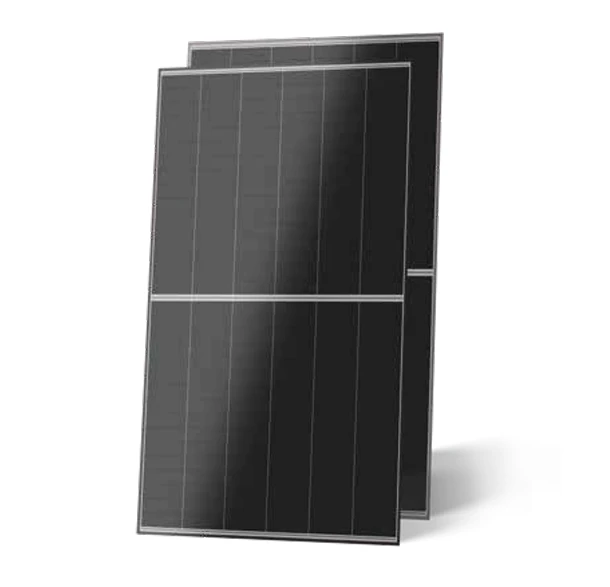
Jinko Tiger Neo 3.0 48OL6-DV
460–485W N-type TOPCon monofacial dual-glass module in the Tiger Neo 3.0 residential range.
View Product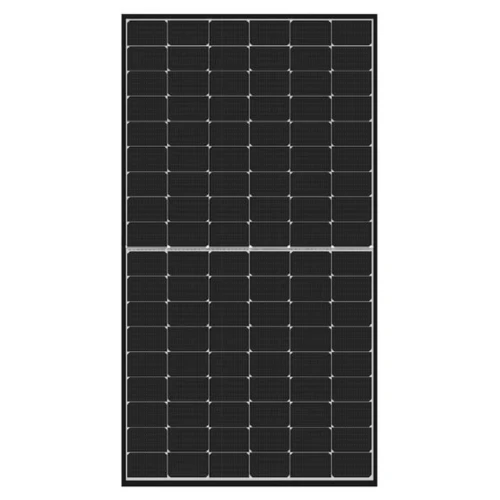
Jinko Tiger Neo 460W
Fixed 460W N-type TOPCon monofacial dual-glass module (JKM460N-48HL4M-DV) within the Tiger Neo 48HL4M-DV family.
View Product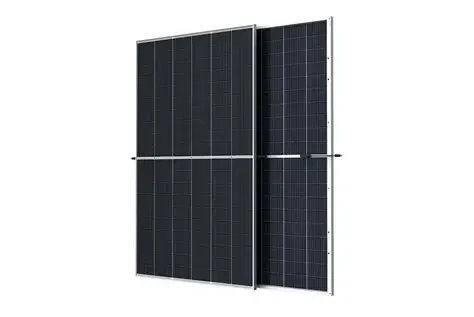
Trina Solar Vertex N 650W
650W N-type i-TOPCon Ultra bifacial dual-glass module (TSM-NEG19RC.20, 625–650W family).
View Product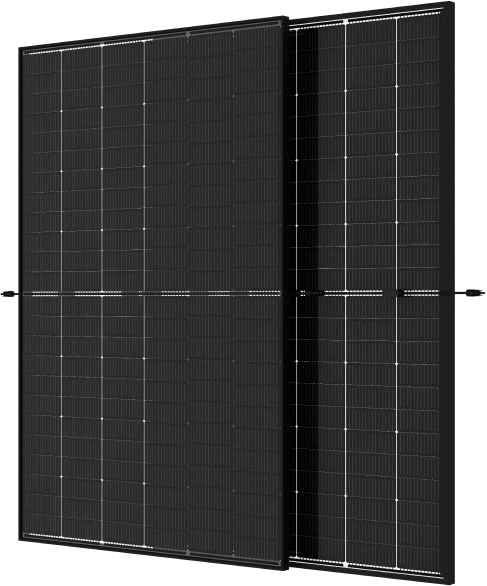
Trina Solar Vertex S+ (445W)
445W transparent bifacial dual-glass N-type i-TOPCon rooftop module (TSM-445NEG9RC.27).
View ProductPRODUCT FAQ
Questions About the AIKO NEOSTAR 3S+60
What is the AIKO NEOSTAR 3S+60 515–540W?
It is AIKO's NEOSTAR 3S+60 dual-glass module family AIKO-A-MCE60Db as documented on international datasheet 202601_V3.1_EN, with front-side STC power classes from 515W to 540W and module efficiency up to 24.4% at 540W.
What are the exact manufacturer model codes?
The family is AIKO-A-MCE60Db. The six documented variants are AIKO-A515-MCE60Db, AIKO-A520-MCE60Db, AIKO-A525-MCE60Db, AIKO-A530-MCE60Db, AIKO-A535-MCE60Db and AIKO-A540-MCE60Db.
Is this the same as the AIKO NEOSTAR 3P+60?
No. NEOSTAR 3S+60 on this page is AIKO-A-MCE60Db. NEOSTAR 3P+60 is a different catalogue product based on AIKO-A-MCE60Dw. Do not mix their datasheets or electrical values.
Is the 515–540W range the current Australian market offering?
This page follows the international 515–540W V3.1 datasheet that matches the legacy Decarby product. AIKO Australia currently publishes a separate ANZ datasheet for AIKO-A-MCE60Db covering 530–550W. Confirm the nameplate and datasheet for modules supplied on Australian projects.
Does BNPI mean the 540W module is really 570W?
No. The 540W class has a 540W front-side STC rating. The datasheet lists a BNPI result of 570W under stated lab bifacial test conditions. That is not a higher STC nameplate rating, and field rear-side gain is site-dependent.
How large and heavy is the module?
Dimensions are 1954 × 1134 × 30 mm and weight is 27.1 kg ±3% according to the V3.1 datasheet.
What are the 540W STC electrical values?
At STC the 540W class is rated 540W, 24.4% efficiency, Voc 45.60 V, Vmp 38.40 V, Isc 14.84 A and Imp 14.07 A, with power tolerance 0 to +3%.
What warranty applies in Australia?
AIKO's ANZ residential N-Type ABC Module Limited Warranty includes AIKO-A-MCE60Db and provides a 25-year product warranty and a 30-year limited power warranty, with ≤1% first-year and ≤0.35% annual front-side degradation, reaching ≥88.85% at year 30. Coverage remains subject to installation requirements, exclusions and authorised-channel supply.
How do I know if this module suits my project?
Suitability depends on available roof area, structure, shading, inverter design, network connection rules, energy goals and the exact power class supplied. Decarby can assess these factors and advise on the appropriate module and system configuration.