
Solar Panel
Jinko Tiger Pro Series
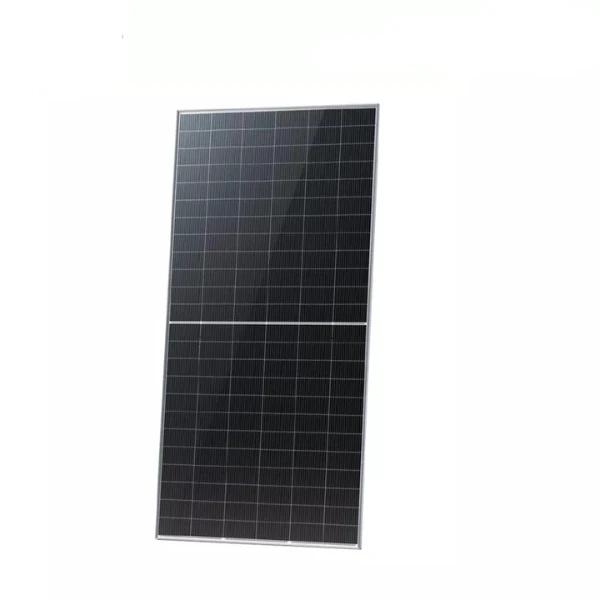
Jinko Tiger Pro 72HC 530–550W Solar Panel
The Jinko Tiger Pro 72HC 530–550W series is a high-output solar panel range designed for commercial rooftops and larger solar installations. Built with P-type monocrystalline half-cell technology and a multi-busbar design, these modules combine strong power output with reliable electrical performance. The series offers a practical option for projects where roof space, electrical configuration and long-term energy generation need to be carefully considered.
This page follows the JinkoSolar monofacial datasheet JKM530-550M-72HL4-(V)-F1-EN. Electrical values vary by power class, and maximum system voltage depends on whether a standard or -V variant is supplied.
Key information
- Product Code
- JKM530M–JKM550M-72HL4 series
- Brand
- JinkoSolar
- Wattage
- 530–550W
- Product Warranty
- 12 years
- Performance Warranty
- 25 years linear
- Maximum Efficiency
- Up to 21.33%
- Technology
- P-type monocrystalline half-cell
- Temperature Coefficient of Pmax
- -0.35%/°C
Product overview
High-Output Modules for Larger Solar Arrays
The Tiger Pro 72HC family covers manufacturer power classes from 530W to 550W under the JKM530M-72HL4 to JKM550M-72HL4 model codes, including applicable -V variants. Across that range, STC module efficiency rises from 20.55% at 530W to 21.33% at 550W according to the selected F1 datasheet.
These larger-format modules are commonly considered for commercial rooftops and other larger arrays. Suitability still depends on roof structure, mounting design, inverter stringing and site conditions. Decarby treats the panel as one part of the complete solar system rather than selecting modules from a wattage figure alone.
Product features
High Power Output
The series includes 530W, 535W, 540W, 545W and 550W variants. Higher module wattage can reduce the number of panels needed for a target array capacity, which may help with mounting layout and balance-of-system planning on larger installations.
The appropriate power class depends on roof area, structural limits, inverter design and project requirements rather than selecting the highest wattage by default.
P-Type Monocrystalline Half-Cell Technology
The module uses P-type monocrystalline cells in a 144 half-cell (6 × 24) layout. Half-cell architecture is intended to reduce operating current and support module reliability as part of the overall electrical design.
This product is not an N-type TOPCon or HOT 3.0 module. Those technologies belong to other JinkoSolar families such as Tiger Neo.
Multi-Busbar Technology
JinkoSolar lists multi-busbar (MBB) technology for improved light trapping and current collection, supporting module power output and reliability.
This page does not assign unsupported numerical performance gains to the multi-busbar design beyond the manufacturer specifications for each power class.
Commercial and Large-Scale Applications
The 72-cell half-cut format and 530–550W power range are commonly used on commercial rooftops and larger solar installations where higher module output can support denser array design.
Final suitability depends on site engineering, roof loading, mounting design, electrical constraints and inverter compatibility.
Temperature Performance
JinkoSolar specifies a Pmax temperature coefficient of -0.35%/°C for this datasheet family. That figure describes how rated power changes with cell temperature under the manufacturer test conditions.
Modules do not produce their full STC rating under high operating temperatures. Actual generation depends on irradiance, temperature, mounting and the complete installation.
Mechanical Durability
The module is certified to withstand manufacturer static test loads of 5400 Pa on the front (snow) and 2400 Pa on the rear (wind).
These are certified test load ratings under the stated standards. They do not guarantee structural suitability for every roof, mounting system or site-specific wind or snow condition.
Environmental Resistance
The selected datasheet lists high salt mist and ammonia resistance among the manufacturer-stated durability features.
Site-specific exposure, mounting hardware and installation practice still need to be assessed as part of system design.
Long-Term Performance
JinkoSolar lists a 25-year linear performance warranty with 0.55% annual degradation for this monofacial Tiger Pro family. Applicable warranty documentation also lists approximately 2% first-year degradation and about 84.8% retained power at year 25.
Warranty eligibility, exclusions and claim conditions remain subject to the applicable JinkoSolar warranty terms for the modules supplied.
System Design Compatibility
The datasheet lists a maximum system voltage of 1000/1500 VDC (IEC). Which voltage rating applies depends on the exact module variant supplied, including whether a -V version is used.
Do not treat all Tiger Pro 72HC versions as interchangeable. Module voltage, current, fuse rating and inverter limits must be checked for the selected string design.
Warranty Coverage
For the monofacial JKM530M–JKM550M-72HL4-(V) family, JinkoSolar lists a 12-year product warranty and a 25-year linear performance warranty.
A product warranty covers materials and workmanship under stated conditions. A linear performance warranty covers power output over time against the manufacturer published degradation curve. This page does not describe the panel as having a 25-year product warranty.
Technical details
Jinko Tiger Pro 72HC 530–550W Specifications
General specifications
| Model Family | JKM530M–JKM550M-72HL4 / -V |
|---|---|
| Datasheet Code | JKM530-550M-72HL4-(V)-F1-EN |
| Series | Jinko Tiger Pro Series |
| Cell Type | P-type monocrystalline |
| Number of Cells | 144 (6 × 24) |
| Module Construction | Monofacial |
| Dimensions | 2274 × 1134 × 35 mm |
| Weight | 28.9 kg |
| Front Glass | 3.2 mm tempered glass with anti-reflective coating |
| Frame | Anodized aluminium alloy |
| Junction Box | IP68 rated |
| Output Cables | 4.0 mm²; (+): 400 mm, (−): 200 mm or customised |
Dimensions and weight follow the selected F1 datasheet. Later catalogue revisions list 2278 × 1134 × 35 mm and 28.0 kg for related Tiger Pro 72HC entries. Final documentation should be checked against the exact module supplied.
Electrical specifications (STC)
| Model | Pmax | Module efficiency | Vmp | Imp | Voc | Isc |
|---|---|---|---|---|---|---|
| JKM530M-72HL4 | 530W | 20.55% | 40.56 V | 13.07 A | 49.26 V | 13.71 A |
| JKM535M-72HL4 | 535W | 20.75% | 40.63 V | 13.17 A | 49.34 V | 13.79 A |
| JKM540M-72HL4 | 540W | 20.94% | 40.70 V | 13.27 A | 49.42 V | 13.85 A |
| JKM545M-72HL4 | 545W | 21.13% | 40.80 V | 13.36 A | 49.52 V | 13.94 A |
| JKM550M-72HL4 | 550W | 21.33% | 40.90 V | 13.45 A | 49.62 V | 14.03 A |
STC values are from the JinkoSolar JKM530-550M-72HL4-(V)-F1-EN datasheet. Matching -V variants share the same STC electrical table on that datasheet. Power tolerance is 0 to +3%. Do not mix electrical values from one power class with another, and do not use NOCT values in place of STC values.
Temperature coefficients
| Temperature Coefficient of Pmax | -0.35%/°C |
|---|---|
| Temperature Coefficient of Voc | -0.28%/°C |
| Temperature Coefficient of Isc | +0.048%/°C |
| Nominal Operating Cell Temperature (NOCT) | 45 ± 2°C |
Operating conditions and mechanical load
| Operating Temperature | -40°C to +85°C |
|---|---|
| Maximum System Voltage | 1000/1500 VDC (IEC), depending on variant |
| Maximum Series Fuse Rating | 25 A |
| Maximum Static Test Load: Front | 5400 Pa |
| Maximum Static Test Load: Rear | 2400 Pa |
Warranty
| Product Warranty | 12 years |
|---|---|
| Linear Performance Warranty | 25 years |
| First-Year Degradation | 2% |
| Annual Degradation Thereafter | 0.55% |
| Retained Power at Year 25 | 84.8% |
Warranty coverage remains subject to JinkoSolar's applicable warranty terms, installation requirements and exclusions for the modules supplied. Australian supply terms should be confirmed for the modules used on the project.
Manufacturer-listed features and standards
- Multi-busbar technology
- Reduced hot-spot loss design
- High salt mist and ammonia resistance
- IEC61215(2016) / IEC61730(2016)
- ISO9001:2015 Quality Management System
- ISO14001:2015 Environment Management System
- ISO45001:2018 Occupational health and safety management systems
Choosing your solar panels
Is the Jinko Tiger Pro 72HC Right for Your Project?
Choosing a solar module for a commercial or larger installation involves more than comparing wattage. Roof structure, usable area, orientation, shading, inverter design, electrical constraints and future energy plans all affect the system that makes sense.
The Tiger Pro 72HC format can suit many larger arrays, but suitability still depends on the complete mechanical and electrical design.
Decarby's engineering-led approach considers the panel, inverter, roof and energy requirements together before recommending a system configuration.
Roof structure and space
Module dimensions, weight and array layout must suit usable roof area, setbacks and structural capacity.
Orientation and shading
Roof direction, pitch and shading affect array layout and expected energy generation.
Inverter and string design
Module voltage, current and fuse ratings must remain within the selected inverter operating requirements, including whether a 1000V or 1500V variant is used.
Energy requirements
System capacity should be designed around the site load profile and generation goals rather than simply maximising module count.
Future energy needs
Battery storage, EV charging and other electrification loads may affect how much solar capacity is worth planning for.
Not Sure What System You Need?
You don't need to have the answer before you call us.
Tell us about your home, your electricity use and what you're hoping to achieve. We'll help you work through what makes sense whether that's solar now, solar and battery together, or a system designed so you can add more later.
Practical advice. No sales pressure.
Related products
JA Solar DeepBlue 4.0 Pro JAM54D40
435–460W n-type dual-glass module in the JAM54D40 family.
View Product
AIKO NEOSTAR 3P+60 530–550W
530–550W dual-glass N-Type ABC module, up to 24.8% efficiency.
View Product
AIKO NEOSTAR 3S+60 (515–540W)
515–540W dual-glass N-type ABC module (AIKO-A-MCE60Db), up to 24.4% efficiency.
View Product
Jinko Tiger Neo 48HL4M-DV
460–480W N-type TOPCon monofacial dual-glass module in the Tiger Neo 48HL4M-DV family.
View Product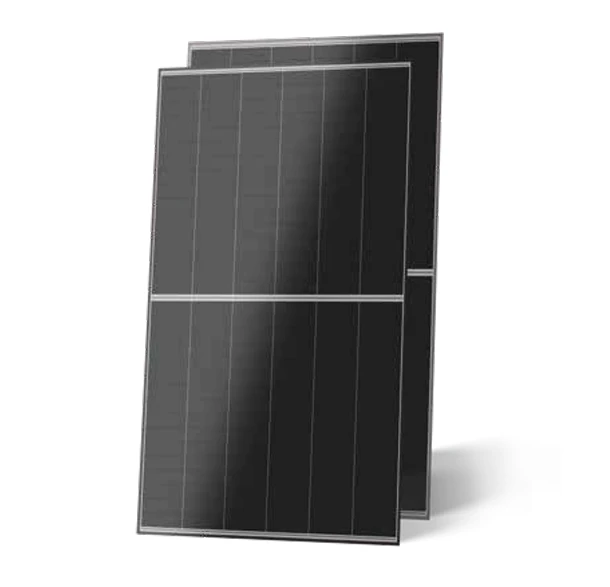
Jinko Tiger Neo 3.0 48OL6-DV
460–485W N-type TOPCon monofacial dual-glass module in the Tiger Neo 3.0 residential range.
View Product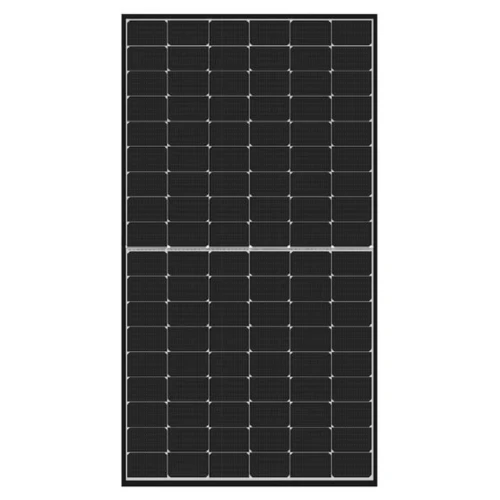
Jinko Tiger Neo 460W
Fixed 460W N-type TOPCon monofacial dual-glass module (JKM460N-48HL4M-DV) within the Tiger Neo 48HL4M-DV family.
View Product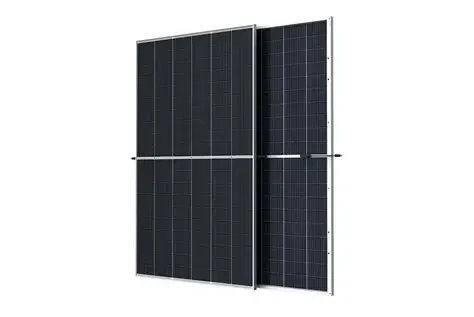
Trina Solar Vertex N 650W
650W N-type i-TOPCon Ultra bifacial dual-glass module (TSM-NEG19RC.20, 625–650W family).
View Product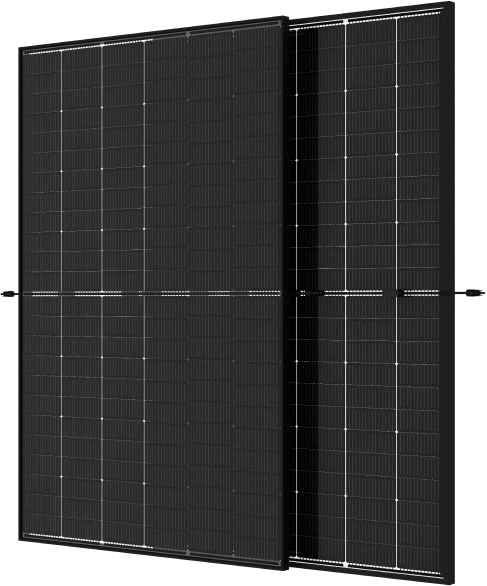
Trina Solar Vertex S+ (445W)
445W transparent bifacial dual-glass N-type i-TOPCon rooftop module (TSM-445NEG9RC.27).
View ProductPRODUCT FAQ
Questions About the Jinko Tiger Pro 72HC 530–550W
What is the Jinko Tiger Pro 72HC 530–550W?
It is a P-type monocrystalline half-cell solar module family from JinkoSolar. The monofacial datasheet used on this page covers JKM530M-72HL4 to JKM550M-72HL4, including applicable -V variants, with rated power from 530W to 550W and STC efficiency up to 21.33%.
What does TIGER-PRO mean on older Decarby listings?
TIGER-PRO was a legacy Decarby catalogue identifier. It is not a manufacturer model number. The manufacturer model family for this page is JKM530M–JKM550M-72HL4, including applicable -V variants.
Is Tiger Pro the same as Tiger Neo?
No. Tiger Pro 72HC on this page is a P-type monocrystalline half-cell family. Tiger Neo modules use N-type TOPCon technology and have different electrical, efficiency and warranty characteristics.
What warranty does the Tiger Pro 72HC have?
For the monofacial JKM530M–JKM550M-72HL4-(V) family, JinkoSolar lists a 12-year product warranty and a 25-year linear performance warranty, with about 2% first-year degradation and 0.55% annual degradation thereafter. An older public Decarby listing showed a 25-year product warranty; that figure is not used on this page because it is not supported by the selected manufacturer documentation.
How efficient is the 550W model?
According to the selected F1 datasheet, the 550W model has an STC module efficiency of 21.33%. Lower power classes in the same family have lower efficiencies, from 20.55% at 530W upward. Do not apply the 550W efficiency to every variant.
Is every Tiger Pro 72HC module rated for 1500V?
No. The datasheet lists 1000/1500 VDC (IEC) depending on variant. Confirm whether the supplied module is a standard or -V version before designing the DC system voltage.
How large is the module?
The selected F1 datasheet lists dimensions of 2274 × 1134 × 35 mm and a weight of 28.9 kg. Roof structure, mounting areas, setbacks and handling requirements need to be accounted for when designing the array.
How does it perform in hot weather?
JinkoSolar specifies a Pmax temperature coefficient of -0.35%/°C. Solar panel output changes as cell temperature rises, and modules do not produce their full STC rating under high operating temperatures. Actual generation depends on the complete installation and operating conditions.
Is this panel suitable for commercial rooftops?
The power range and module format are commonly considered for commercial rooftops and larger arrays. Suitability still depends on roof loading, mounting design, electrical configuration, inverter compatibility and project requirements.
How do I know if this panel is right for my project?
The panel needs to be considered as part of the complete solar system. Available roof space, structure, orientation, shading, electricity use, inverter design and future requirements can all influence the appropriate module and system configuration. Decarby can assess these factors and advise on suitability.