
Solar Panel
Vertex N Series
Trina Solar Vertex N 650W Bifacial Dual Glass Module
The Trina Solar Vertex N 650W is a high-output bifacial dual-glass solar module designed for commercial and large-scale solar installations. Built with N-type i-TOPCon Ultra cell technology, the TSM-NEG19RC.20 combines up to 650 W of front-side rated power with module efficiency of up to 24.1%. Its bifacial design can capture additional reflected light from the rear, with the actual energy benefit depending on installation conditions, surface reflectivity and system design.
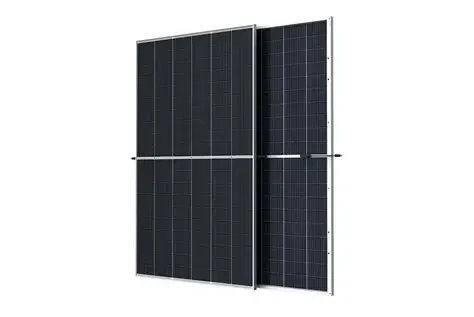
Key information
- Product Code
- TSM-NEG19RC.20
- Brand
- Trina Solar
- Wattage
- 650 W
- Cell Technology
- N-type i-TOPCon Ultra
- Panel Type
- Bifacial dual glass
- Maximum Efficiency
- 24.1%
- Product Warranty
- 12 years
- Performance Warranty
- 30 years linear
Product overview
High-Output Bifacial Dual-Glass Module
This page documents the Trina Solar Vertex N TSM-NEG19RC.20 family with a 650 W headline power class. The Australian datasheet covers 625–650 W variants under the same mechanical platform. Electrical values for other power classes are shown in the variant table and must not be mixed with the 650 W column.
Technical figures follow Trina Solar datasheet DT-M-0045-AUS-EN K (version TSM_AUS_EN_2025_D) for TSM-xxxNEG19RC.20. This is not NEG21C.20, NED19RC.20 Shield, NEG19RC.70 Anti-Dust or a backsheet Vertex N model. Warranty terms follow the Trina Solar Global Limited Warranty for crystalline modules, which expressly includes NEG19RC.20, together with the datasheet product and power warranty summary.
Product features
High-Output 650 W Solar Module
Under STC, the 650 W class is rated at 650 Wp front-side power with 24.1% module efficiency. The large-format 132-cell module is intended for commercial, industrial and utility-scale arrays where higher string power and tracker utilisation matter.
Rated wattage is front-side STC output. It should not be combined with theoretical rear-side bifacial gain and described as a higher nameplate panel wattage.
N-Type i-TOPCon Ultra Cell Technology
The module uses N-type i-TOPCon Ultra monocrystalline cells on Trina Solar's 210 mm technology platform. Manufacturer documentation positions the platform for high power density, continued efficiency upgrades and strong energy yield characteristics.
Cell technology is only one contributor to system performance. Orientation, temperature, shading, inverter matching and array layout remain important in real installations.
Bifacial Dual-Glass Construction
Front and rear 2.0 mm heat-strengthened glass enclose the cells in a bifacial dual-glass structure. The datasheet lists bifaciality coefficients of φPmax 80% ±5%, φVoc 100% ±3% and φIsc 80% ±5%.
Rear-side generation depends on albedo, mounting height, row spacing, ground cover and shading. Manufacturer material refers to about 10%–20% additional rear-side energy yield depending on albedo; that range is site-dependent and not a guaranteed uplift for every project.
Up to 24.1% Module Efficiency
At the 650 W power class, STC module efficiency is 24.1%. Across the documented 625–650 W family, efficiency rises from 23.1% to 24.1%. Higher efficiency can improve land or racking utilisation, but total system output still depends on array size and site conditions.
Commercial and Utility-Scale Applications
With dimensions of 2382 × 1134 × 30 mm and 650 W class output, the module is suited to commercial rooftops, carports and ground-mounted systems designed around large-format modules and, where used, 1P trackers.
This format is not automatically appropriate for every residential roof. Structural capacity, handling, access and inverter string design need project-specific engineering.
Low-Light Performance
Trina Solar states excellent low-irradiation performance validated by third-party testing. Low-light behaviour can support morning, evening and overcast generation, but it does not create a fixed annual yield guarantee for a specific site.
Temperature Performance
The AU datasheet lists a Pmax temperature coefficient of -0.29%/°C, Voc -0.24%/°C and Isc +0.04%/°C, with NOCT of 43°C (±2°C). Operating temperature is -40°C to +70°C.
Module output falls as cell temperature rises above STC conditions, so hot Australian sites should account for temperature when estimating generation.
Bifacial Rear-Side Energy Potential
Bifacial energy gain depends on reflective surfaces, clearance below the module, row spacing, tilt and shading of the rear side. Light-coloured ground cover or elevated mounting can increase rear irradiance; dark or shaded surfaces reduce it.
BNPI values on the datasheet describe lab bifacial test conditions and should not be treated as guaranteed field energy uplift.
Structural Reliability
Manufacturer documentation references non-destructive cutting and high-density packaging to reduce microcrack risk, together with half-cut cell architecture to reduce hot-spot risk. Module weight is 33.0 kg.
The Vertex Series installation manual lists mechanical test loads for NEG19RC.20 of up to 5400 Pa downforce and 2400 Pa uplift when four clamps are used on the long side with rails perpendicular to the long frame, within the stated clamp ranges. Design loads require the applicable safety factor and structural engineering.
Environmental Resistance
The AU datasheet lists Fire Class Rating C and Safety Class II. Broader Trina Vertex N product material for this platform also cites certified resistance against salt, ammonia, sand, PID, LID and LeTID. Coverage and test scope remain subject to the certificates and warranty terms for the modules supplied.
System Voltage and String Design
Maximum system voltage is 1500 V DC (IEC/UL) with a maximum series fuse rating of 35 A. The low-voltage design is intended to support higher string power in appropriately engineered systems.
Final string length must stay within inverter operating windows, cable ratings and network connection requirements.
Installation and Handling
At nearly 2.4 m long and 33 kg, the module needs appropriate handling, mounting hardware and structural support. Cable length is listed as portrait 200/320 mm with 4.0 mm² PV cable, and connectors are Stäubli MC4-EVO2 family types.
Installation must follow the current Trina Vertex Series user manual for approved clamp or bolt methods. Unapproved mounting methods can damage the module and affect warranty coverage.
Warranty and Long-Term Performance
The AU datasheet states a 12-year product warranty and a 30-year power guarantee, with 1% first-year degradation and 0.4% annual attenuation thereafter, reaching 87.4% front-side warranted output at year 30.
The Trina Solar Global Limited Warranty expressly includes NEG19RC.20 among N-type i-TOPCon dual-glass products. In Australia, warranty coverage applies to modules purchased through authorised channels. Performance warranty terms for front-side and bifacial backside power are detailed in that warranty document.
Australian Commercial Solar Considerations
Large-format bifacial modules need coordinated structural, electrical and network design. Roof or ground structure, wind region, inverter matching, DC cable routes and DNSP connection rules all affect whether NEG19RC.20 is suitable for a project.
Decarby designs commercial and larger solar systems around those constraints rather than selecting a module from wattage alone.
Technical details
Trina Solar Vertex N 650W Specifications
General
| Model family | TSM-NEG19RC.20 |
|---|---|
| Headline power class | TSM-650NEG19RC.20 (650 W) |
| Series | Vertex N Series |
| Cell technology | N-type i-TOPCon Ultra monocrystalline |
| Number of cells | 132 |
| Module construction | Bifacial dual glass |
| Datasheet revision | TSM_AUS_EN_2025_D (DT-M-0045-AUS-EN K) |
| Country of origin | China |
| Product warranty | 12 years (materials and workmanship) |
| Performance warranty | 30 years linear; ≤1% year 1, ≤0.4%/year thereafter; ≥87.4% at year 30 (front side) |
Electrical characteristics at STC
| Model | Pmax | Efficiency | Vmpp | Impp | Voc | Isc |
|---|---|---|---|---|---|---|
| TSM-625NEG19RC.20 | 625 W | 23.1% | 40.46 V | 15.45 A | 48.70 V | 16.32 A |
| TSM-630NEG19RC.20 | 630 W | 23.3% | 40.68 V | 15.49 A | 48.90 V | 16.38 A |
| TSM-635NEG19RC.20 | 635 W | 23.5% | 40.84 V | 15.55 A | 49.10 V | 16.44 A |
| TSM-640NEG19RC.20 | 640 W | 23.7% | 41.06 V | 15.60 A | 49.30 V | 16.51 A |
| TSM-645NEG19RC.20 | 645 W | 23.9% | 41.22 V | 15.65 A | 49.52 V | 16.55 A |
| TSM-650NEG19RC.20 | 650 W | 24.1% | 41.43 V | 15.69 A | 49.77 V | 16.59 A |
STC: 1000 W/m², cell temperature 25°C, AM1.5. Measuring tolerance Pmax ±3%, Voc ±3%, Isc ±5%. Power selection 0 to +5 W. Use only the row matching the module supplied. This page headlines the 650 W class.
Electrical characteristics at NOCT (650 W class)
| Pmax (NOCT) | 496 W |
|---|---|
| Vmpp (NOCT) | 39.00 V |
| Impp (NOCT) | 12.73 A |
| Voc (NOCT) | 47.30 V |
| Isc (NOCT) | 13.37 A |
| NOCT conditions | 800 W/m², ambient 20°C, wind 1 m/s; NOCT 43°C (±2°C) |
Temperature ratings
| Temperature coefficient of Pmax | -0.29%/°C |
|---|---|
| Temperature coefficient of Voc | -0.24%/°C |
| Temperature coefficient of Isc | +0.04%/°C |
| Operating temperature | -40°C to +70°C |
Bifacial characteristics
| Bifaciality φPmax | 80% ±5% |
|---|---|
| Bifaciality φVoc | 100% ±3% |
| Bifaciality φIsc | 80% ±5% |
| Rear-side energy potential | Manufacturer cites about 10%–20% additional rear-side energy yield depending on albedo; site-specific, not guaranteed |
| BNPI Pmax (650 W class) | 720 W (front 1000 W/m² + rear 135 W/m² lab condition) |
Mechanical specifications
| Module dimensions | 2382 × 1134 × 30 mm |
|---|---|
| Weight | 33.0 kg |
| Front glass | 2.0 mm AR-coated heat-strengthened glass |
| Back glass | 2.0 mm heat-strengthened glass |
| Frame | 30 mm anodized aluminium alloy |
| Junction box | IP68 rated |
| Cables | 4.0 mm² PV cable; portrait 200/320 mm (length customisable) |
| Connectors | Stäubli PV-KST4-EVO2 / PV-KBT4-EVO2 family |
| Packaging | 36 modules per box; 720 modules per 40' container |
Operating limits and mechanical loads
| Maximum system voltage | 1500 V DC (IEC/UL) |
|---|---|
| Maximum series fuse rating | 35 A |
| Fire class / safety class | Class C / Class II |
| Mechanical test loads (install manual, rails perpendicular) | Downforce ≤5400 Pa; uplift ≤2400 Pa; 4 clamps on long side, clamp centres 420–520 mm from edge |
| Mechanical test loads (install manual, rails parallel) | Downforce ≤3600 Pa; uplift ≤2400 Pa; 4 clamps on long side, clamp centres 440–540 mm from edge |
| Design load note | Manual test loads require the applicable 1.5 safety factor for design loads; confirm with structural engineering |
Warranty
| Product / materials warranty | 12 years |
|---|---|
| Linear power performance warranty | 30 years |
| First-year degradation (front side) | ≤1% |
| Annual degradation years 2–30 (front side) | ≤0.4% |
| Warranted output at year 30 (front side) | ≥87.4% of nameplate |
| Australian applicability | Global Limited Warranty applies to authorised-channel supply; confirm current terms for modules supplied |
Manufacturer-listed standards and certifications
Manufacturer-listed certificates (datasheet)
- IEC 61215 / IEC 61730
- ISO 9001 / ISO 14001 / ISO 45001
- ISO 14064 / ISO 14067
- Fire Class C; Safety Class II
Choosing your module
Is the Trina Solar Vertex N 650W Right for Your Project?
Module selection should start with the project, not the wattage figure. Available mounting area, structural capacity, inverter design, bifacial gain potential, network connection rules and commercial energy goals all affect whether a large-format NEG19RC.20 array is appropriate.
Decarby designs commercial and larger solar systems around those constraints rather than recommending a panel from a brochure rating alone.
Project scale
Commercial rooftops, carports and ground mounts are the usual fit for this format.
Structure and handling
Length, weight and wind region determine whether the roof or racking can support the array.
Bifacial potential
Rear-side gain depends on albedo, clearance and shading, not only the module datasheet.
Inverter matching
String voltage, current and 1500 V system design must suit the selected inverter.
Network requirements
DNSP connection rules and export limits can constrain system size and configuration.
Not Sure What System You Need?
You don't need to have the answer before you call us.
Tell us about your home, your electricity use and what you're hoping to achieve. We'll help you work through what makes sense whether that's solar now, solar and battery together, or a system designed so you can add more later.
Practical advice. No sales pressure.
Related products
JA Solar DeepBlue 4.0 Pro JAM54D40
435–460W n-type dual-glass module in the JAM54D40 family.
View Product
AIKO NEOSTAR 3P+60 530–550W
530–550W dual-glass N-Type ABC module, up to 24.8% efficiency.
View Product
AIKO NEOSTAR 3S+60 (515–540W)
515–540W dual-glass N-type ABC module (AIKO-A-MCE60Db), up to 24.4% efficiency.
View Product
Jinko Tiger Neo 48HL4M-DV
460–480W N-type TOPCon monofacial dual-glass module in the Tiger Neo 48HL4M-DV family.
View Product
Jinko Tiger Pro 72HC 530–550W
530–550W P-type monocrystalline half-cell module for commercial and larger solar installations.
View Product
Jinko Tiger Neo 3.0 48OL6-DV
460–485W N-type TOPCon monofacial dual-glass module in the Tiger Neo 3.0 residential range.
View Product
Jinko Tiger Neo 460W
Fixed 460W N-type TOPCon monofacial dual-glass module (JKM460N-48HL4M-DV) within the Tiger Neo 48HL4M-DV family.
View Product
Trina Solar Vertex S+ (445W)
445W transparent bifacial dual-glass N-type i-TOPCon rooftop module (TSM-445NEG9RC.27).
View ProductPRODUCT FAQ
Questions About the Trina Solar Vertex N 650W
What is the Trina Solar Vertex N 650W?
It is the 650 W power class within Trina Solar's TSM-NEG19RC.20 Vertex N bifacial dual-glass family. The Australian datasheet covers 625–650 W variants on the same mechanical platform, with 24.1% STC efficiency at 650 W.
What is the exact manufacturer model?
The manufacturer family is TSM-NEG19RC.20. The 650 W class is identified as TSM-650NEG19RC.20. It is not NEG21C.20, NED19RC.20 Shield or NEG19RC.70 Anti-Dust.
How much extra energy can the rear side generate?
That depends on albedo, mounting height, row spacing and shading. The datasheet lists bifaciality around 80% ±5% for Pmax and refers to about 10%–20% additional rear-side energy yield depending on albedo. Those figures are not a guaranteed field uplift for every site.
How large and heavy is the module?
Dimensions are 2382 × 1134 × 30 mm and weight is 33.0 kg. Structural support, handling and access need to be assessed as part of the array design.
What are the 650 W STC electrical values?
At STC the 650 W class is rated 650 Wp, 24.1% efficiency, Vmpp 41.43 V, Impp 15.69 A, Voc 49.77 V and Isc 16.59 A, with power selection 0 to +5 W.
What warranty applies in Australia?
The AU datasheet states a 12-year product warranty and a 30-year power guarantee with ≤1% first-year and ≤0.4% annual front-side degradation, reaching ≥87.4% at year 30. The Global Limited Warranty includes NEG19RC.20 and, in Australia, applies to authorised-channel supply.
Is this module suitable for residential roofs?
It is primarily a commercial and large-scale format. Some larger residential or light-commercial roofs may suit it after structural and handling assessment, but it should not be assumed appropriate for every home roof.
What is the maximum system voltage?
The datasheet lists 1500 V DC maximum system voltage and a 35 A maximum series fuse rating. Final string design must still match the inverter and installation standards.
How do I know if this module suits my project?
Suitability depends on available mounting area, structure, bifacial gain potential, inverter design, network connection rules and energy goals. Decarby can assess these factors and advise on the appropriate module and system configuration.