
Fast, Responsive Cooking
Induction transfers energy directly into compatible cookware, allowing quick heating and responsive changes to temperature settings.
INDUCTION COOKTOP INSTALLATION
Move from gas cooking to fast, responsive electric cooking with professional induction cooktop installation designed around your kitchen, electrical capacity and wider home electrification plans.
ELECTRIC COOKING
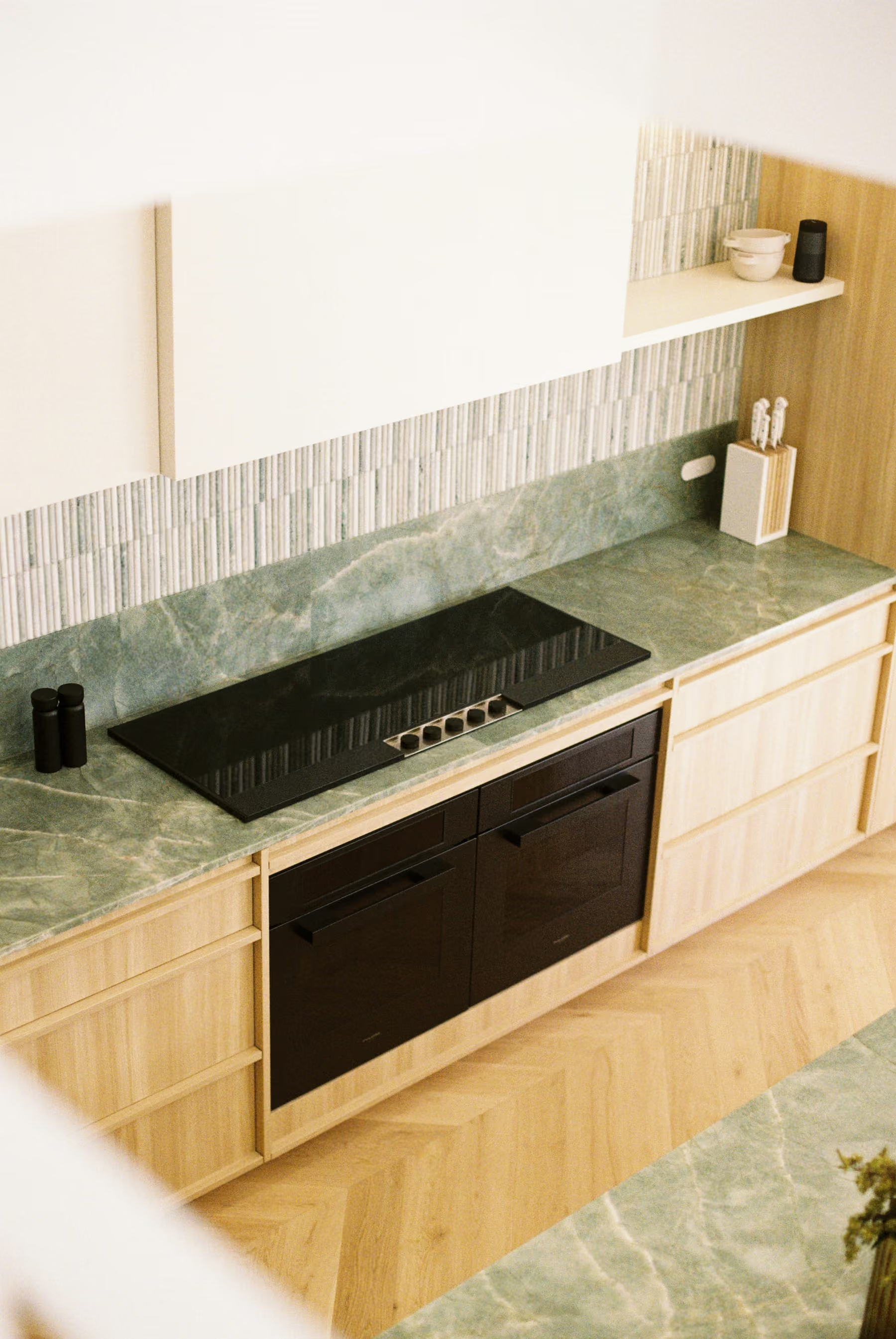
Induction cooktops are becoming a practical choice for Canberra households moving towards all-electric homes.
Unlike traditional electric elements that heat the cooktop surface first, induction uses an electromagnetic field to transfer energy directly into compatible cookware. This provides fast response and precise temperature control while avoiding an open gas flame.
A professional induction cooktop installation should consider more than the appliance itself. Cooktop power requirements, the existing switchboard, available electrical capacity, cabling and the kitchen layout can all affect what is required before installation.
For households replacing gas, Decarby can consider the cooktop as part of the broader home electrification plan rather than treating it as an isolated appliance upgrade.
BENEFITS
For households moving away from gas, installing induction cooktop technology can provide a responsive electric cooking experience while supporting a wider transition to an all-electric home.
Induction transfers energy directly into compatible cookware, allowing quick heating and responsive changes to temperature settings.
Induction cooking removes the open flame associated with a gas cooktop and keeps the surrounding cooking surface cooler than traditional electric elements, although cookware and the area beneath it can still become hot.
The smooth glass surface is generally straightforward to wipe down because there are no raised burners or gas trivets.
Replacing gas cooking with induction can be one part of a broader move towards electric hot water, heating and cooling, EV charging, solar and battery storage.
HOW IT WORKS
Induction generates heat in the cookware itself rather than heating an element beneath the cooking surface.
The cooktop generates an electromagnetic field beneath the cooking zone.
The magnetic field interacts with suitable cookware.
Heat is produced directly within the cookware rather than first heating a traditional element.
Adjusting the cooktop setting quickly changes the energy delivered to the cookware.
Because the heat is produced in the pan, the cooking surface stays cooler than a conventional electric element, though it will still warm from contact with hot cookware.
Unlike conventional electric cooktops that heat an element before transferring warmth to a pan, induction technology generates a changing magnetic field that heats compatible cookware directly. This provides responsive temperature control, allowing cooking power to increase or decrease quickly when settings are adjusted. Because heat is generated in the cookware rather than through an exposed flame or conventional heating element, less energy is lost to the surrounding kitchen.
A successful induction upgrade also requires consideration of the home's existing electrical infrastructure and kitchen layout. Cookware must have a suitable magnetic base, and the installation may require assessment of the electrical circuit, switchboard capacity and available space. Once installed, induction cooking provides a practical way to move away from gas while retaining precise control for everyday cooking. The glass surface can still become hot from contact with cookware, so normal cooking safety precautions remain important.
ELECTRICAL REQUIREMENTS
Before installing induction cooktop equipment, the home’s electrical capacity should be reviewed.
Induction cooktops are high-power appliances and commonly require a dedicated electrical circuit. Depending on the selected model, existing switchboard capacity and the electrical connection to the property, additional work may be needed.
ACT guidance notes that some induction cooktops can require circuits rated up to around 40 amps. This can be significant for some single-phase homes, particularly where the property already has multiple high-power electric appliances.
A licensed electrician should assess the property and confirm whether the existing electrical system is suitable.
Confirming these requirements early keeps an induction cooktop installation straightforward once the appliance is on site, rather than uncovering electrical work after the old cooktop has been removed.
SWITCHING FROM GAS
Replacing gas cooking with induction can involve more than removing one appliance and fitting another.
If the existing gas cooktop is being removed, an ACT licensed plumber or gas fitter may be required to safely disconnect or modify the gas supply. A licensed electrician is then required for the electrical installation.
If the induction cooktop is the final gas appliance in the home, the household may also want to consider whether the gas connection itself should eventually be disconnected or abolished.
The right sequence depends on the property, existing services and broader electrification plan.
Kitchen layout, cooktop power requirements and the existing electrical system are assessed.
Where a gas cooktop is being removed, a licensed plumber or gas fitter safely disconnects or modifies the gas supply.
A licensed electrician prepares the dedicated circuit and any switchboard work the installation requires.
The induction cooktop is fitted into the benchtop and connected to the new electrical supply.
The completed electrical work is tested and certified in accordance with applicable requirements.
COOKWARE COMPATIBILITY
Cookware is one of the first questions households ask when installing induction cooktop equipment in an existing kitchen.
Induction requires cookware that can interact with the cooktop’s magnetic field, and many existing pots and pans may already be compatible.
A simple way to check is to place a magnet against the base of the cookware. If the magnet sticks firmly, the cookware will generally work with an induction cooktop.
Common compatible materials can include suitable:
Compatibility varies by cookware construction, so manufacturer guidance should be checked where uncertain.
HOME ELECTRIFICATION
The installation of induction cooktop technology can be planned alongside other electric household upgrades rather than treated as a separate project.
For homes also considering heat pump hot water, reverse-cycle air conditioning, EV charging, solar or battery storage, total future electricity demand matters.
Planning these upgrades together can help identify switchboard capacity, circuit requirements and other electrical work before multiple systems are installed independently.
This is particularly useful for older Canberra homes where the existing electrical system may not have been designed for several modern high-power appliances.
Where several upgrades are likely, scoping the induction cooktop installation alongside them means the electrical work can be planned once rather than revisited each time an appliance is added.
PROFESSIONAL INSTALLATION
Correct installation is important because an induction cooktop is a fixed high-power electrical appliance.
When installing induction cooktop equipment, Decarby considers the appliance requirements, the existing electrical system and wider electrification plans before work begins.
Where upgrades are required, they should be identified before the cooktop is fitted so the finished installation is safe, compliant and appropriate for the household.
Decarby completes induction cooktop installation as part of broader home electrification work for Canberra households rather than as an isolated appliance swap.
When electrical work is completed in the ACT, the licensed electrician is responsible for testing and certifying the work in accordance with applicable requirements.
OUR HOME ELECTRIFICATION SERVICES
Electrifying a home does not have to happen all at once. Some households begin with hot water or heating and cooling, while others are ready to move several major appliances away from gas at the same time.
Decarby’s home electrification services focus on three important household systems.
Replace conventional electric or gas hot water with a heat pump system that draws heat from the surrounding air and transfers it into the water. Heat pumps can substantially reduce the energy required for hot water compared with traditional electric storage systems, while quality units are designed to operate through Canberra’s cold conditions.
Explore Hot Water Heat PumpsUse modern reverse-cycle air conditioning for both heating and cooling. These systems can provide efficient year-round comfort, with options ranging from individual split systems to whole-home ducted solutions depending on the property and requirements.
Explore Air Conditioning InstallationMove away from gas cooking with induction technology that transfers energy directly to compatible cookware using magnetic fields. Induction provides responsive temperature control and removes the need for an open gas flame, but because cooktops are high-power appliances, some homes may require electrical assessment or upgrades before installation.
Back to OverviewWHY DECARBY
Decarby takes an engineering-led approach to solar, battery storage and home electrification, helping homeowners and businesses make informed decisions about their energy needs. Rather than recommending a standard package, we consider how each property uses energy, its existing infrastructure and the practical opportunities for improvement. Our focus is on providing clear advice and designing solutions that make sense for the property, its occupants and their long-term goals.
From the initial consultation through system design and installation, we prioritise technical expertise, transparency and quality workmanship. We help customers understand their options, navigate applicable rebates and incentives, and plan energy upgrades with confidence. Whether you're considering rooftop solar, battery storage or broader electrification, our goal is to deliver a practical, well-considered solution rather than a one-size-fits-all recommendation.
FREQUENTLY ASKED QUESTIONS
Usually, yes. Induction cooktops are high-power appliances and typically require a dedicated circuit sized to the power requirements of the selected cooktop. A licensed electrician should assess the existing switchboard and electrical capacity before installation.
Not always. It depends on the age and capacity of the existing switchboard, available circuit space, existing safety devices and the cooktop’s power requirements. Older homes or properties already using several high-power electric appliances may require additional electrical work.
Yes. Induction is a practical electric replacement for gas cooking. Removing an existing gas cooktop may require an ACT licensed plumber or gas fitter as well as a licensed electrician for the new electrical installation.
Some will. Induction requires cookware with a magnetic base. A simple test is to hold a magnet against the bottom of the pan. If it sticks firmly, the cookware will generally be suitable for induction.
Induction responds quickly because energy is transferred directly into compatible cookware rather than first heating a conventional element. This allows rapid heating and responsive temperature control.
Yes. Induction cooking can be planned alongside heat pump hot water, reverse-cycle air conditioning, EV charging, solar and battery storage as part of a broader transition towards an all-electric home.
Not necessarily. Australian Government guidance notes that a typical household single-phase connection is adequate for many all-electric homes. The actual requirement depends on the cooktop, total household electrical demand and existing connection capacity.
Fixed electrical work should be completed by an appropriately licensed electrician. If a gas cooktop is being removed, a licensed plumber or gas fitter may also be required to safely disconnect the gas service.
Yes. An induction cooktop uses electricity, so electricity generated by rooftop solar may contribute to household cooking loads when the cooktop is used while the solar system is producing energy. Actual solar use depends on household demand and system generation at the time.
You don't need to have the answer before you call us.
Tell us about your home, your electricity use and what you're hoping to achieve. We'll help you work through what makes sense whether that's solar now, solar and battery together, or a system designed so you can add more later.
Practical advice. No sales pressure.