
Current quarterly bill
—
SOLAR SAVINGS CALCULATOR
See how rooftop solar and battery storage could change your electricity costs. Enter your electricity bill, choose Monthly or Quarterly billing, select Solar Only or Solar + Battery, and get an indicative estimate instantly.
Get an instant estimate based on Decarby’s simplified savings model. No email required.
Enter the amount from your electricity bill and select how often you are billed.
Indicative estimate
Enter your electricity bill to see indicative results.
Current quarterly bill
—
Estimated quarterly savings
—
Estimated quarterly bill after solar:—
Potential annual savings
—
Strongest indicative figure from your estimate
—
per year
Potential Combined Annual Benefit
—
per year
This additional value is indicative and may come from battery optimisation, exports, wholesale market conditions or provider-specific incentives rather than a simple reduction in household consumption charges.
You can still assess VPP or smart battery optimisation options later. Suitability depends on your battery, electricity retailer, tariff and household energy use.
Your calculator result is a useful starting point. Decarby can assess your property, roof conditions, electricity use, future loads and battery requirements to develop a more detailed recommendation.
UNDERSTANDING YOUR ESTIMATE
A solar panel savings calculator is most useful when it begins with something you already know: what you currently pay for electricity.
Decarby's calculator uses the electricity bill amount and billing period you enter as the starting point and applies a simplified illustrative savings model for solar or solar with battery storage.
That gives you a quick way to compare scenarios such as:
Your current estimated electricity cost.
An estimate of what your bill could look like once part of your household electricity is generated from rooftop solar.
An estimate of how battery storage may further reduce grid electricity purchases by storing some surplus daytime solar for later use.
The result is intended to help you understand the opportunity.
It is not a replacement for proper system design.
HOW IT WORKS
Enter your electricity bill and tell us whether it is a monthly or quarterly bill. The calculator converts your bill to an annual estimate and applies Decarby’s simplified savings assumptions based on the system you’re considering.
Enter the amount from your electricity bill and select Monthly or Quarterly billing. The calculator converts that figure to an annual equivalent so the same savings assumptions can be applied consistently.
If you select Solar Only, the calculator applies Decarby’s illustrative assumption of up to 60% bill reduction.
If you select Solar + Battery, the calculator applies an illustrative assumption of up to 80% bill reduction.
If you also indicate interest in a VPP or smart battery optimisation program, the calculator shows a separate indicative annual additional benefit range. That figure is not another guaranteed percentage reduction of your bill.
These percentages are illustrative only and are not guaranteed savings.
Actual outcomes depend on how and when your household uses electricity, tariffs, system design, battery performance and other property-specific factors covered in the sections below.
SAVINGS FACTORS
A household with a high electricity bill may have a larger opportunity to offset grid electricity than a very low-use household. But total consumption is only part of the story.
Solar is usually most valuable when the electricity it generates is used directly in the home. This is known as solar self-consumption.
A larger solar system can produce more electricity, but it does not automatically mean proportionally greater savings. If much of the additional generation is exported rather than used onsite, the financial value may be lower.
Roof direction, pitch, available area and shading all affect how much solar energy the system can generate.
The value of solar depends partly on what you would otherwise pay for grid electricity. Time-of-use tariffs can also affect the result.
Electricity exported to the grid may receive a feed-in tariff. The value of exported solar is generally different from the retail price paid when buying electricity from the grid.
A battery can increase self-consumption by storing excess solar for later use. But not every household needs one.
CANBERRA & ACT
A solar savings calculator Australia result should not treat every part of the country as identical.
Solar generation, electricity tariffs, weather, rebate settings and household energy behaviour vary by location.
For Canberra and the ACT, several local factors can influence the result:

System design should consider year-round performance, winter loads, future EV charging and home electrification rather than relying only on generic national averages.
That is why the calculator should be viewed as the first estimate, followed by a property-specific assessment.
SOLAR SELF-CONSUMPTION
One of the biggest mistakes when estimating solar savings is focusing only on how much electricity the system produces.
How much of that solar electricity will you actually use?
A solar panel savings calculator can show an estimated outcome, but your real savings are strongly influenced by self-consumption.
Uses these appliances during daylight hours.
Uses very little electricity during the day and most of its energy after sunset.
The same solar array can produce very different financial outcomes for those two households.
This is why Decarby looks beyond system size when recommending solar.
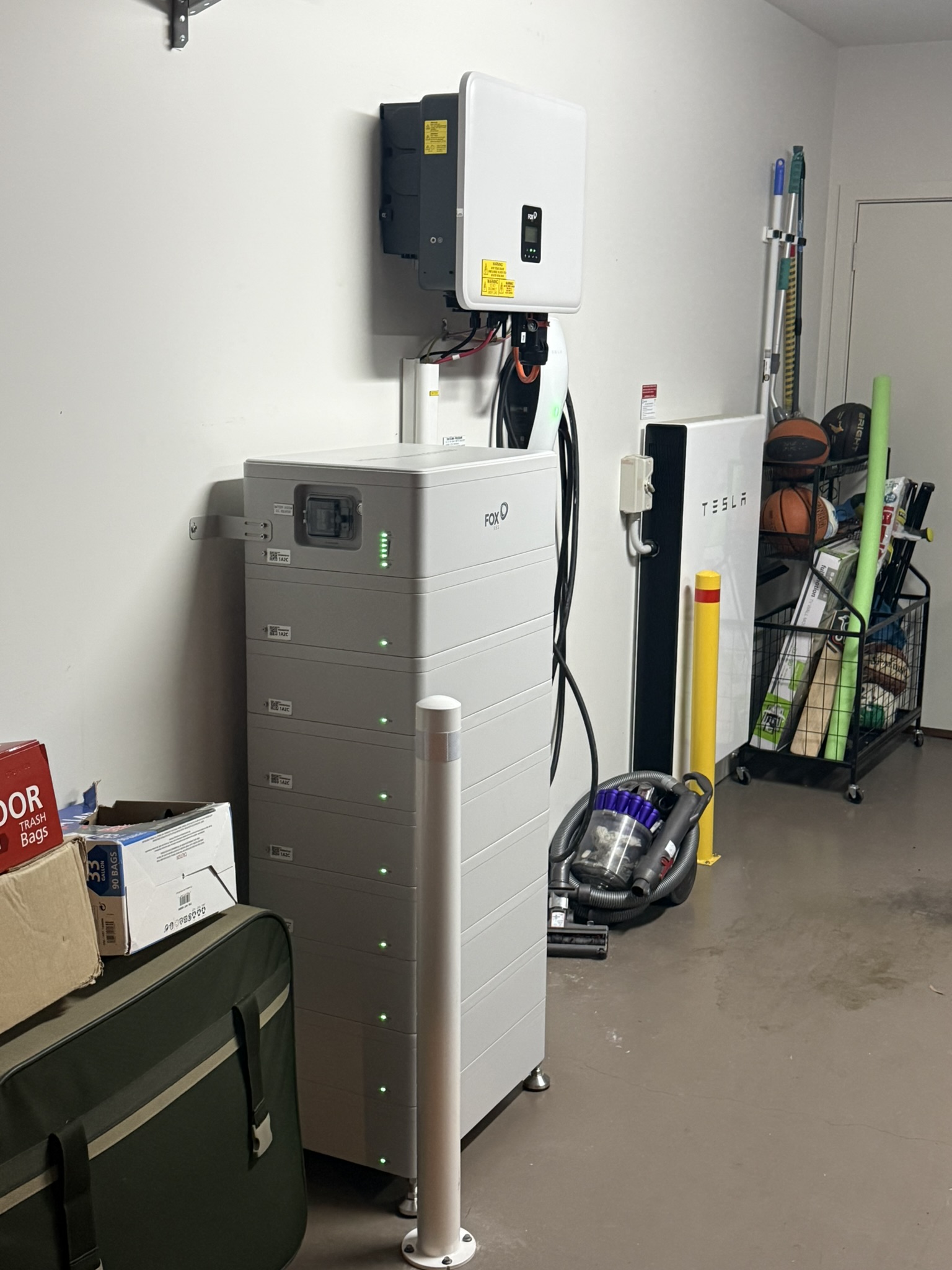
BATTERY STORAGE
The battery does not create additional solar energy. It changes when that energy can be used.
Battery value depends heavily on available excess solar, evening electricity consumption, electricity tariffs, battery size, battery efficiency and charging behaviour.
Battery storage should be appropriately sized rather than selected simply because a larger battery is available.
Solar → Household → Grid export
Solar → Household → Battery → Later household use → Grid when required
SOLAR COSTS
When comparing solar panels and cost, the cheapest quote is not necessarily the lowest-cost energy solution.
A solar quote can vary for many reasons. The right question is not only what each system costs upfront, but what it is expected to produce and how much of that electricity can realistically be used in your home.
A calculator can help frame the savings side.
A proper site assessment helps answer the design side.
Don't just ask"Which system costs less?"
Ask"What does each system cost, what is it expected to produce, and how much of that electricity can I realistically use?"
The cost of solar panel installation varies from property to property.
Government incentives can also reduce the effective upfront price of an eligible system.
For qualifying residential solar projects, federal support may be available through Small-scale Technology Certificates under the Small-scale Renewable Energy Scheme.
Factors can include:
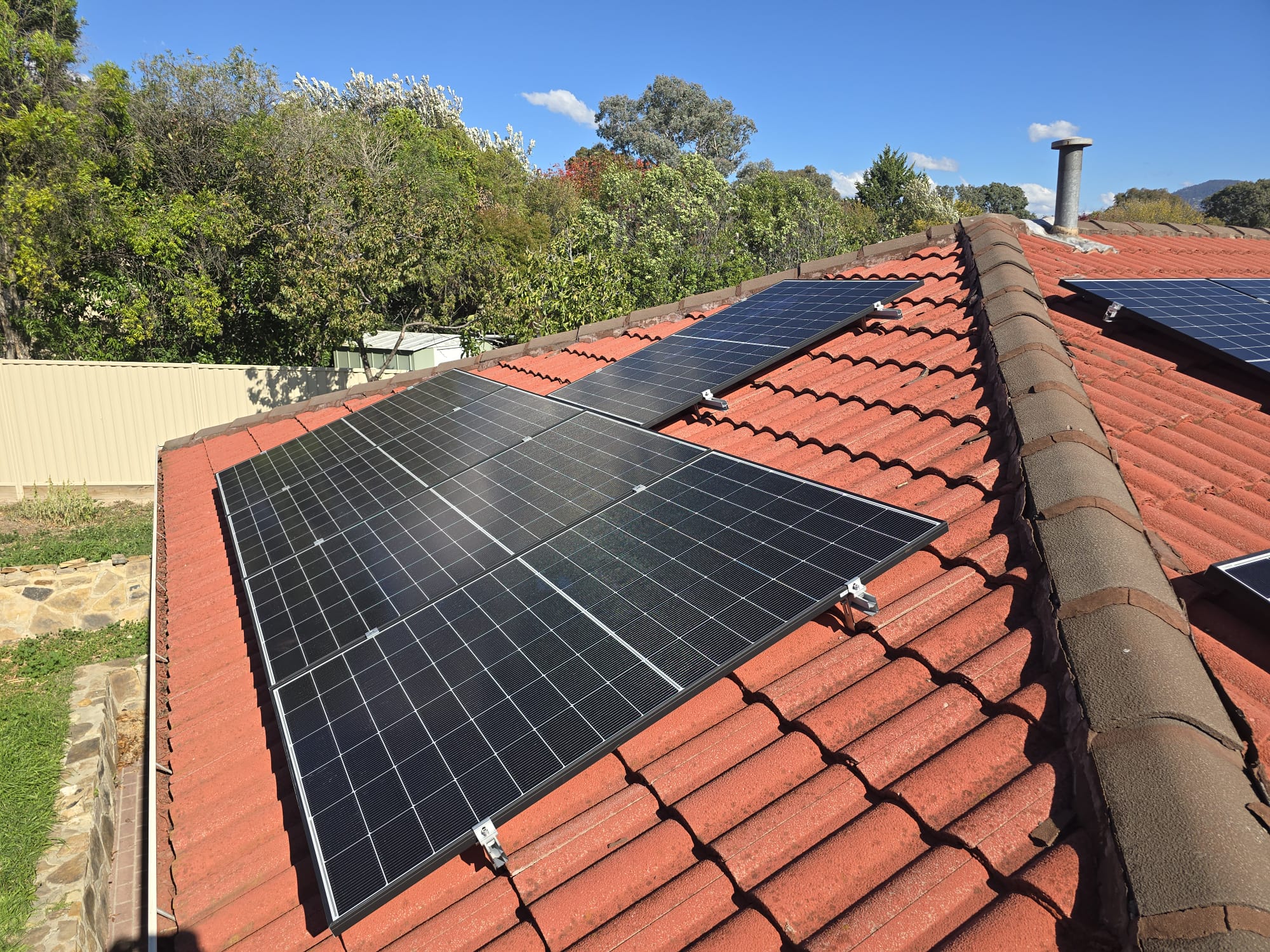
The cost of installing solar panels is only one part of the financial decision.
A useful assessment should also consider how the system performs over its life and how it matches your household.
A system can cost more upfront and still represent stronger long-term value if it is better designed around the household.
Likewise, a cheaper system may not be good value if it underperforms, is poorly matched to future demand or requires unnecessary rework later.
This is why Decarby approaches solar through engineering and consultancy rather than price alone.
PLAN AHEAD
Your current bill tells us what the household uses today.
It does not necessarily tell us what the household will use five years from now.
Future changes can increase electricity consumption while reducing gas or petrol use elsewhere.
That means a household planning to electrify may need more solar than its current electricity bill initially suggests.
ESTIMATE VS DESIGN
A solar savings calculator is useful because it turns a complex energy decision into a simple first estimate.
But it cannot see everything about your property. That is why a personalised property assessment provides a more accurate basis for system design.
"What could solar potentially do to my bill?"
"What solar system makes sense for this particular home?"
NEXT STEPS
Start with your electricity bill amount and choose Monthly or Quarterly billing to establish a baseline.
Review the estimated bill outcomes under Decarby’s simplified illustrative model.
If you selected Solar + Battery, indicate whether you would consider a VPP or smart battery optimisation program for an indicative additional benefit range.
Review the sections below on self-consumption, tariffs, battery storage and future electricity use to understand why actual savings can differ from the estimate.
Decarby can assess roof conditions, solar access, system size, electrical infrastructure and battery suitability.
A detailed solar proposal can use property-specific information instead of relying solely on calculator assumptions.
WHY DECARBY
Decarby takes an engineering-led approach to solar, battery storage and home electrification, helping homeowners and businesses make informed decisions about their energy needs. Rather than recommending a standard package, we consider how each property uses energy, its existing infrastructure and the practical opportunities for improvement. Our focus is on providing clear advice and designing solutions that make sense for the property, its occupants and their long-term goals.
From the initial consultation through system design and installation, we prioritise technical expertise, transparency and quality workmanship. We help customers understand their options, navigate applicable rebates and incentives, and plan energy upgrades with confidence. Whether you're considering rooftop solar, battery storage or broader electrification, our goal is to deliver a practical, well-considered solution rather than a one-size-fits-all recommendation.
FREQUENTLY ASKED QUESTIONS
This version intentionally uses a simplified Decarby estimate based on the electricity bill amount and billing period you enter, plus your selected system type. It applies illustrative assumptions of up to 60% bill reduction for solar and up to 80% for solar with battery storage. It is useful for a quick first look, but it cannot replace a property-specific assessment that considers roof conditions, tariffs and usage patterns.
Savings depend on your electricity bill, usage patterns, system size, tariffs and self-consumption. Use the calculator for an indicative starting estimate, then request a personalised assessment for a property-specific view.
Solar is generated during daylight hours. Using electricity while panels are producing increases self-consumption and reduces grid purchases. Evening-heavy households may export more solar unless battery storage is used. The calculator does not ask for your usage profile, but these factors help explain why actual savings can differ from the illustrative estimate.
Not always. A battery can shift surplus solar to later use, but value depends on excess generation, evening demand, tariffs and battery size. Some households benefit more from solar-only solutions.
A larger system generates more electricity, but financial benefit depends on how much is self-consumed versus exported at a lower feed-in tariff. Oversizing without matching usage can reduce value.
The calculator asks for your electricity bill amount, whether that bill is monthly or quarterly, and whether you are considering Solar Only or Solar + Battery. If you choose Solar + Battery, it can also ask whether you would consider a VPP or smart battery optimisation program.
The calculator converts the bill amount and billing period you enter into an annual baseline rather than modelling seasonal variation hour by hour. Higher winter use may mean your annual consumption is above or below what a single bill implies.
Eligible systems may receive incentives that reduce upfront cost, but this calculator focuses on ongoing bill savings rather than quoting installed system prices. See our rebates section for current incentive information.
Yes. Selecting Solar + Battery applies Decarby’s simplified illustrative assumption of up to 80% bill reduction. That figure is indicative only and not a guaranteed outcome.
At a high level. If you select Solar + Battery and indicate interest in a VPP or smart battery optimisation program, the calculator can show an indicative additional annual benefit range. Actual value depends on the provider, battery, tariff, electricity market conditions, household usage and applicable fees. This is not another guaranteed percentage reduction of your bill.
A recent electricity bill, awareness of when you use power, future plans such as EV charging or electrification, and basic property details help. Decarby can guide the rest during assessment.
Yes. Future electrification can increase electricity demand. Solar and battery planning should consider expected loads such as EV charging, heat pumps and induction cooking, not only your current bill.
Not necessarily. Equipment quality, design, warranties and compatibility with future plans all affect long-term value. Compare expected production and usable solar, not price alone.
Yes. Decarby provides property-specific assessments that consider roof conditions, shading, tariffs, electrical infrastructure and future energy plans.
Actual outcomes depend on tariffs, weather, equipment performance, self-consumption behaviour, shading, system design and future energy use. The calculator uses a simplified Decarby bill-reduction model and cannot model every variable.
You don't need to have the answer before you call us.
Tell us about your home, your electricity use and what you're hoping to achieve. We'll help you work through what makes sense whether that's solar now, solar and battery together, or a system designed so you can add more later.
Practical advice. No sales pressure.