How Long Do Solar Batteries Last in Canberra?
What Canberra Homeowners Should Know Before Installation
Solar batteries are becoming an increasingly common addition to solar panel systems across Canberra. With rising electricity prices and growing interest in energy independence, many homeowners are asking the same question before investing: how long will a solar battery actually last?
The answer depends on several factors, including battery quality, usage habits, installation conditions, and Canberra’s unique climate. Understanding these factors helps homeowners make better decisions and get long-term value from their investment.
Average Lifespan of Solar Batteries in Canberra
For most modern residential systems, a solar battery lifespan of 10 to 15 years is a realistic expectation under normal operating conditions.
It is important to understand that battery lifespan does not mean the battery suddenly stops working at the end of this period. Instead, solar batteries gradually lose storage capacity over time.
After around 10 years of use, many batteries can still operate effectively but may hold approximately 70 to 80 percent of their original capacity. This gradual degradation is normal and is already accounted for in most manufacturer warranties.
What Affects the Lifespan of Solar Batteries?
Several factors influence how quickly a solar battery degrades. In Canberra, climate and installation choices play a particularly important role.
How Canberra’s Climate Affects Solar Battery Lifespan
Canberra experiences distinct seasonal temperature changes:
- Summer (December to March): daytime highs typically around 25 to 28°C
- Winter (May to August): daytime highs around 11 to 14°C, with overnight temperatures often close to freezing
While these temperatures are not extreme by Australian standards, the seasonal variation means that temperature stability is critical for battery longevity.
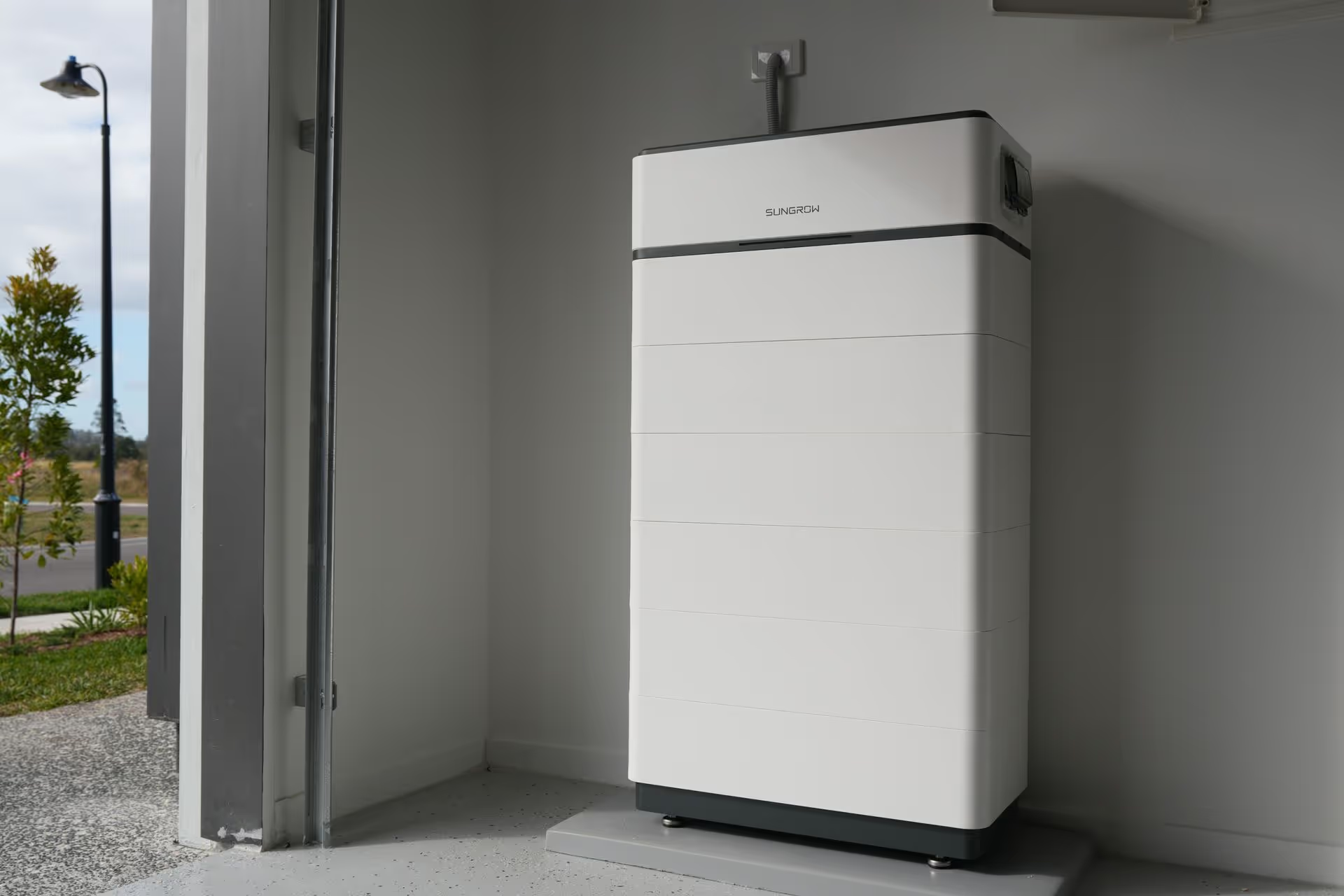
Batteries perform best when operating within a moderate and stable temperature range. For this reason, installers commonly recommend placing batteries in garages or dedicated utility areas rather than outdoors. This helps protect the system from prolonged heat in summer and cold overnight temperatures in winter.
Usage Patterns and Depth of Discharge
How a household uses its battery on a daily basis has a major impact on lifespan.
Understanding Depth of Discharge
Depth of Discharge, often referred to as DoD, describes how much of a battery’s stored energy is used before it is recharged.
- Frequent full discharges place more stress on the battery
- Partial daily usage generally results in slower degradation
Homes with balanced and predictable energy use patterns often experience better long-term battery performance compared to households that regularly drain the battery completely overnight.
Battery Quality and Chemistry
Not all batteries are built the same, and upfront cost alone is not a reliable indicator of long-term value.
Most residential solar batteries today use lithium-ion technology, typically based on:
- Lithium Iron Phosphate (LFP)
- Nickel Manganese Cobalt (NMC)
Higher-quality batteries are engineered to handle more charge cycles, temperature variations, and long-term use. Lower-cost options may appear attractive initially but often use lower-grade components, which can lead to faster capacity loss and a shorter effective lifespan.
How to Extend the Life of a Solar Battery
While no battery lasts forever, there are practical steps homeowners can take to maximise performance and longevity.
Proper Installation and Location
Temperature control remains the single most important factor. Installing a battery in a sheltered indoor space, such as a garage or utility room, helps maintain stable operating conditions throughout the year.
Avoiding direct sunlight and exposure to outdoor temperature extremes significantly reduces long-term stress on the battery system.
Smart Energy Management
Small changes in daily energy habits can have a meaningful impact on battery health.
Examples include:
- Reducing heavy electricity use late at night when solar generation is unavailable
- Timing high-energy appliances, such as EV chargers or electric heating, to operate during the day
Smarter energy use not only helps extend battery life but can also improve overall household energy savings.
Monitoring and Software Optimisation
Most modern solar batteries include monitoring software that allows homeowners to track performance through a mobile app.
These systems can:
- Monitor charging and discharging behaviour
- Identify abnormal usage patterns
- Automatically optimise charging strategies
Early detection of issues and ongoing optimisation reduces unnecessary wear and supports long-term reliability.
What to Know Before Buying a Solar Battery
Choosing the right battery involves more than just capacity and price. Long-term performance should be a key consideration.
Warranty Versus Expected Lifespan
Most solar batteries come with a 10-year warranty, often guaranteeing that the battery will retain a minimum capacity, commonly around 70 percent, at the end of the warranty period.
This does not mean the battery will stop working after 10 years, but it provides a useful benchmark for expected long-term performance.
Battery Features That Matter for Longevity
When comparing options, homeowners should pay attention to:
- Operating temperature tolerance
- Compatibility with existing or future solar systems
- Advanced monitoring and energy management features
- Scalability for future household energy needs
These features can make a significant difference over the life of the system.
Choosing the Right Solar Battery for Canberra Homes
In Canberra, battery lifespan is closely linked to winter energy usage, daylight hours, and household size. A system that works well for one household may not be suitable for another.
Matching battery size, chemistry, and system design to lifestyle and energy consumption patterns is essential for achieving the best long-term outcome.
So, How Long Will a Solar Battery Last in Your Home?
For many Canberra households, a well-designed solar battery system can provide 10 years or more of reliable service. Battery lifespan ultimately depends on daily usage habits, installation quality, and product selection.
This is where professional system design becomes critical.
Decarby Solar and Long-Term Battery Performance
Decarby Solar designs solar battery systems specifically for Canberra homes, with a strong focus on long-term reliability rather than short-term performance alone. By considering local climate conditions, household energy usage patterns, battery chemistry, and installation environment, Decarby Solar helps homeowners maximise battery lifespan, maintain performance over time, and achieve better long-term value from their investment.
FAQ
Can solar batteries help during a blackout?
Yes, many solar battery systems can provide backup power during a blackout, but this depends on how the system is designed. Batteries with backup or blackout protection can supply power to selected essential circuits, such as lighting, refrigerators, internet equipment, or medical devices, when the grid is down. Not all battery systems include this feature by default, so it is important to confirm backup capability during system design. Backup power capacity is also limited, meaning careful load management is required during extended outages.
How do solar batteries work with my solar panels?
A solar battery stores excess electricity generated by your solar panels during the day, which would otherwise be exported to the grid. This stored energy can then be used later, such as in the evening, at night, or during cloudy periods. By using more of your own solar power, a battery helps reduce reliance on grid electricity and can improve overall energy efficiency. In Canberra, this is particularly useful during winter evenings when solar generation is low but household demand is higher.
Can solar batteries freeze in Canberra’s winter?
No, modern residential solar batteries do not freeze. They use lithium-based technology rather than liquid electrolytes. While very cold temperatures can slightly reduce charging and discharging efficiency, built-in thermal management and protection systems prevent physical damage. That said, installing a battery in a sheltered indoor location, such as a garage or utility space, helps maintain more stable temperatures and supports better long-term performance, especially during Canberra’s colder months.
Is a solar battery worth it in Canberra?
For many households, a solar battery can be a worthwhile investment, but value depends on individual circumstances. Batteries allow homeowners to store daytime solar energy and use it during the evening, which can be particularly beneficial during winter when electricity demand increases. Factors such as household energy usage patterns, solar system size, battery capacity, and long-term goals all influence whether a battery makes financial sense. Homes with consistent evening electricity use often see the greatest benefit.
Why do solar batteries make sense in the ACT?
Several local factors make solar batteries attractive in the ACT. Electricity prices are relatively high compared to solar feed-in tariffs, which reduces the value of exporting excess energy to the grid. Canberra also experiences increased evening energy use during colder months due to heating and lighting. A battery allows households to store solar energy generated during the day and use it when demand is highest, reducing reliance on grid electricity and improving energy independence.
How long do solar batteries typically last?
Most modern residential solar batteries are designed to last 10 to 15 years, depending on usage habits, installation conditions, and battery quality. Over time, batteries gradually lose storage capacity rather than stopping suddenly. After around 10 years, many batteries still operate effectively but may store around 70 percent of their original capacity. This gradual degradation is normal and is usually reflected in manufacturer warranties.
Do solar battery warranties match their real lifespan?
Solar battery warranties typically last 10 years and usually guarantee a minimum remaining capacity at the end of that period, often around 60 to 70 percent. This does not mean the battery will stop working after the warranty expires. Instead, the warranty provides a performance benchmark. Many batteries continue operating beyond the warranty period, although with reduced capacity. Understanding warranty terms helps set realistic expectations about long-term performance.
Does battery size affect lifespan?
Yes, battery size can influence lifespan. A battery that is too small for a household’s energy needs may be fully discharged more often, which increases wear over time. Properly sizing a battery allows for partial daily use rather than regular full discharges, which generally results in slower degradation. Matching battery capacity to household energy consumption is one of the most important factors in achieving long-term performance.
Where should a solar battery be installed in Canberra?
In Canberra, solar batteries are best installed in locations with stable temperatures, such as garages or indoor utility areas. Avoiding direct sunlight, extreme heat, and overnight cold helps protect the battery and supports long-term reliability. Outdoor installations may still be suitable if properly sheltered, but indoor locations usually provide better environmental protection and more consistent operating conditions.
How does Decarby Solar approach battery system design?
Decarby Solar designs solar battery systems specifically for Canberra homes, taking into account local climate conditions, household energy usage patterns, and long-term performance goals. Rather than focusing only on upfront capacity, Decarby Solar prioritises correct battery sizing, appropriate installation location, and system configuration to help maximise battery lifespan, reliability, and overall value over time.
Can a solar battery reduce electricity bills in winter?
Yes, a solar battery can help reduce winter electricity bills by storing excess solar energy generated during the day and making it available in the evening. While solar generation is lower in winter, many Canberra homes still produce enough daytime energy to benefit from storage. The level of savings depends on system size, battery capacity, and household usage patterns, particularly evening energy demand.