Current snapshot
Electricity prices are talked about constantly, but a lot of that conversation is too shallow to be useful. One week the blame falls on wholesale markets. The next week it is networks, gas, policy or retailers. For people paying the bill, that can feel noisy and contradictory. The practical question is simpler: what is actually pushing costs up, how much of that pressure is temporary, and what can a home or business do about it?
How Solar Reduces Price Risk for Australian Households and Businesses matters because electricity is no longer just a utility line item. It is becoming the backbone of home and business energy strategy. Once solar, batteries, EV charging, hot water electrification and smarter tariffs enter the picture, the cost of electricity shapes the value of much broader decisions. That is why looking only at the bill total is not enough.
In Australia, the current picture is clear. The Australian Energy Regulator's 2025 to 2026 Default Market Offer decision lifted standing offer prices in several regions. AEMO's market reporting has continued to show that volatility, weather, outages and network constraints still matter. The AEMC's latest long-range outlook has also made a bigger point: future affordability depends not just on today's price, but on how well the transition to renewables, storage and electrification is coordinated. So this article focuses on the pieces that actually matter, not the usual headlines.
Why this issue is front of mind in 2026
The current concern about electricity prices is not happening in a vacuum. It is grounded in recent regulatory decisions and recent market data. Those signals do not say the same thing, but together they tell a consistent story: the cost of serving customers is still under pressure, and volatility remains part of the picture.
The AER's latest DMO decision and AEMO market reporting show why consumers are concerned not just about prices, but about sudden movements and uncertainty.
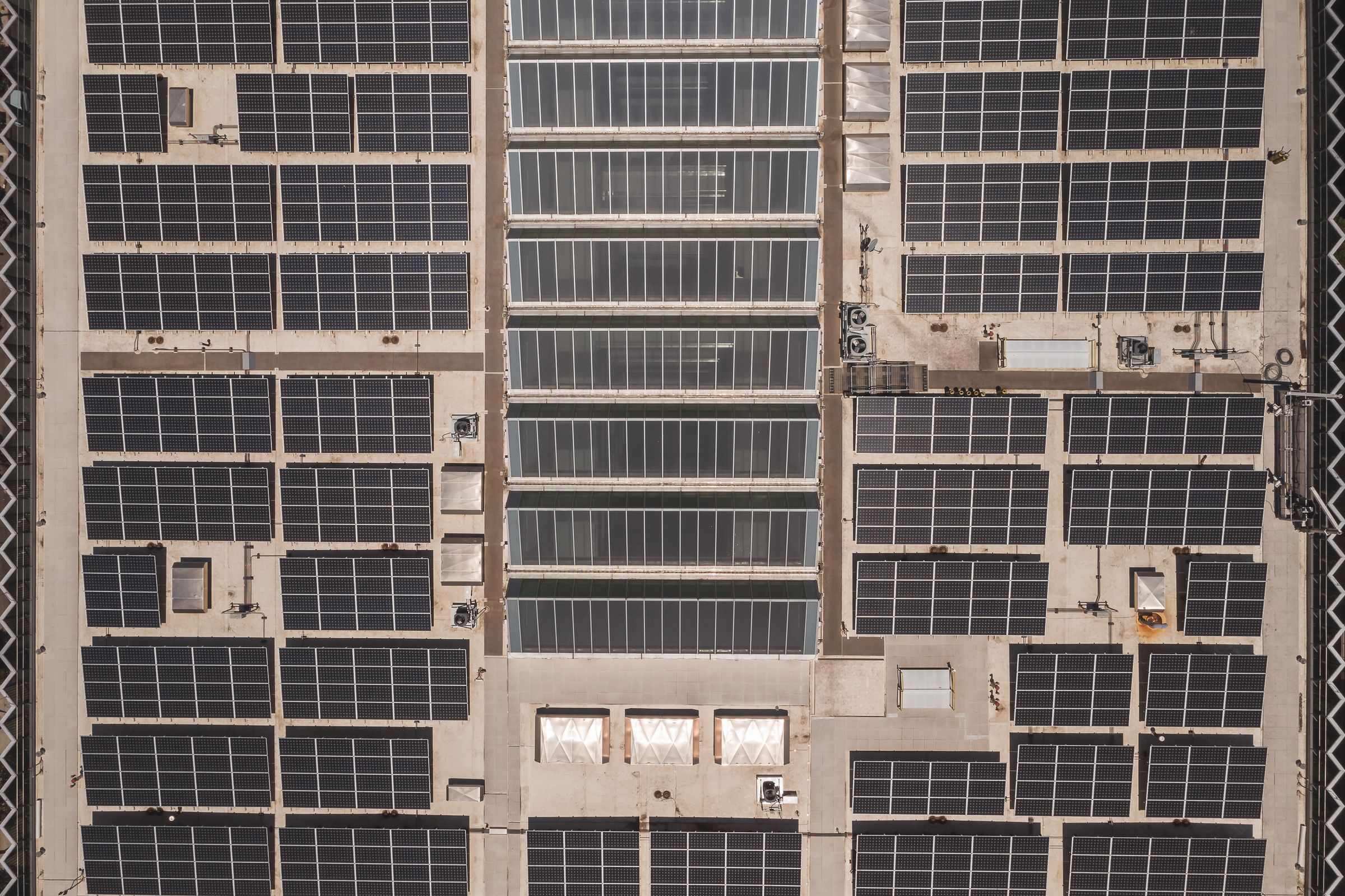
The CER says one in three suitable Australian homes now has rooftop solar, reflecting how common solar has become as a response to energy cost pressure.
Government-backed guidance for businesses says rooftop solar can reduce bills and help protect against electricity price rises.
That matters because consumers tend to experience price pressure in two ways at once. First, there are regulated or reference price movements that shape standing offers and influence market offers. Second, there are underlying system conditions, such as wholesale volatility or network constraints, that feed through to risk costs and future pricing. Good decisions need to account for both.
What is actually pushing costs higher
Retail electricity pricing is a stack, not a single number. Wholesale energy is only one component. Network costs matter because poles, wires, system strength and local constraints must still be paid for. Retail costs matter because retailers must fund operations, risk management, customer acquisition and bad debt. Environmental schemes matter because they sit inside the cost of supply. When pressure shows up across several layers at once, consumers feel it.
A retail contract gives certainty for a period, but it does not eliminate future pricing risk.
Solar does not remove fixed charges, and it does not automatically solve evening peaks without storage or load shifting.
Poor design can leave too much value on the table, especially where exports are limited or feed-in tariffs are weak.
That is why headlines about one cause can be misleading. Gas market tightness can matter. Coal outages can matter. Transmission limits can matter. Hot weather or cold still weather can matter. A regulator's decision can matter. But the bill usually reflects an accumulation of pressures rather than a single dramatic event.
Why average market prices and household bills are not the same thing
A household does not usually buy electricity directly at the five-minute wholesale price. Retailers hedge those exposures using contracts. If the market becomes more volatile, those hedging costs can rise. That means a quarter with only a handful of severe price events can still influence future retail pricing. From a customer perspective, that is one reason it can feel like bills move even when average generation conditions seem to have improved.
What households and businesses can do about it
No single response suits every site, but the practical options are usually consistent. First, reduce the amount of expensive grid energy you need to buy at high-value times. Second, improve how flexible loads are timed. Third, plan future electrification so that new electrical demand can be served efficiently rather than simply added to an already stressed bill.
Generate more of your own power at times when prices are most exposed to future increases.
Use solar to support electrification, so more of the household or business energy budget can be served by on-site generation.
Combine solar with batteries or demand management where the load profile needs evening support.
It is also worth separating short-term and long-term responses. In the short term, tariff review and load-shifting can help. In the medium term, solar and possibly batteries become relevant. In the longer term, electrification changes the entire household or business energy budget by shifting spend away from gas and petrol.
Common mistakes when reacting to price headlines
A calmer approach usually wins. The right project is not necessarily the fastest one to install. It is the one that responds to the actual source of cost pressure on the site.
The longer-term view
It is tempting to treat electricity prices as a short-term frustration. That is understandable, especially when people are dealing with seasonal bill shocks. But the more useful view is that households and businesses are moving into an energy system where flexibility has real value. Timing, control and self-generation matter more than they used to. That is not only a market story. It is also a design story.
One of the reasons the AEMC shifted its reporting toward total household energy costs is that electricity is becoming a bigger share of energy spending as homes electrify. That means the effect of solar, load control, EV charging strategy and hot water scheduling can no longer be treated as side issues. They sit at the centre of affordability. A site that is set up well can absorb this change better than one that continues to buy energy in the most exposed way.
For businesses, the same logic applies in a different form. Energy is becoming a more strategic overhead. It affects margins, forecasting confidence and sometimes customer expectations around decarbonisation. That is why the best response to rising prices is rarely a single gadget. It is a better energy system.
What to do before making a solar or battery decision
Start with the bill, but do not stop there. Look at the tariff structure, the timing of your highest usage, and any planned changes in the next few years. If you are thinking about an EV, hot water replacement, reverse-cycle heating, new tenancy patterns or longer operating hours, they all matter. An energy decision made from a static picture can be technically sound and still wrong for the next stage of the property.
The next step is to separate no-cost, low-cost and capital responses. No-cost actions include tariff review and simple behaviour changes. Low-cost actions may include timers, controls or metering improvements. Capital responses include solar, batteries, electrification upgrades and switchboard work. This sequence matters because it avoids solving a timing problem with an expensive hardware answer when a simpler change would have captured part of the value.
Finally, compare options using a few grounded scenarios rather than a single perfect-case estimate. A conservative case, a typical case and a future-electric case will usually reveal far more than one headline savings number. That is particularly true in a market where both retail offers and household or business energy use are evolving.
A practical decision checklist
Before you respond to rising prices with a purchase, check four things. First, what part of your bill is actually hurting? For some sites it is rising daytime energy. For others it is evening imports, winter heating, demand peaks or a growing transport fuel bill that will soon become an electricity bill. Second, what is likely to change in the next few years? A household planning an EV or a business planning longer operating hours should not design for the past.
Third, what can be solved with better timing rather than more hardware? This matters because time-of-use tariffs, controlled loads and flexible appliances can sometimes unlock savings that reduce the size or urgency of a capital project. Fourth, what role do you want the grid to keep playing? Some customers want the lowest practical bills. Others place more value on backup, resilience or reduced gas exposure. The right answer depends on that objective.
If those points are clear, the energy decision becomes much easier. Instead of reacting to headlines, you are designing a response to your own cost profile. That is a much better position for solar, batteries or electrification planning.
Example of how this changes a real decision
Take a household that has rising evening consumption, an ageing gas hot water system and a likely EV purchase in the next two years. If that household reads only a headline about rising electricity prices, it may assume the answer is to install the biggest solar system it can afford straight away. That could help, but it may not be the best sequence. A better sequence might be to review the tariff first, size solar around future daytime opportunity, plan for hot water electrification, and then assess whether battery storage becomes valuable once the evening load is clearer.
Now take a small business that is open during the day, has refrigeration or HVAC loads, and is starting to see more complex tariff structures. That business may initially think its problem is simply expensive electricity. In reality, the bigger issue might be that short intervals of high demand are shaping the bill. Solar may still be part of the answer, but the design brief will be stronger if the business understands the cost mechanism first.
In both cases the lesson is the same. Rising prices do not point to one universal fix. They point to the need for better diagnosis. When the site understands what the bill is reacting to, solar, storage and electrification become far easier to evaluate properly.
One last point, price pressure is not the same as emergency
Rising prices understandably create urgency, but urgency does not always need to mean rushing into the first available hardware decision. In energy, the strongest projects are usually built from a clear view of timing, load and future change. That is especially true now that homes and businesses are becoming more electrified and more flexible.
The practical takeaway is simple. Use current market conditions as a reason to review the whole energy picture, not as a reason to skip that review. People who do that usually make better decisions and keep more of the value over the life of the system.
How Decarby Solar approaches this topic
At Decarby Solar, these discussions usually start well before a customer asks for a quote. We help people separate the headline from the practical decision. That means looking at the tariff, the load profile, likely future electrification, and whether solar or storage will solve the real cost problem rather than the obvious one.
Related reading
Why electricity prices are rising in Australia in 2026
Cost of living and energy bills in Australia
Sources
AER final determination on 2025 to 2026 safety net prices
Clean Energy Regulator: Australia reaches 4 million small-scale renewable energy installations